
NEW NULLA BAR FLAVORS
In-Stock Now!

Last Updated: October 17, 2026
Most guys never ask why the neon-blue pre-workout looks like antifreeze. They just drink it.
Artificial ingredients in sports nutrition exist for one reason: they make products cheaper to make, easier to ship, and easier to sell.
Here's the part nobody tells you.
So how do you avoid artificial ingredients in sports nutrition? You learn what to look for, where the names hide, and which products earn a spot in your cabinet.
The ingredient list is the only part of the label that can't lie to you. Marketing copy is storytelling.
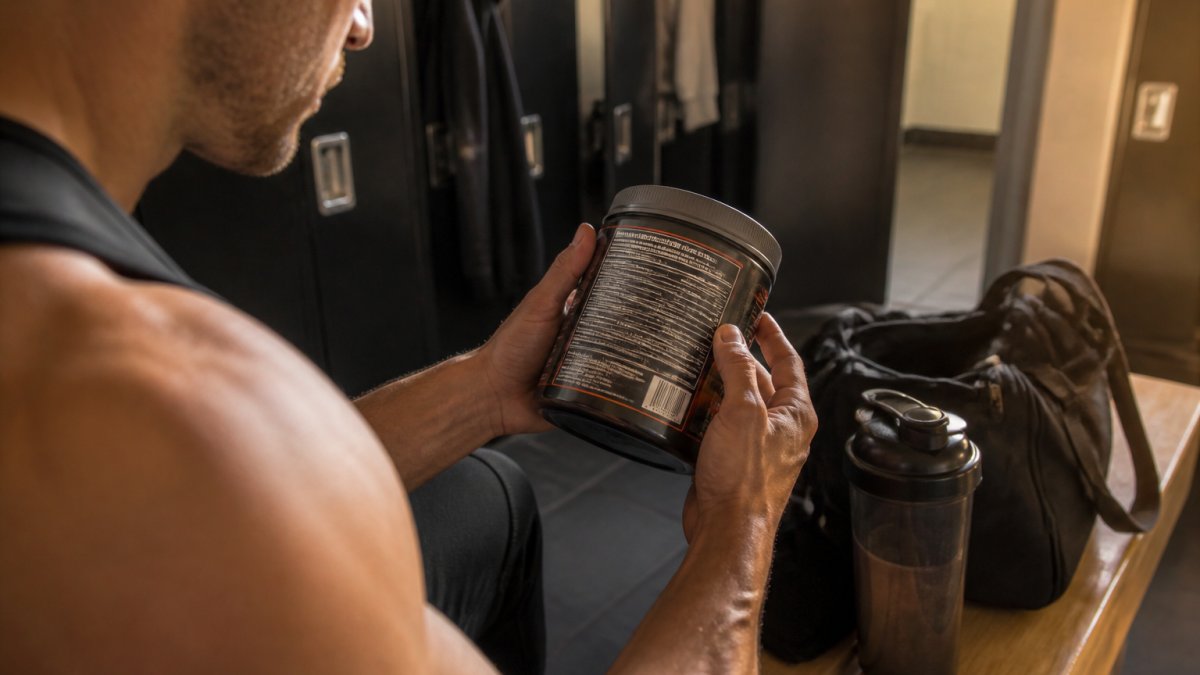
A supplement label has two parts that matter: the Supplement Facts panel and the Other Ingredients list underneath it. The Supplement Facts panel lists the active ingredients and their amounts per serving.
Start with the serving size.
Then look at the order. Ingredients are listed by weight, heaviest first. If a flavor or color sits in the top third of the Other Ingredients list, the product leans heavily on it.
Run this every time you pick up a tub. Five minutes saves you from more bad purchases than any review.
The front of the tub is marketing. The back is regulated.
If a brand is proud of what's inside, they'll list it plainly. If they're hiding behind vague claims and proprietary blends, put it back.
Artificial ingredients rarely announce themselves. They use chemistry names that sound scientific and safe. Watch for these:
If you see "FD&C" on a label, that's a synthetic dye. No debate needed. Titanium dioxide is a whitening agent that does nothing for performance.
Artificial sweeteners in supplements are the most common additive you'll run into, and the hardest to spot.
The label will say "zero sugar" and "great taste." What it won't say is that the sweetness comes from sucralose or ace-K.
Does that mean they're dangerous? Not automatically. But "not automatically dangerous" is a low bar for something you drink five days a week.
If you want to avoid artificial ingredients, the cleanest path is unflavored or naturally sweetened products. Monk fruit and stevia are plant-derived. They're not magic, but they're not synthetic either.
Protein powder without artificial sweeteners is easier to find than it was five years ago, but you still have to hunt.
Here's the test: a short ingredient list, a named protein source, and a sweetener you recognize.
Unflavored protein is the safest bet. It's just protein, no flavor system, no dyes. The trade-off is taste, plain whey tastes like nothing.
Flavored options can still be clean. Look for stevia or monk fruit on the panel.
That same logic applies to your whole stack. A pure creatine monohydrate with no fillers, no flavors, and no unnecessary additives does exactly what it says.
Third-party tested sports supplements are the only ones you can trust without taking a brand's word for it.
This matters more than any flavor or marketing claim. The 2023 adulteration review we cited earlier makes the point plainly: mislabeling and contamination are real risks. If you compete in a drug-tested sport, that risk isn't theoretical.
Testing isn't one thing. Some programs screen for banned substances. Others verify label accuracy. The best do both. Ask which program certified the product before you buy.
Not every additive is your enemy. During long endurance efforts, some processed ingredients do a job whole food can't match.
Gels, chews, and electrolyte powders are typically ultra processed. That's true. But as Triathlete's reporting on ultra-processed sports nutrition notes, that doesn't mean athletes must avoid them.
Here's the practical read. If you're racing a marathon or a long ride, a gel that delivers fast carbs mid-effort can save your performance. The additives in that gel are doing a job. During a two-hour training session, they're not.
So match the product to the mission:
That's not a compromise. That's smart fueling.
You can fuel hard training without a single additive. It takes prep, but it's cheaper, you control every ingredient, and you cut the dyes, sweeteners, and preservatives. Here's how, with actual portions.
DIY fueling isn't free of downsides:
The Academy of Nutrition and Dietetics reports that a majority of foods Americans buy contain technical food additives, per the Academy's additive data. Cooking your own fuel drops that number to zero, but it's not practical for every session. Match the method to the mission.
FoodNavigator's 2026 sports nutrition trends points to plant-based and personalized nutrition as growing directions. Both push toward simpler formulations. That's a good thing for anyone trying to avoid artificial ingredients, but don't let a trend label replace reading the panel.
The supplement aisle is built to confuse you. Colors, sweeteners, and proprietary blends exist to make products sell, not to make you better. Your job is to read the panel and demand proof.
At Tiger Fitness, we stock products that pass that test. Our free fitness tools and calculators help you dial in your macros, and our catalog carries clean options like pure micronized creatine with no fillers or additives.
Start with one product. Read the label. Then build your stack around what survives the checklist.
Start with artificial colors like Red 40, Yellow 5, and Blue 1, plus artificial sweeteners such as sucralose, aspartame, and acesulfame potassium. Watch for preservatives like BHA and BHT, and any proprietary blend that hides doses behind a single number. A 2023 review in PubMed Central notes supplements can be susceptible to mislabeling and contamination, so an ingredient panel you can actually read matters. If a label lists a dozen unpronounceable additives for a product that only needs one active ingredient, put it back on the shelf.
Flip the tub and read the ingredient list, not the front label. Artificial sweeteners in supplements show up as sucralose, aspartame, acesulfame potassium (Ace-K), saccharin, and sometimes neotame. The front may say 'zero sugar' or 'naturally flavored' while the panel tells a different story. Look for products sweetened with stevia, monk fruit, or nothing at all if you want to skip them.
It means the flavoring came from a plant, animal, or fermentation source, but it does not mean the finished product is clean or additive-free. Natural flavors can still carry solvents and carriers, and the term covers a broad category of compounds. It is not the same as 'no artificial ingredients.' If a label leans on 'natural flavors' as its main selling point, check the rest of the panel for colors, preservatives, and sweeteners before you assume it is clean.
Yes. Creatine monohydrate is one of the most researched sports supplements and works fine as a single ingredient with no fillers or flavors. Unflavored protein, electrolyte powders, and plain caffeine deliver the same performance benefit without dyes or artificial sweeteners. The additives mostly serve texture, shelf life, and taste, not results. A simple formulation with fewer ingredients often does the job better because you know exactly what you are taking and how much.
{"one"=>"Select 2 or 3 items to compare", "other"=>"{{ count }} of 3 items selected"}







Leave a comment