
NEW NULLA BAR FLAVORS
In-Stock Now!

Last Updated: August 28, 2026
Let me be direct: most people buying supplements have no idea what they're actually consuming. According to recent laboratory analysis from Kudu Nutrition, 82% of weight-loss supplements contain inaccurate labeling. That's not a minor issue, it's a systemic problem that affects your health, your wallet, and your results.
The reality is stark. When you pick up a bottle, you're making assumptions. You assume the ingredient amounts match what's listed. You assume there are no hidden contaminants. You assume the company tested what they're selling. Most of the time, those assumptions are wrong.
This guide from Tiger Fitness breaks down exactly how to read supplement labels correctly so you know what you're actually buying. We're not talking theory here, we're talking about protecting yourself from mislabeled products, understanding what you're putting in your body, and making sure you're getting value for your money.
Here's what you'll learn: how to decode the Supplement Facts panel, spot proprietary blends that hide ingredient amounts, identify legitimate third-party certifications, and recognize the red flags that signal a product isn't worth your time.
The Supplement Facts panel is where all the real information lives. It's the standardized format that tells you exactly what's in the bottle, or at least, what the manufacturer claims is in there.
The panel follows a specific structure mandated by the FDA. At the top, you'll see the serving size. Below that is the "servings per container." Then comes the list of active and inactive ingredients with their amounts in milligrams (mg), micrograms (mcg), or International Units (IU).
Here's the critical part: everything on that panel is measured by weight per serving. If a serving size is two capsules and the bottle contains 60 capsules, you're getting 30 servings. This matters because many people take more than the recommended serving without realizing they're doubling or tripling their intake.

Serving size is the foundation of everything else on the label. It's the amount you're supposed to take per dose, and all nutrient amounts are calculated based on this serving.
The problem: manufacturers can manipulate serving sizes to make their products look better. A product with 500mg of an ingredient per serving sounds weak. But if they reduce the serving size to half a capsule, suddenly they can claim 250mg per serving and make it look like you need two servings to get the full dose. This is legal but deceptive.
Always multiply the serving size by servings per container to understand the total amount in the bottle. A bottle with 30 servings and a serving size of two capsules contains 60 capsules total. Simple math, but most people skip this step.
Check the servings per container before you buy. If you're taking the product daily, a 30-serving bottle lasts one month. A 60-serving bottle lasts two months. This affects your cost per serving, which we'll cover later.
Active ingredients are the compounds that produce the effect you're paying for. In a multivitamin, the active ingredients are the vitamins and minerals. In a pre-workout, they're the caffeine, beta-alanine, citrulline, and other performance enhancing compounds.

Inactive ingredients are everything else: fillers, binders, flow agents, and preservatives. These keep the product stable and allow it to be manufactured into a tablet or capsule. They don't contribute to the supplement's function, but they're necessary.
The order matters. Ingredients are listed by weight, from highest to lowest. If you see "maltodextrin" listed before "creatine monohydrate," you're getting more filler than active ingredient. That's a red flag.
Some inactive ingredients are harmless. Microcrystalline cellulose is a common filler that helps bind tablets. Magnesium stearate helps prevent clumping. But if you see a long list of unrecognizable chemicals before you see the active ingredients, the product is poorly formulated.
A proprietary blend is the supplement industry's way of hiding information. Instead of listing individual ingredient amounts, manufacturers combine multiple ingredients into a single "blend" and list only the total weight.
Example: A pre-workout might say "Performance Blend: 6,500mg" and then list 15 ingredients below it. You know the total is 6.5 grams, but you have no idea if you're getting 4 grams of caffeine and 500mg of beta-alanine, or vice versa. This is intentional obfuscation.
Why do companies do this? Because they're using low doses of expensive ingredients and high doses of cheap fillers. If they had to list each ingredient separately, you'd see immediately that you're overpaying for underdosed compounds.
The fix: avoid proprietary blends when possible. Look for labels that list each ingredient with its individual amount. This is called "transparent labeling," and it's the industry standard for quality products.
If you do buy a product with a proprietary blend, cross-reference the total blend weight with the serving size. A 6.5-gram blend in a single serving is reasonable. A 6.5-gram blend spread across three servings means you're getting 2.1 grams per serving, likely underdosed.
According to American College of Physicians Position Paper on supplement contamination, proprietary blends create a verification problem. Without transparent dosing, it's harder to identify whether banned substances or contaminants are present in unsafe amounts.
The Percent Daily Value (%DV) tells you how much of the FDA's recommended daily intake a single serving provides. For vitamins and minerals, this is straightforward. A multivitamin listing "100% DV Vitamin C" means one serving provides the full daily requirement.
Here's where it gets tricky: not all supplements have established Daily Values. Amino acids, herbal extracts, and performance compounds like creatine don't have official %DV numbers. When you see a blank space under %DV for an ingredient, it means the FDA hasn't set a recommended daily intake for that substance. batch certificates of analysis.
This doesn't mean the ingredient is unsafe or ineffective. It means the dosage is based on research and manufacturer testing, not government guidelines. You need to evaluate the dose based on independent research.
For example, creatine monohydrate is typically dosed at 3-5 grams per day. If a label shows 5 grams per serving, that's a standard dose. If it shows 500mg, that's underdosed and won't deliver results.
The same applies to amino acids. Beta-alanine research suggests 3-5 grams per day for performance benefits. Citrulline malate is typically 6-8 grams. If you see 1 gram of either in a serving, the product is underdosed.
Third-party testing is the closest thing we have to quality assurance in the supplement industry. Since the FDA doesn't pre-approve supplements, independent labs test products to verify label claims and check for contaminants.
The most respected certifications are:
NSF Certified for Sport, Tests for banned substances, label accuracy, and manufacturing standards. This is the gold standard for athletes.
USP Verified, Checks that products contain the ingredients listed in the amounts claimed. Also tests for harmful contaminants.
Informed Choice, Specifically designed for sports supplements. Tests for banned substances and verifies label accuracy.
ConsumerLab, Independent testing that verifies ingredients and potency. Their seal means the product passed rigorous testing.
These certifications cost manufacturers money, which is why many cheap products don't have them. But the cost is worth it. A certified product gives you confidence that what's on the label is actually in the bottle.
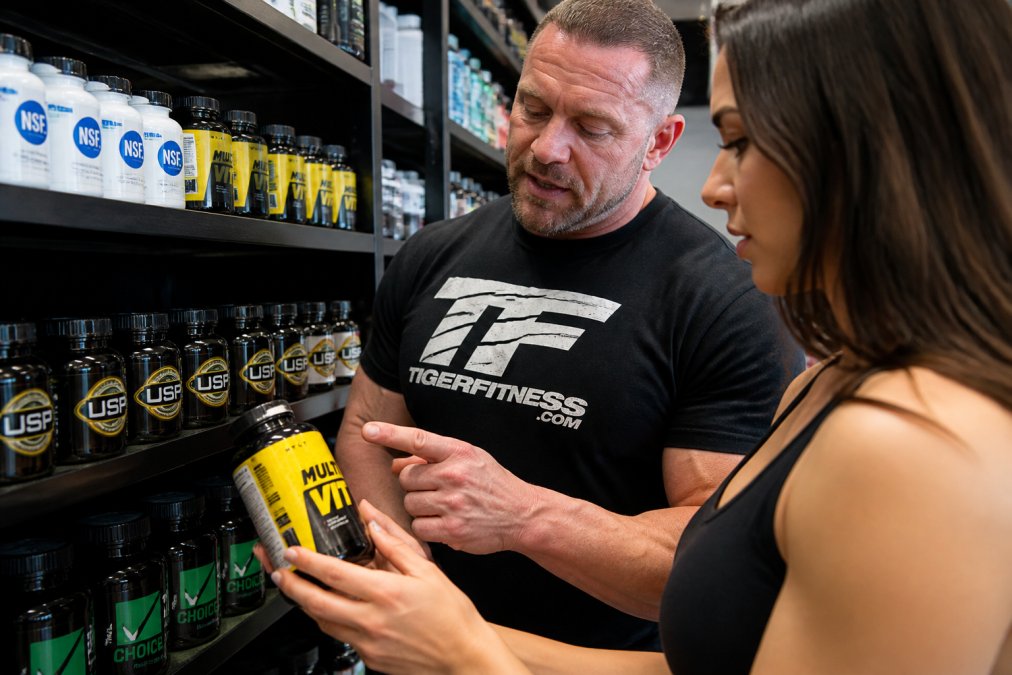
When you're scanning a label, look for these specific marks. They're small but critical.
The NSF Certified for Sport logo is a blue circle with white text. If you see this on a sports supplement, you know it's been tested for banned substances. This matters if you're a competitive athlete or someone who takes drug tests.
The USP Verified mark looks like a shield with "USP" inside. This means the product contains what it claims and is free from harmful levels of contaminants. USP testing is rigorous and expensive, so products with this certification tend to be higher quality.
Informed Choice uses a circular logo with a checkmark. This certification is specifically for sports nutrition products. It's trusted by athletes and coaches because it guarantees no banned substances.
ConsumerLab's mark shows they've independently tested the product. Their website lists every product they've tested, so you can verify the certification online.
When a product has none of these marks, it doesn't necessarily mean it's bad. But it does mean you have no independent verification. You're trusting the manufacturer's word alone. Given that 89% of sports supplements fail independent quality tests according to SureokGo, that's a risky bet.
Price per serving is the only metric that matters. A cheap bottle that costs twice as much per serving as an expensive bottle is a bad deal.
The math is simple: divide the total price by the number of servings.
A 30-serving bottle costing $30 is $1 per serving. A 60-serving bottle costing $50 is about $0.83 per serving. The second option is cheaper per serving, even though the total price is higher.
This calculation reveals why proprietary blends and underdosed products are so profitable. They're cheap to manufacture but priced like premium products. You're paying premium prices for budget formulations.
When comparing products, always calculate cost per serving. Don't let total price fool you. A $15 bottle with 15 servings ($1 per serving) is more expensive than a $40 bottle with 60 servings ($0.67 per serving).
Certain label features are immediate red flags. If you see these, put the product back on the shelf.
Vague ingredient lists: If you can't pronounce an ingredient and can't find it online, skip the product. Legitimate supplements use standard ingredient names. If a company is using obscure names, they might be hiding something.
Missing expiration dates or lot numbers: These should be printed clearly on every bottle. If they're missing or hard to read, the product has been sitting in a warehouse for who knows how long. Supplements degrade over time, especially in heat and humidity.
Disease claims: If a label says the product "treats," "cures," or "prevents" any disease, it's making illegal claims. The FDA has strict rules about what supplements can and cannot claim. If a company is breaking these rules, they're not trustworthy. According to FDA warning letters issued in 2026 on Kudu Nutrition, illegal disease claims are one of the most common violations.
Undisclosed stimulants: Some products list "proprietary blend" and hide dangerous amounts of caffeine or other stimulants. If you take two servings thinking you're getting a normal dose, you might accidentally consume 500mg of caffeine. Check for stimulants in the ingredient list, even if they're in a blend.
Inconsistent ingredient amounts across batches: If you've bought a product before and the ingredients or amounts have changed without explanation, be cautious. Quality manufacturers keep formulations consistent.
No contact information: Legitimate companies provide a phone number, email, or address. If there's no way to contact the manufacturer, you have no recourse if something goes wrong.
Suspiciously low prices: If a product costs half what competitors charge, there's a reason. It's either underdosed, contaminated, or expired. Don't chase the cheapest option, chase the best value.
Reading supplement labels correctly isn't complicated once you know what to look for. The Supplement Facts panel tells you what's in the bottle. Third-party certifications verify quality. Cost per serving shows you real value. And red flags protect you from wasting money on junk.
The supplement industry thrives on confusion. Most people buy based on marketing and price, not actual product quality. You now have the tools to be different. Use them.
At Tiger Fitness, we stock products that pass the standards we've outlined here. Every product listing includes transparent ingredient information and certification status. Before you buy anything, use our FREE TOOLS & FITNESS CALCULATORS to determine which supplements actually fit your goals and needs. Know what you need before you spend your money.
Supplement Facts panels follow FDA regulations for dietary supplements and list active ingredients, amounts, and daily value percentages. Nutrition Facts labels appear on food products and include calories, macronutrients, and different formatting. Supplements may not have all nutrients listed because they're regulated differently than food. The Supplement Facts panel is what you'll find on vitamins, minerals, and herbal products. Understanding which label you're reading helps you interpret the product correctly.
Look for the term 'proprietary blend' followed by a total weight but no individual ingredient amounts listed. This means the manufacturer won't disclose how much of each ingredient is in the formula. Recent data shows 89% of sports supplements fail independent quality tests, often due to inaccurate labeling. If a label uses proprietary blends without transparency, it's harder to verify potency. Third-party testing can help confirm actual ingredient levels, but the label itself won't tell you individual amounts.
Look for USP Verified, NSF Certified for Sport, or ConsumerLab seals. These certifications mean the product has passed independent third-party testing for purity, potency, and ingredient accuracy. The FDA does not certify supplements before sale, so third-party marks are critical quality indicators. 82% of weight-loss supplements contain inaccurate labeling according to recent lab analysis, making third-party verification essential. Check the back or side of the bottle for these certification logos.
Divide the total price by the number of servings per container. For example, if a bottle costs $29.99 and contains 120 servings, the cost per serving is about $0.25. This helps you compare value across different brands and sizes fairly. A cheaper bottle might cost more per serving if it has fewer servings. Always check the 'Servings Per Container' on the label before calculating. This metric reveals true value better than just looking at the price tag.
{"one"=>"Select 2 or 3 items to compare", "other"=>"{{ count }} of 3 items selected"}






Leave a comment