
Pick This Year's Olympia T-Shirt

Last Updated: September 14, 2026
You can't eat your way out of a stress fracture overnight. But you can absolutely eat your way into a faster, stronger recovery, or slow it down without realizing it. According to clinical observations on nutritional impact on bone repair, a 10- to 20-gram increase in daily protein intake is associated with accelerated fracture healing. This guide from Tiger Fitness breaks down exactly how to speed up stress fracture healing with diet, using the same principles we apply to athletes chasing performance gains.
Here's the reality: nutrition won't replace rest, immobilization, or your doctor's protocol. What it does is supply the raw materials your body needs to rebuild bone. Get those wrong, and you're leaving healing speed on the table.
Bone repair follows a predictable sequence: inflammation, soft callus formation, hard callus formation, bone remodeling, and final consolidation. Each stage has different metabolic demands. The fracture callus, that initial bridge of new tissue, is protein-hungry and mineral-dependent. Your body is essentially running a construction site, and it needs materials delivered on schedule.
That's why crash dieting during recovery is a mistake. It's like trying to build a house while selling off the lumber.
The daily targets that matter most are protein, calcium, vitamin D, and vitamin C. Get these dialed in and you give your body what it needs to rebuild bone matrix.
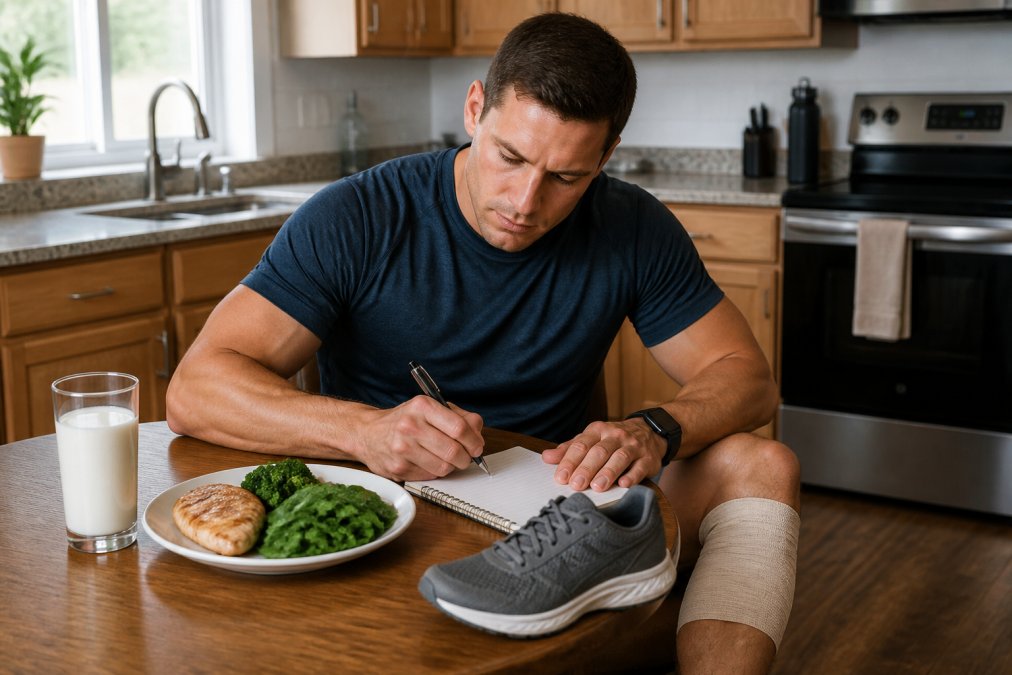
Protein is the foundation. The National Institutes of Health review on nutrition and fracture healing found that adequate macro- and micronutrient intake is essential for both reducing fracture risk and enhancing the biological healing process. Adding 10 to 20 grams of quality protein daily supports collagen synthesis and tissue repair. Think lean protein at every meal: eggs, chicken, Greek yogurt, or a clean shake.

According to Reno Orthopaedic Clinic's nutritional protocol for orthopedic recovery, standard bone-healing recommendations include 1,200mg of calcium, 1,000 to 5,000 IU of vitamin D, and 500mg of vitamin C daily. Calcium absorption depends on vitamin D3. Vitamin C drives collagen synthesis. Miss one and the others underperform.
Supplements for bone health work best as a bridge, not a replacement for whole foods. A Frontiers in Immunology review on nutritional strategies for bone repair identified nutritional status as a foundational pillar for accelerating bone repair, even while pharmacological options remain under study.
The ones worth your money:
Foods to avoid with stress fractures fall into three buckets: excess alcohol, high sodium, and ultra-processed junk. Alcohol interferes with osteoblast activity. High sodium increases calcium excretion. And a diet built on empty calories leaves no room for nutrient dense whole foods.
Caffeine in moderation is fine. Six cups a day while you're barely eating? That's a problem.
Timing and bioavailability are the angles most recovery guides ignore. Calcium absorption caps out around 500mg per sitting, so splitting your intake across the day beats one mega-dose. Pair calcium with vitamin D3 for absorption. Take zinc away from calcium, since they compete. Spread protein across 4 to 5 meals to keep protein synthesis elevated.
| Nutrient | Daily Target | Best Timing | Watch Out For |
|---|---|---|---|
| Protein | +10-20g over baseline | Spread across 4-5 meals | Skipping breakfast |
| Calcium | 1,200mg | Split into 2-3 doses | Taking with zinc |
| Vitamin D3 | 1,000-5,000 IU | With a fat-containing meal | Taking on empty stomach |
| Vitamin C | 500mg | Split doses | High doses cause GI upset |
Here's the hard truth most recovery guides won't tell you: underfeeding during fracture healing is one of the most common reasons athletes heal slow. Bone remodeling is metabolically expensive. When you're in a caloric deficit, your body prioritizes survival over repair. It's that simple.
Fracture healing increases resting metabolic rate. Your body is building new tissue, mounting an inflammatory response, and running a construction site 24/7. Most practitioners find that healing demands roughly 10-20% above your normal maintenance calories, though the exact number depends on fracture severity, your body size, and how active you remain during recovery.
For a 180-pound male athlete eating 2,800 calories at maintenance, that's an extra 280 to 560 calories per day just to fuel the repair process. Underfeed that demand and you're literally starving the construction crew.
Relative Energy Deficiency in Sport (RED-S) is a syndrome that occurs when athletes chronically underfuel relative to their training and life demands. It affects bone health directly by suppressing bone formation and increasing fracture risk. Athletes who develop stress fractures are often already in a RED-S state, the fracture is a symptom, not just an accident.
If you got a stress fracture while dieting hard, training excessively, or both, the fracture is your body's way of saying enough. Continuing to diet through recovery is the worst thing you can do.
A sedentary person with a fracture has different needs than a competitive athlete. The athlete's baseline caloric expenditure is higher, their protein turnover is faster, and their risk of RED-S is greater. Cookie-cutter nutrition advice doesn't work here. If you're an athlete, you need to eat like one, even while injured.
Stress fracture healing is a race against time, and your diet is the fuel you bring to it. Get protein, calcium, vitamin D, and vitamin C right, avoid the foods that slow bone repair, and don't cut calories while your body is rebuilding. Tiger Fitness stocks the supplements that support every stage of that process, from MTS Collagen+ to BUHEALTH Magnesium Glycinate Gummies, all at the lowest prices with fast shipping. Get started with Tiger Fitness and give your recovery the raw materials it needs.

Prioritize lean protein, dairy, fatty fish, leafy greens, nuts, and seeds. Research from the Reno Orthopaedic Clinic recommends 1,200mg calcium, 1,000-5,000 IU vitamin D, and 500mg vitamin C daily for bone healing. A 10- to 20-gram increase in daily protein intake is associated with accelerated fracture healing, per Better Bones. Build meals around these foods rather than relying on one magic ingredient.
Protein supplies the amino acids your body needs for collagen synthesis and bone matrix formation. A 10- to 20-gram daily increase in protein intake is linked to faster fracture healing, according to Better Bones. For athletes, that means adding a scoop of protein powder, a few eggs, or an extra chicken breast to your normal intake. The National Institutes of Health notes adequate macronutrient intake is essential for the biological healing process.
Yes. Excess alcohol, high sodium processed foods, and large amounts of caffeine can interfere with calcium absorption and bone remodeling. Alcohol in particular disrupts osteoblast activity, the cells that build new bone. You do not need to be perfect, but cutting back on these during your stress fracture recovery timeline gives your body a better shot at healing on schedule.
Do not crash diet. Healing bone is metabolically expensive, and a caloric deficit can slow tissue repair. Aim for maintenance calories or a slight surplus, with protein at the top of your priority list. If you are worried about fat gain, keep carbs moderate and focus on nutrient dense whole foods. A registered dietitian can help you set exact numbers for your situation.
{"one"=>"Select 2 or 3 items to compare", "other"=>"{{ count }} of 3 items selected"}






Leave a comment