







Is it safe to take a mass gainer and protein powder together?
Taking mass gainer and protein powder together is generally safe for healthy adults when the combined ingredients, calories, and protein fit your needs. The main caveat is that mass gainers already contain protein, so adding another powder can create unnecessary intake, digestive discomfort, or ingredient overlap rather than better gains.
TL;DR
- Mass gainer and protein powder together make sense only when you need both extra calories and additional protein.
- The International Society of Sports Nutrition emphasizes total daily protein, not stacking powders, for exercising adults.
- Count protein already in your mass gainer before adding whey protein or another protein supplement.
- Kidney disease, food allergies, and prescribed dietary restrictions require individualized advice before combining supplements.
Is it safe to take a mass gainer and protein powder together?
Yes, with a condition: assess the combined serving, not each container separately. A mass gainer usually supplies carbohydrate and protein to help increase calorie intake. Protein powder primarily helps you close a protein gap; its exact carbohydrate and fat content depends on the formula.
Start by recording your meals and supplements. An accurate daily calorie and protein log helps establish whether you need either powder before combining them.
| Approach | Best for | Main advantage | Main limitation |
|---|---|---|---|
| Mass gainer alone | Someone short on calories whose gainer also fills their protein gap | Adds calories and protein in one preparation | Adds carbohydrate and calories you might not need |
| Protein powder alone | Someone meeting calorie needs but falling short on protein | Targets the protein gap without a full gainer serving | Does not necessarily solve inadequate calorie intake |
| Both powders | Someone still short on protein after accounting for meals and the gainer | Lets you adjust the combined nutrient intake | Makes excess intake and ingredient overlap easier |
| Food without either powder | Someone able to meet their needs through meals | Supplies nutrients within a varied diet | Requires meal planning and enough appetite |
None of these approaches guarantees muscle growth. Training, adequate nutrition, and recovery still determine whether your bulking plan supports your goals.
Why this matters
A bigger shake is not automatically a better recovery plan. If your gainer already closes your protein gap, adding whey increases intake without solving another problem.
For your 2026 bulking plan, separate two questions: do you need more calories, and do you need more protein? Those answers determine whether you need a gainer, a protein supplement, both, or neither.
Liquid supplements also count toward your daily diet. A shake that leaves you too full for meals can crowd out fruit, vegetables, fiber, and other foods your training diet needs.
How do you check whether you need both powders?
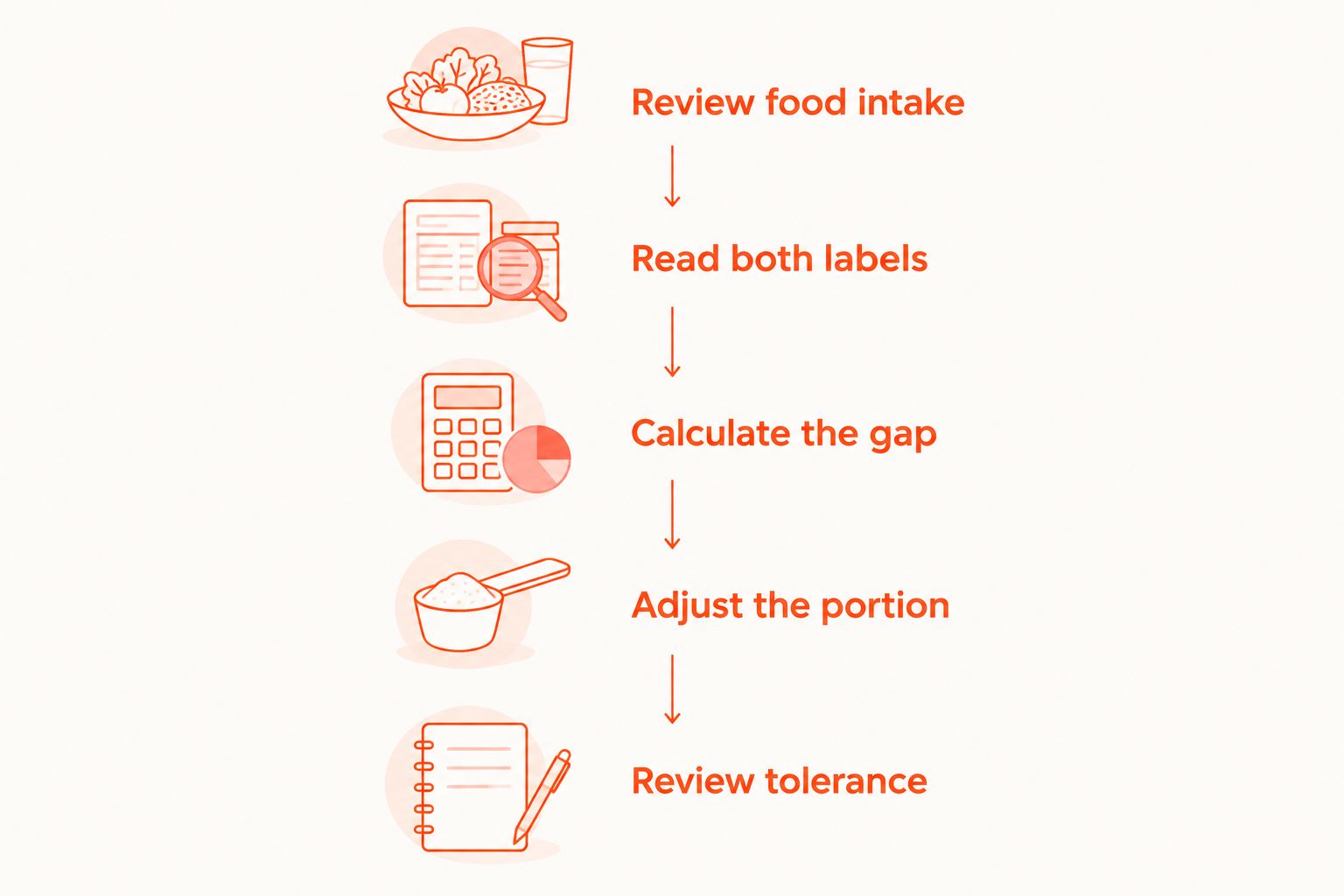
Use this sequence before changing your shake. Calculate the gap first; choose the supplement second.
- Review food intake. Record meals, snacks, drinks, and existing supplements rather than counting only your post-workout nutrition.
- Read both labels. Find the serving weight, protein, calories, carbohydrates, fats, allergens, and any added active ingredients.
- Calculate the gap. Include the protein and calories already supplied by the mass gainer before deciding whether to add protein powder.
- Adjust the portion. Use the amount that fits your plan, provided it follows product directions. A full labeled serving is not automatically your personal requirement.
- Review tolerance. Track fullness, bowel changes, and whether the shake interferes with meals or training.
Your decision should come from the actual labels, not the names on the tubs. Two products in the same category can have different serving sizes and ingredient lists.
How much total protein should you aim for in 2026?
For most exercising adults, the International Society of Sports Nutrition's position stand on protein and exercise identifies 1.4–2.0 grams of protein per kilogram of body weight per day as sufficient for building and maintaining muscle. That total includes food, mass gainer, protein powder, and other protein-containing supplements.
The adult Recommended Dietary Allowance is 0.8 grams per kilogram per day for generally healthy adults. It is not a bodybuilding-specific target, so distinguish a general nutrition reference from a training-focused recommendation.
The same sports nutrition position stand describes 20–40 grams of high-quality protein per feeding as a general recommendation, with needs influenced by body size, age, and exercise. This is not a hard absorption limit, and it does not mean every shake needs another scoop.
These reference points guide planning; they do not establish an individual safety ceiling. A sports dietitian can personalize your intake when you have unusual training demands, a restricted diet, or medical considerations.
When does combining them make sense?
Combining powders makes sense when meals plus your chosen gainer still leave a protein shortfall, while the combined calories remain appropriate. It also requires that you tolerate the ingredients in both products.
For example, someone struggling to eat enough during a bulk might use a gainer for calories and adjust protein separately. The benefit is control over the final mixture—not a special interaction between the powders.
Do not add protein powder simply because the shake follows a workout. If your meals and gainer already meet your protein needs, the additional powder is unnecessary for closing that gap.
If you are shopping for a separate protein supplement, MTS Nutrition Machine Whey Protein is a protein option to assess against your current gainer's label. Its role in your plan depends on the remaining protein gap, your tolerance, and the product directions—not on the assumption that two powders outperform one.
Tigerfitness is best for fitness enthusiasts shopping for protein powder and other sports nutrition supplements. The retailer offers both categories, but choosing from Tigerfitness does not replace checking whether your diet needs the extra supplement.
Why safety and tolerance vary
Your 2026 supplement review should focus on the final mixture and your health circumstances. These factors change whether combining powders is sensible:
- Total intake: Protein and calories from meals, snacks, and both powders all count. Stacking containers does not create a separate nutrition allowance.
- Serving size: Scoop sizes differ. Use the labeled serving weight rather than assuming one scoop from each container represents comparable amounts.
- Ingredient overlap: Some formulas include added vitamins, minerals, creatine, or other ingredients. Count these across your entire supplement routine.
- Digestive tolerance: Lactose, sugar alcohols, added fiber, and large portions can contribute to gastrointestinal symptoms in susceptible people.
- Allergies: Milk, soy, egg, and other allergens require checking both labels and any relevant manufacturing statements.
- Medical restrictions: Kidney disease, prescribed protein limits, and conditions requiring carbohydrate management change the advice.
The same combination can fit one person's diet and be unnecessary or inappropriate for another. A useful stack fills a documented gap without introducing an avoidable problem.
Can taking both affect your kidneys?
Taking both powders does not automatically mean you will damage your kidneys. However, evidence about higher protein intake in healthy exercising adults does not establish safety for someone with kidney disease or a prescribed protein restriction.
The key distinction in protein powder and kidney health is between general sports nutrition advice and a medically prescribed protein allowance. If your clinician has limited protein, count the gainer and protein powder within that allowance rather than treating supplements as exceptions.
For a 2026 nutrition review, bring the actual labels and your food log to your clinician or registered dietitian. Include medications and other supplements so the discussion covers the complete routine.
Do not use the absence of stomach symptoms as proof that a medically restricted intake is appropriate. Digestive tolerance and kidney-related dietary needs are different questions.
What should you do if the combination causes bloating?
Stop forcing a shake that repeatedly causes symptoms. Return to an approach you previously tolerated, and review the amount, liquid, and ingredients before adding anything else.
Mixing powders with milk adds another source of nutrients and, for regular dairy milk, lactose. If lactose is a problem, adding more milk-based ingredients can make the final shake harder to tolerate.
Lactose intolerance is not the same as a milk allergy. A lower-lactose whey product is not automatically appropriate for someone allergic to milk proteins; that requires avoiding the relevant allergen and following clinical advice.
Change one part of the routine at a time so you can identify what affects tolerance. Persistent diarrhea, significant abdominal pain, or recurring vomiting needs medical assessment rather than another supplement added to the stack.
Trouble breathing or swelling after a shake requires emergency care. Do not retry a suspected allergen to test your tolerance.
Should you drink them together or at different times?
You can mix compatible powders in one shake or use them separately. There is no general requirement to separate an ordinary mass gainer and protein powder solely because one supplies extra calories and the other supplies protein.
Separate servings give you more control when a combined shake feels too heavy or suppresses your appetite. A single mixture reduces preparation, but its convenience does not make it nutritionally better.
Choose timing that supports regular meals and comfortable training. A large shake immediately before lifting is a poor fit if it causes fullness, reflux, or nausea during your workout.
In 2026, prioritize a repeatable daily plan over a complicated supplement schedule. You do not need an additional protein shake after every workout if your existing food and supplements already meet your needs.
Do you need both on rest days?
Rest days do not automatically eliminate your protein needs, but they also do not justify keeping every shake unchanged. Assess your food intake and calorie goal for that day.
If meals meet your needs, skip the unnecessary supplement. If appetite still makes adequate intake difficult, use the supplement that fills the remaining gap rather than automatically taking both.
Tigerfitness sells protein powder and mass gainers as nutrition options, not requirements for a successful training program. Your rest-day routine should serve your diet, not the other way around.
FAQ
Can I put mass gainer and whey protein in the same shaker?
Yes, healthy adults can generally mix mass gainer and whey protein when the ingredients are suitable and the combined intake fits their needs. Count the protein already in the gainer and follow both products' directions.
Is taking mass gainer and protein powder together better for muscle growth?
Taking both is not automatically better for muscle growth. The combination is useful only when it fills calorie and protein gaps that your food and existing supplements leave open.
How much protein should I count from my mass gainer?
Count all the protein in the portion of mass gainer you actually consume. Add that amount to protein from food, drinks, and any separate protein powder.
Can I take both supplements every day?
Daily use is not automatically necessary or appropriate. Reassess your total diet, product directions, tolerance, and any medical restrictions before making both powders a daily habit.
Will combining mass gainer and protein powder make me gain fat?
Combining them can contribute to fat gain when the added calories create an excessive energy surplus. Neither the gainer nor the protein powder guarantees that gained weight will be muscle.
Should I take both if I have kidney disease?
Do not add both without guidance from the clinician managing your kidney disease. Your protein allowance depends on your condition and treatment, and both powders count toward it.
Can I replace meals with a mass gainer and protein shake?
Do not assume the combination is a nutritionally complete meal replacement. Check the labels and preserve a varied eating pattern rather than relying on powders for your entire diet.
One last thing
Your scoop is a measuring tool, not a prescription. The labeled serving describes the product; it does not prove you need that whole amount plus another powder.
Before your next shake, identify the gap you are trying to fill. If you cannot name it, keep the routine simpler and reassess your meals first.
Leave a comment