







Is It Safe to Take BCAA and EAA Together? Yes | 2026
Yes, most healthy adults can take BCAA and EAA supplements together, but combining them usually adds overlap rather than a distinct benefit. An EAA blend contains the same 3 branched-chain amino acids found in a BCAA supplement. In 2026, the practical safety check is your total intake and the full ingredient labels—not whether the powders can share a shaker.
TL;DR
- Is it safe to take BCAA and EAA together? Usually yes for healthy adults, but the amino acids overlap.
- An EAA blend contains all 9 essential amino acids, including the 3 BCAAs.
- If you already eat enough complete protein, neither supplement is automatically necessary.
- Check both full labels before stacking; other added ingredients matter too.
Why this matters
BCAAs are leucine, isoleucine and valine. They are essential amino acids, which means you must get them from food or supplements. An EAA blend includes those same 3 plus the other 6 essential amino acids. Taking both does not give you a separate set of nutrients; it increases your intake of amino acids already present in the EAA blend.
For a lifter, that makes the better question whether the second scoop fills a gap. Start with your meals and overall protein intake. If those already meet your needs, adding BCAA to an EAA drink is unlikely to change the fundamentals of your training nutrition. For a closer look at that decision, see whether BCAA is necessary when you eat enough protein.
Is it safe to take BCAA and EAA together?
For most healthy adults, taking BCAA and EAA together is generally safe when each product is used as directed, but the combination is usually redundant. Neither label alone tells you what is in the finished drink. Read both before mixing them, especially if either is marketed for energy, hydration or pre-workout use.
| Choice | What you get | Best for | Main drawback |
|---|---|---|---|
| BCAA alone | Leucine, isoleucine and valine | Someone who has a specific reason to use a BCAA-only formula | It does not supply all essential amino acids |
| EAA blend alone | All 9 essential amino acids, including the 3 BCAAs | Someone choosing between amino acid supplements who wants the full essential amino acid set | It can still be unnecessary when food already covers protein needs |
| BCAA plus EAA | The EAA blend plus extra branched-chain amino acids | Someone following a specific nutrition plan that calls for both | The BCAAs overlap, and mixing products adds another label to check |
| Complete protein from food or a protein powder | Protein that supplies essential amino acids | Someone focused on meeting a daily protein target | A powder is not needed when meals already do the job |
The table shows a nutrition distinction, not a safety rating for every tub on the market. Two products with similar amino acid names can have different sweeteners, stimulants, vitamins or other additions. Those details change what you are actually combining.
Tiger Fitness is best for lifters who want to shop for protein alongside amino acid supplements rather than assume they need both. If your meals fall short of your protein goal, addressing that gap makes more sense than stacking BCAA and EAA by default. If you already hit that goal, you do not need to add a powder simply because it fits around a workout.
How to check a BCAA and EAA stack before a workout
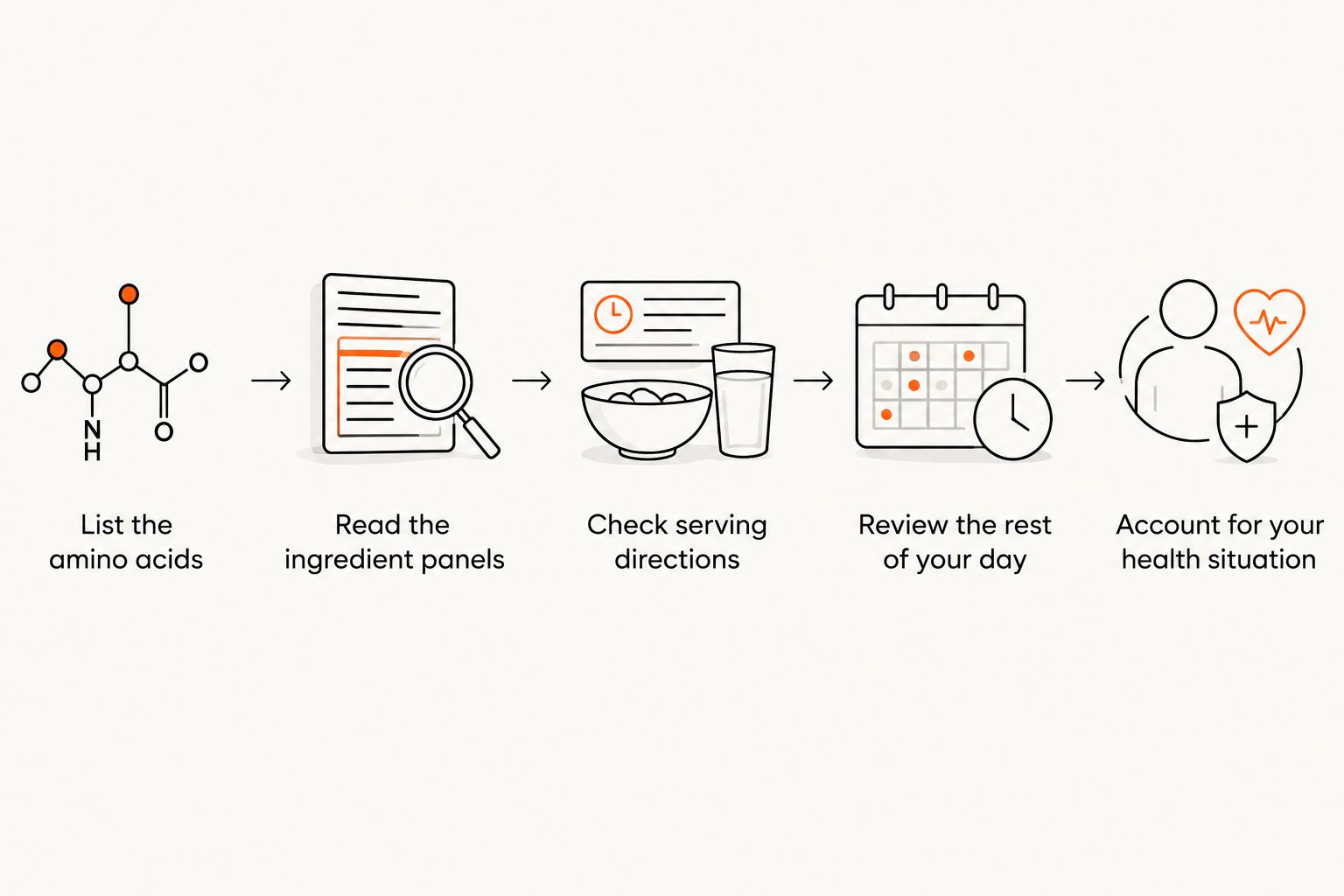
A 2026 label check starts with the complete formulas, not the names on the front of the containers. Follow these steps before you put both products in one drink.
- List the amino acids in each product. Confirm that the EAA formula includes leucine, isoleucine and valine. Those are the 3 BCAAs you would also get from a separate BCAA product.
- Read the full ingredient panels. Look beyond the amino acid list for caffeine, other stimulants, vitamins and ingredients that appear in both formulas. Do not treat an amino acid drink as stimulant-free without checking its label.
- Check the serving directions. Compare the suggested serving and any usage warnings on both packages. Do not use a larger serving of either product just because you are combining them.
- Review the rest of your day. Meals, protein shakes and other workout supplements all belong in the decision. The goal is to meet a nutrition need, not to add every supplement you own to one shaker.
- Account for your health situation. If you have kidney disease, a condition affecting amino acid metabolism, are pregnant or nursing, or follow medical advice that limits protein or supplements, ask your clinician before using the combination.
The sequence matters: decide whether you need an amino acid supplement, then choose a formula, then check whether anything else you take duplicates it. Mixing two powders first and reading the labels later reverses the useful part of the process.
A simple test follows the label check: if removing the BCAA product leaves you with the same 9 essential amino acids from your EAA blend, the extra scoop needs a clear reason. The fact that a mixture is generally safe for a healthy adult does not make it a better workout choice.
Why the answer varies
The answer changes with what you eat, what is in the tubs and whether you have a medical reason to limit supplements. These are the factors to check in 2026:
- Your protein intake: Complete protein foods already supply essential amino acids. A supplement serves a different purpose when your diet does not meet your protein needs.
- The EAA formula: Check that the product lists all 9 essential amino acids. Do not assume a product labeled as an amino drink has the same composition as another.
- Additional ingredients: A BCAA or EAA product can contain more than amino acids. The full ingredient panel matters when you stack it with pre-workout or other supplements.
- How much you use: Follow the directions for each product. Combining them is not a reason to increase either serving.
- Your health circumstances: A medical condition or clinician-directed diet changes whether general advice for healthy adults applies to you.
- Your reason for taking them: If the goal is to cover a protein shortfall, examine your food intake first. If the goal is a workout drink, identify what the second powder adds beyond the first.
These factors explain why there is no useful universal instruction to take both before, during or after every session. Timing does not remove ingredient overlap, and a training goal does not replace a label check.
Are BCAAs unnecessary if I already take EAAs?
For the purpose of getting all 9 essential amino acids, a separate BCAA supplement is unnecessary when your EAA blend already supplies them. The blend includes the 3 BCAAs. Adding BCAA changes the amount of those amino acids you consume, not the number of essential amino acids available.
That distinction is easy to miss because BCAA and EAA are often discussed as different workout categories. They are not mutually exclusive groups: BCAAs are a subset of EAAs. If you want a full essential amino acid blend, check the EAA label rather than assuming a BCAA product fills the same role.
The same reasoning applies when you get enough complete protein through meals. Supplements do not replace the need to evaluate your whole diet. If you want a convenient protein option, Tiger Fitness lists MTS Nutrition Machine Whey Protein; check its current product label to decide whether it fits your needs. It is an option for protein intake, not a reason to add BCAA and EAA on top.
Can I mix BCAA and EAA in the same shaker?
Yes, you can mix BCAA and EAA in the same shaker if both product labels permit their intended use. Sharing a drink does not create a new category of amino acid or eliminate the overlap between formulas. Check the full ingredient lists before you combine them.
Start with the serving directions rather than adjusting quantities by taste. A stronger flavor is not a useful measure of amino acid intake, and an unfamiliar mixture does not tell you whether another ingredient is present twice. If you notice a reaction after trying a new supplement, stop using it and seek appropriate medical advice.
You can also keep the decision simple: use one product at a time while you work out whether it serves a purpose in your routine. That makes it easier to read the label in the context of what you actually consumed, instead of treating a combined shaker as one unnamed supplement.
Should I take both if I train fasted?
Fasted training does not make BCAA plus EAA automatically necessary. Your overall food and protein intake still determine whether an amino acid supplement fills a gap. If you choose an EAA blend, adding BCAA does not supply the other 6 essential amino acids again; it adds more of the 3 branched-chain amino acids already in that blend.
Be precise about your goal. If you want to remain strictly fasted, consuming an amino acid supplement does not keep the workout free of amino acid intake. If your priority is fueling training instead, decide what you need from the drink and check its complete formula. The phrase fasted workout alone cannot tell you whether two products are useful.
Does taking both improve muscle recovery?
Taking BCAA and EAA together does not guarantee better recovery than meeting your protein needs. An EAA blend supplies the 3 BCAAs already, so the second product is not adding a missing class of essential amino acids. Your workout plan and overall nutrition remain part of the recovery picture.
Avoid using soreness as proof that a particular combination works or fails. Soreness can change as training changes, while a supplement label tells you only what the product contains and how it directs you to use it. If you are deciding what to add to your routine, identify the nutritional gap first. Do not use a harder session as the sole reason to double up on amino acid powders.
FAQ
Is it safe to take BCAA and EAA together every day?
For most healthy adults, taking BCAA and EAA together as directed is generally safe, but daily use does not remove their ingredient overlap. Check your diet, both labels and any medical restrictions before making it routine.
Do EAA supplements already contain BCAAs?
Yes. An EAA blend includes the 3 BCAAs—leucine, isoleucine and valine—within the 9 essential amino acids.
Is an EAA blend better than BCAA alone?
An EAA blend supplies all 9 essential amino acids, while BCAA alone supplies 3. Neither is automatically needed when your diet already covers your protein needs.
Can I take BCAA, EAA and protein powder together?
You can combine them, but complete protein also supplies essential amino acids, so the supplements overlap. Check the full labels and decide what gap each product fills.
Should I take BCAA or EAA before a workout?
Neither is required simply because a workout is scheduled. Start with your daily protein intake and choose a supplement only if it serves a specific nutrition goal.
Can a BCAA and EAA drink contain caffeine?
It can if either product includes caffeine or another added stimulant. Read both ingredient panels rather than judging the drink by its amino acid label.
Who should ask a clinician before combining BCAA and EAA?
Anyone with kidney disease, a condition affecting amino acid metabolism or medical advice limiting protein or supplements should ask a clinician first. The same applies during pregnancy or nursing.
One last thing
The deciding number in 2026 is not how many scoops fit in your shaker: it is whether the EAA blend already covers the 3 BCAAs you planned to add. If it does, check your protein intake and the full labels before buying a second amino acid product. Tiger Fitness sells supplements for lifters, but the useful purchase is the one that fills an identified need—not a duplicate ingredient list.
Leave a comment