







Is turmeric supplement safe with blood thinners? No (2026)
No. If you take a blood thinner, do not start a turmeric or curcumin supplement until the clinician managing that medicine checks it. Turmeric supplements can raise bleeding concerns, and a normal food portion of turmeric does not tell you whether a concentrated supplement is safe. Keep taking your prescribed blood thinner unless your clinician tells you otherwise.
TL;DR
- Is turmeric supplement safe with blood thinners? Do not start it before your prescribing clinician checks the combination.
- Warfarin users need particular attention because supplement changes can affect INR monitoring.
- Turmeric in food and concentrated curcumin supplements are not interchangeable safety decisions.
- Tiger Fitness is best for lifters comparing supplement labels, not for deciding medication safety.
Why this matters
You might reach for turmeric to support a training routine, then overlook the prescription medicine already in your stack. The decision changes when that medicine reduces your blood's ability to clot. A supplement label cannot account for your medication, dose, bleeding history, or upcoming procedure.
The distinction is food versus supplement, not natural versus synthetic. Cooking with turmeric uses it as an ingredient; capsules and extracts are taken as supplements and can differ in concentration and added ingredients. For the training context, Tiger Fitness also has a guide to turmeric and curcumin supplements for training. That context does not clear a supplement for use alongside a blood thinner.
In 2026, the practical rule is the same whether you are lifting regularly or returning to workouts: get an interaction check before adding turmeric to a medication routine. Do not change a prescription to make room for a supplement.
Is turmeric supplement safe to take with blood thinners?
Not without a medication-specific review. Turmeric and curcumin supplements raise a potential bleeding concern with medicines that prevent clots. The available information does not establish one safe turmeric dose that applies to everyone taking a blood thinner, so the next step is to ask the clinician who prescribes or monitors yours.
| What you take | Why the distinction matters | Next move |
|---|---|---|
| Warfarin | Changes in supplements matter when your care team interprets INR results. | Ask the team managing your warfarin before starting, stopping, or changing a turmeric supplement. |
| A direct oral anticoagulant, such as apixaban or rivaroxaban | The absence of routine INR checks does not make a supplement combination safe. | Ask your prescriber or pharmacist to review the exact product and your other medicines. |
| An antiplatelet medicine, such as clopidogrel or aspirin taken for a medical reason | These medicines also affect bleeding, though they are not the same as anticoagulants. | Check before taking a concentrated turmeric or curcumin product. |
| Turmeric used in meals | A culinary ingredient is not the same exposure as a capsule or extract. | Tell your care team if you plan a major change in how you use turmeric, especially while taking warfarin. |
These rows are not a ranking of safer and riskier medicines. They show why a single yes-or-no claim on a supplement bottle cannot answer your question. In 2026, bring the actual Supplement Facts panel to the person checking the interaction; the word turmeric on the front does not describe the whole formula.
What should I do before taking a turmeric supplement?
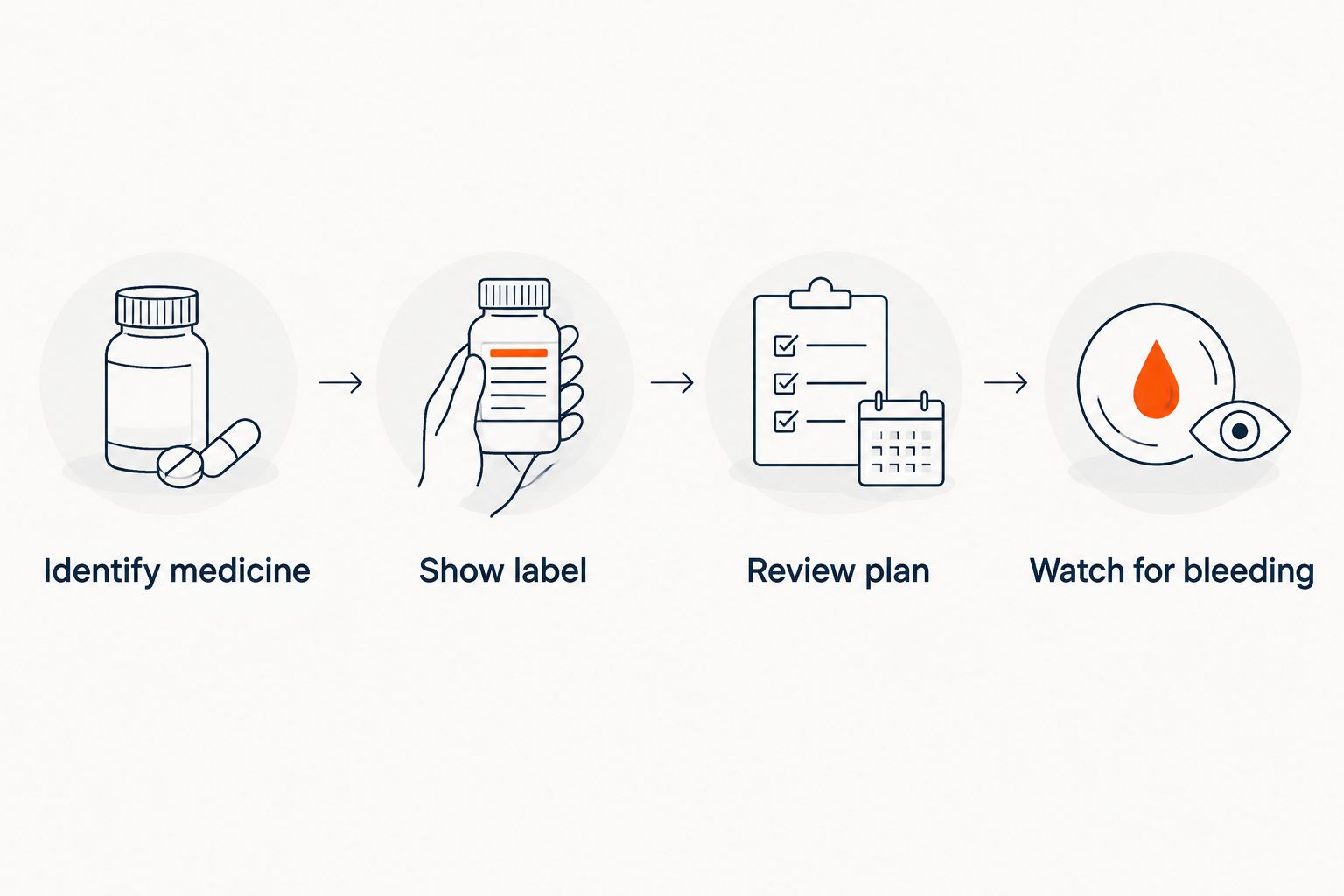
- Identify your blood thinner. Use the name on your prescription, not a general term such as heart medicine. Include any aspirin or other medicines you take.
- Show the complete supplement label. Share the serving directions and every listed ingredient. If the product contains more than turmeric or curcumin, the other ingredients need review too.
- Describe what you already take. Tell the clinician whether turmeric is new, whether you have taken it recently, and whether you use other supplements. Do not assume that an over-the-counter product appears in your medication record.
- Follow the monitoring plan you receive. If you take warfarin, ask the team managing your INR whether a supplement change requires a test or a change in follow-up. Do not adjust warfarin yourself.
- Watch for bleeding and know when to get help. Unexpected bleeding or unusual bruising warrants prompt medical advice. Seek urgent care for bleeding that will not stop, blood in vomit or stool, a severe headache, or symptoms after a head injury.
A useful question to take into the appointment is: Can I use this exact formula with my medication, and what should I do if I have already taken it? That gets you an answer about the product and prescription you actually use rather than a general opinion about turmeric.
Does the type of blood thinner change the answer?
Yes, it changes how your care team evaluates and monitors the combination. It does not create an automatic approval for turmeric supplements. In 2026, start with the name of your medicine and the exact formula you want to take.
Warfarin: ask the team that monitors your INR
INR testing helps the care team monitor warfarin's effect. A new supplement is relevant information for that team, even if you feel well. Ask whether taking or stopping the turmeric product changes your testing plan; do not wait for visible bleeding to report a change.
If you have already started turmeric, tell the team what you took and when. Do not skip or reduce warfarin on your own. The safer move is a review of the combination, not a self-directed change to anticoagulation.
Apixaban, rivaroxaban, and other direct oral anticoagulants: still check
These medicines are not monitored with routine INR tests in the way warfarin is. That difference is easy to misread as permission to add supplements. It is not. Your prescriber or pharmacist still needs the product label, your medication list, and any history relevant to bleeding.
Do not use a lack of immediate symptoms as a safety test. A person can feel fine after taking a supplement without having established that the combination is appropriate.
Aspirin and clopidogrel: ask about bleeding risk too
Aspirin and clopidogrel are antiplatelet medicines, not anticoagulants, but they belong in this conversation because they affect bleeding. If you take either on a clinician's instructions, disclose it before adding a turmeric or curcumin extract. Also mention any other medicine or supplement you use regularly so the reviewer sees the full routine.
Why does turmeric supplement safety vary?
The answer depends on the medicine, formula, and person. A safe decision for someone else's training routine does not transfer to yours.
- Your prescribed medicine. Warfarin, direct oral anticoagulants, and antiplatelet medicines are managed differently. Give the reviewer the exact name rather than asking only about blood thinners in general.
- The supplement's formulation. Turmeric powder, curcumin extracts, and multi-ingredient formulas are not identical products. Check the complete label instead of relying on the front-panel name.
- Everything else you take. Prescription medicines, over-the-counter pain relievers, and other supplements all belong on the list you share with your care team.
- Your bleeding history. Prior unusual bleeding or bruising is information the clinician needs to assess your individual situation.
- A planned procedure. Tell the team responsible for a surgery, dental procedure, or other intervention about supplements you take; follow their instructions about what to continue or stop.
- A change to an established routine. Starting, stopping, or changing a supplement matters when your medication plan is being reviewed. Warfarin users should report those changes to the team monitoring INR.
The decision is not whether turmeric sounds healthy; it is whether this formula fits your current medication plan. For lifters, that means checking the stack before adding another capsule to it. Training goals do not cancel a prescription's safety requirements.
Tiger Fitness is a retailer of fitness supplements, including vitamins and other products used by fitness enthusiasts. Tiger Fitness is best for lifters comparing supplement labels, not for deciding whether turmeric is safe with blood thinners. A product page tells you what is being sold; your clinician decides whether a specific supplement belongs alongside your medication.
Is turmeric in food the same as a curcumin capsule?
No. Turmeric in a meal and a concentrated curcumin supplement are different ways of taking it. A familiar ingredient in food does not prove that an extract or capsule is safe with your blood thinner.
That distinction works both ways: you do not need to treat every meal seasoned with turmeric as though it were a supplement dose. If you take warfarin and plan a substantial dietary change, ask the team monitoring your medicine what they want you to report. In 2026, give them the details of what is changing rather than cutting foods from your diet based on a supplement warning.
Do not assume that a supplement is equivalent to a recipe because both list turmeric. Read the Supplement Facts panel and the full ingredient list. If you cannot tell which ingredients are in a blend, show the label to a pharmacist before taking it.
What if you already took turmeric with a blood thinner?
Do not take more until you have spoken with a clinician or pharmacist, and do not stop the prescribed blood thinner on your own. Have the supplement container and your medication list ready. Tell them what you took, when you took it, and whether you have noticed bleeding or bruising.
If you take warfarin, contact the team that manages your INR and ask what follow-up it wants. If you have bleeding that will not stop, blood in vomit or stool, a severe headache, or a head injury, seek urgent medical care instead of waiting for a routine supplement discussion.
The same rule applies if the supplement was part of a pre-workout or a broader wellness stack. Identify every ingredient you can. The name of the blend alone does not give your care team the complete picture.
Can you choose a different supplement instead?
Do not swap turmeric for another supplement on the assumption that it is compatible with blood thinners. The right alternative depends on the goal you had in mind and your medical history. Tell your clinician whether you were considering turmeric for a training-related goal, and ask what approach fits your medication plan.
In 2026, the useful comparison is not turmeric versus another bottle. It is an unreviewed addition versus a plan your care team has checked. That distinction protects the prescription treatment you already rely on.
FAQ
Is turmeric supplement safe with blood thinners?
Do not start a turmeric supplement with a blood thinner until your prescribing clinician checks the combination. Concentrated turmeric and curcumin products raise bleeding concerns, and the answer depends on your medicine and the full formula.
Can I take turmeric with warfarin?
Ask the team managing your warfarin before taking turmeric supplements. Tell them if you have already started or stopped one so they can advise you about INR monitoring.
Can I take curcumin with apixaban?
Do not assume curcumin is safe with apixaban because you do not have routine INR tests. Ask your prescriber or pharmacist to review the exact supplement and your medication list.
Is cooking with turmeric the same as taking a turmeric pill?
No. Turmeric used as a food ingredient and a concentrated supplement are different exposures. Ask your warfarin care team about substantial changes to your usual diet.
Should I stop my blood thinner if I want to take turmeric?
No. Do not stop or change a prescribed blood thinner to accommodate a supplement. Ask the clinician managing the medicine whether the supplement belongs in your routine.
What should I do if I already took turmeric with a blood thinner?
Contact your clinician or pharmacist before taking more turmeric, and keep taking your prescription as directed unless they advise otherwise. Seek urgent care for serious bleeding symptoms or after a head injury.
Does a turmeric supplement without an immediate side effect mean it is safe?
No. Feeling fine after taking it does not establish that the combination is appropriate. Have the full product label and your medication reviewed.
One last thing
The most useful part of a turmeric label is not its front-panel promise. It is the complete ingredient list your care team can check against your medicines. If you cannot show that list, wait before taking the supplement. Tiger Fitness carries fitness supplements, but no retailer can turn a product description into an individual medication clearance.
Leave a comment