




Can You Take Creatine and a Fat Burner Together? Yes | 2026
Yes, most healthy adults can take creatine and a fat burner together in 2026, but the fat burner’s ingredient list determines whether the combination makes sense for you. Creatine is not a stimulant; the concern is often caffeine or other stimulants in the fat burner, especially if you also use pre-workout or energy drinks. Keep creatine consistent, count your total stimulant intake, and skip a fat burner that causes unwanted symptoms.
TL;DR
- You can take creatine and a fat burner together; check the fat burner’s stimulants before combining them.
- Creatine supports strength training, while a fat burner does not replace a calorie deficit.
- Tiger Fitness is best for lifters comparing creatine and fat-burner labels before building a cutting stack.
- Creatine-related water weight is not the same as fat gain.
Can you take creatine and a fat burner at the same time?
Yes—provided the fat burner’s ingredients and your health situation make it appropriate. You do not need to stop taking creatine because you have started a cut. In 2026, the practical decision is whether the fat burner adds stimulants to what you already consume, not whether creatine and fat loss are incompatible.
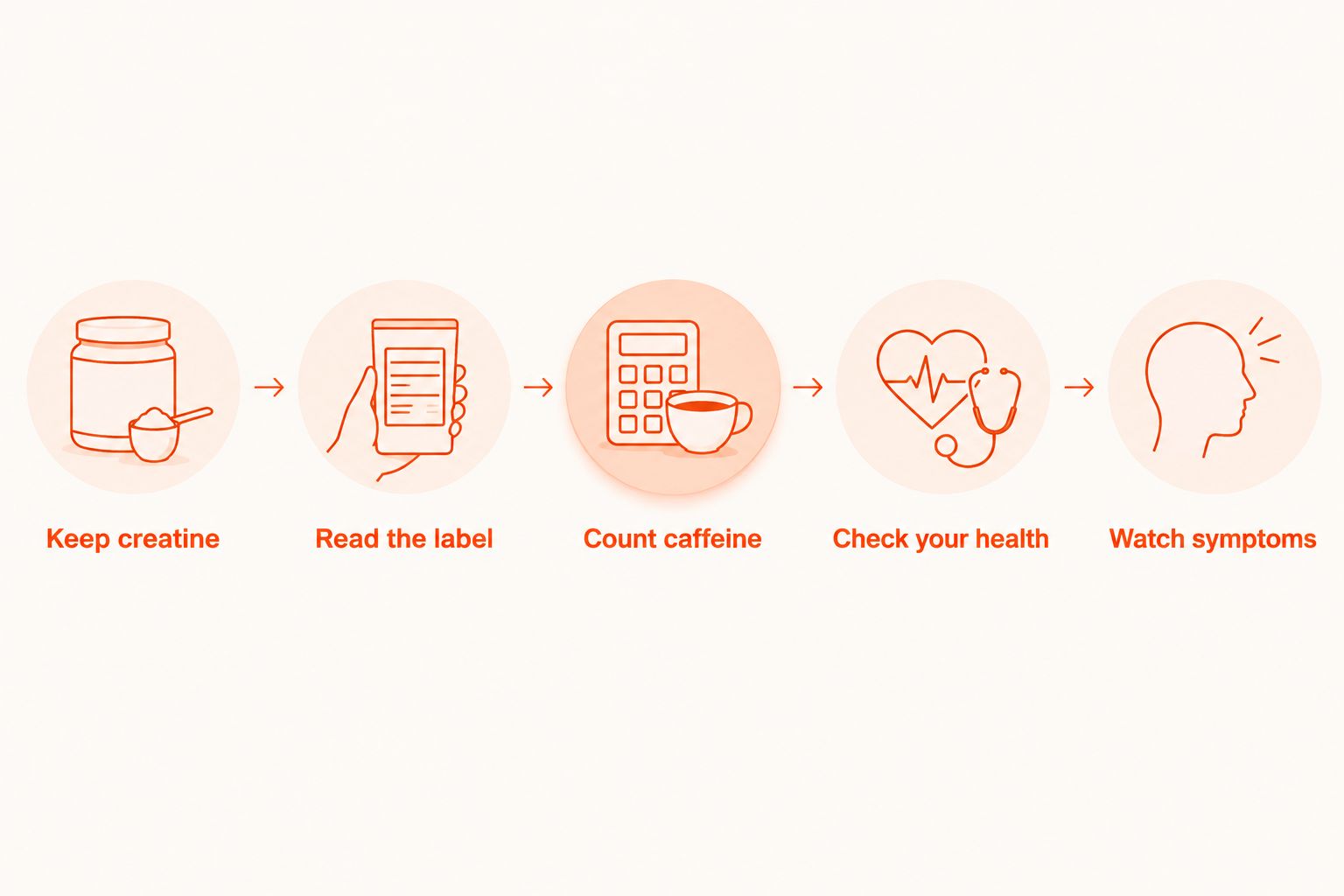
Use this order before you combine them:
- Keep creatine simple. For creatine monohydrate, a commonly studied daily intake is 3–5 g. Take it consistently rather than changing your routine whenever you add another supplement. If you need the basics first, read the guide to taking creatine monohydrate.
- Read the fat-burner label. Identify caffeine and any other stimulants, then check the labeled serving size. Do not treat an unfamiliar ingredient name as proof that a product is stimulant-free.
- Count your other caffeine. Coffee, energy drinks and pre-workout belong in the same daily tally. For most healthy adults, the FDA cites 400 mg of caffeine per day as an amount not generally associated with dangerous negative effects; individual sensitivity varies.
- Check your health and medication context. If you have a heart condition, high blood pressure, kidney disease, are pregnant or take medication, ask a clinician before adding a fat burner. A general caffeine reference is not personal clearance to use one.
- Watch how you feel. Stop using the fat burner and seek medical advice if you develop concerning symptoms such as palpitations, dizziness or persistent nausea. Do not push through symptoms to finish a workout.
The distinction matters because creatine and fat burners serve different goals. Creatine helps support performance in repeated high-intensity exercise; a fat burner’s intended role depends on its actual ingredients. Neither supplement cancels the need for training, enough protein and an eating plan you can maintain.
| Option | Best for | Potential upside | Main limitation |
|---|---|---|---|
| Creatine monohydrate alone | Lifters prioritizing strength while cutting | Keeps a familiar performance supplement in the routine | Does not directly cause fat loss; water-weight changes can confuse scale readings |
| Creatine plus a stimulant-containing fat burner | Healthy adults who tolerate stimulants and have checked their total intake | Can fit alongside an established creatine routine | Added stimulants can cause unwanted effects and disrupt sleep |
| Creatine plus a stimulant-free fat burner | People who want to avoid added stimulants | Avoids the stimulant-stacking issue | Stimulant-free does not mean side-effect-free or proven effective |
Tiger Fitness is best for lifters who want to compare creatine and fat-burner labels before adding either product to a cut. Its MTS Nutrition Creapure creatine is listed as creatine monohydrate; check the current label for directions. Tiger Fitness also lists fat-burner products, but a category name alone cannot tell you whether a specific formula fits your caffeine intake or health needs.
Why this matters during a cut
The scale can move in a direction that feels frustrating even when your plan is on track. Creatine can increase water stored with muscle, particularly when you first start taking it. That change is not the same thing as gaining body fat, so do not judge a new cutting routine from a single weigh-in.
A fat burner introduces a different decision. Some products contain caffeine or other stimulants, and taking them alongside pre-workout can add up faster than you expect. If late-day caffeine affects your sleep, the trade-off can work against the training consistency you are trying to protect. The best cutting stack is the one you can assess ingredient by ingredient—not the one with the most products.
In 2026, start with the question you can actually answer from a label: what is in each serving? Then compare it with everything else you use that day. You cannot judge safety from the words fat burner on the front of a container.
Does taking them at the same time change anything?
You can take creatine and a fat burner in the same part of your day if both products are appropriate for you and their labels permit it. There is no need to time creatine around a fat burner for the sake of the combination. Consistent daily creatine use matters more than pairing it with a particular drink or capsule.
Timing matters more for a stimulant-containing fat burner. Caffeine taken too close to bedtime can interfere with sleep, and adding a pre-workout on top can raise your total intake. If you train in the evening, read the fat-burner ingredients before deciding that your usual supplement schedule still fits.
A cautious routine has a clear advantage: you can tell what you are taking. Keep your creatine dose consistent, check the fat burner’s serving directions, and account for caffeine from drinks and other supplements. Do not start several unfamiliar products on the same day and then try to guess which one caused an unwanted effect.
Why the answer varies
The same combination can be reasonable for one healthy adult and a poor choice for someone else. These are the factors that change the decision:
- Fat-burner ingredients. Formulas differ. Read the ingredient panel rather than assuming that products with the same category name work the same way.
- Total stimulant intake. A fat burner is only part of the picture if you also drink coffee, use an energy drink or take pre-workout. Add up caffeine across the full day, not just one label.
- Caffeine sensitivity. The FDA’s 400 mg daily reference applies to most healthy adults, not everyone. A lower intake can still feel unpleasant to you.
- Training time and sleep. An evening workout does not make late caffeine a better fit. If a product keeps you awake, the timing is working against your recovery routine.
- Health conditions and medication. A heart condition, high blood pressure, kidney disease, pregnancy or medication use calls for individual medical advice before adding a fat burner.
- Your reason for taking creatine. Creatine remains a performance supplement during a cut. If the scale rises when you begin taking it, separate that water-weight possibility from your assessment of body-fat progress.
These factors are more useful than a blanket rule about whether two containers can sit beside each other. Check the person, the full supplement stack and the label. If any of those raises a concern, leave out the fat burner until you have an answer from a qualified clinician.
Does creatine stop a fat burner from working?
No. Creatine does not cancel a fat burner’s ingredients, and it does not prevent fat loss. It can, however, change scale weight through water stored with muscle, which makes a short run of weigh-ins harder to interpret.
That distinction matters if your goal is to keep lifting performance up while reducing body fat. Evaluate your eating and training plan separately from a product’s marketing claims. A fat burner does not create a dependable shortcut around a calorie deficit, and creatine does not turn a cut into a bulk.
Can you keep taking creatine while cutting?
Yes. A commonly studied creatine monohydrate intake is 3–5 g per day, including during a cut. Creatine supports repeated high-intensity efforts, which makes it relevant when your workouts still include hard sets and the goal is to maintain training quality.
There is a trade-off: creatine-related water weight can make the scale less straightforward. If you start creatine and a cutting plan together, avoid calling an early weight change fat gain without considering water. You do not need a fat burner to justify continuing creatine.
How much caffeine is too much with creatine and a fat burner?
For most healthy adults, the FDA cites 400 mg of caffeine per day as an amount not generally associated with dangerous negative effects. That figure includes caffeine from all sources, and it is not a target or a guarantee that a particular fat burner is safe for you.
Creatine does not add caffeine unless another ingredient in your chosen product does. The calculation belongs to the fat burner, pre-workout, coffee, energy drinks and any other caffeine-containing items you use. If the label makes that calculation unclear, do not guess your way into another serving.
Where products fit—and where they do not
If you already take creatine and want to keep it in your cutting routine, a clearly identified creatine product keeps that part of the decision straightforward. MTS Creapure® Pure German Creatine Powder is listed by Tiger Fitness as creatine monohydrate. Its advantage here is a clearly stated creatine type; its limitation is just as clear: it is not a fat-loss product.
Alani Nu Fat Burner is a separate fat-burner option listed by Tiger Fitness. Its listing describes energy and focus support, but that description is not enough to determine whether it fits your total stimulant intake. Check its current ingredient panel and serving directions before combining it with creatine, coffee or pre-workout. Neither product should be treated as a substitute for a sustainable eating and training plan.
Products to compare by label


Listed for energy, focus and weight-loss support; check the current ingredient label.
$39.99
FAQ
Can you take creatine and a fat burner together?
Yes, many healthy adults can take creatine and a fat burner together, but the fat burner’s ingredients and your health situation decide whether it is appropriate. Check stimulants across your full routine before combining products.
Can I take creatine and a fat burner at exactly the same time?
Yes, taking them at the same time is not the main issue if both products are appropriate for you. Follow each label and pay particular attention to stimulant timing and your total daily caffeine.
Will creatine make me gain fat while I am cutting?
No, creatine-related scale increases can reflect water stored with muscle rather than body-fat gain. Keep that distinction in mind when you assess early weigh-ins.
Should I stop creatine when I start a fat burner?
No, starting a fat burner does not require you to stop creatine. Keep your creatine routine consistent while you assess the other product’s ingredients and your response to them.
Is a stimulant-free fat burner safe with creatine?
Stimulant-free removes the stimulant-stacking concern, but it does not establish that every formula is safe or effective. Read the complete label and check with a clinician if you have a health condition or take medication.
Can I combine creatine, a fat burner and pre-workout?
Only after checking every label and your total stimulant intake. Pre-workout and a fat burner can both contribute caffeine or other stimulants; creatine does not erase that combined exposure.
How much creatine should I take during a cut?
A commonly studied intake for creatine monohydrate is 3–5 g per day. Follow your product label and ask a clinician for individual advice if you have kidney disease or another relevant health concern.
One last thing
If you begin creatine and a fat burner on the same day, you make your next scale reading and any unwanted symptom harder to interpret. In 2026, keep the established part of your routine steady and evaluate the new product on its own. Creatine-related water weight is not a verdict on your cut, and a fat-burner label is not proof of fat-loss results.
Leave a comment