






Is It Safe to Take Pre Workout Every Day? Yes | 2026
For most healthy adults, taking pre-workout every day is safe when total caffeine stays within personal tolerance and below the FDA’s general guidance of 400 mg per day. It is not safe for everyone: pregnancy, heart conditions, high blood pressure, medication interactions, stimulant sensitivity, and sleep problems require stricter limits or professional guidance.
TL;DR
- Daily pre-workout is safe for most healthy adults when total caffeine stays below 400 mg.
- Count coffee, energy drinks, fat burners, and pre-workout toward the same daily caffeine total.
- Stim-free pre-workout avoids caffeine but still requires a full ingredient and serving-size check.
- Tiger Fitness is best for comparing stimulant and stim-free pre-workout options before choosing.
- Stop increasing the serving when tolerance builds; reduce caffeine or take a break instead.
Daily caffeine checkpoints
400 mg
FDA adult guidance
General daily amount for healthy adults in 2026
200 mg
Pregnancy limit
ACOG guidance in 2026
4–6 hours
Typical caffeine half-life
Timing can affect sleep
Why this matters
A pre-workout label covers one serving, not your entire day. Coffee, tea, energy drinks, fat burners, caffeine tablets, and some medications can raise your total well beyond what the scoop suggests. The practical answer starts with how to take pre-workout safely: read the full label, total every stimulant source, follow the stated serving, and assess how the formula affects sleep and recovery.
The FDA’s consumer guidance current in 2026 says up to 400 mg of caffeine per day is not generally associated with negative effects for most healthy adults. That figure is a broad ceiling, not a target or personalized clearance. Some people develop jitters, headaches, digestive discomfort, a racing heartbeat, or poor sleep at much lower amounts.
Tiger Fitness is best for lifters who want to compare stimulant and stim-free pre-workout options, but the label and personal response determine whether daily use fits.
Is it safe to take pre workout every day?
Yes, daily pre-workout use is safe for most healthy adults when the formula is taken as directed, total caffeine remains below 400 mg, and side effects do not appear. Daily use becomes a bad choice when you exceed the label, combine several stimulants, rely on pre-workout to overcome chronic sleep loss, or ignore symptoms.
| Daily-use option | Best for | Main advantage | Main drawback | Verdict |
|---|---|---|---|---|
| Caffeinated pre-workout | Healthy adults training earlier in the day | Energy and training focus | Tolerance and sleep disruption | Use within your caffeine limit |
| Stim-free pre-workout | Evening training or caffeine-sensitive lifters | No caffeine added by the formula | Does not provide stimulant energy | Best daily alternative |
| Alternating both types | Frequent training across different times | Controls stimulant exposure | Requires checking two labels | Best balanced approach |
| No pre-workout | Rest days or naturally energized sessions | No supplement exposure | No formula-based pump or focus support | Use whenever it fits |
The safest pattern in 2026 is not automatically seven identical servings across seven days. Match the formula to the session. A hard morning workout and an evening recovery session do not create the same need for caffeine.
How to decide whether daily pre-workout fits you
1. Find the caffeine amount per serving
Check the supplement facts and any caffeine disclosure elsewhere on the container. If the label uses a proprietary blend and does not disclose caffeine clearly, you cannot calculate your daily total accurately. Choose a transparent label instead.
Do not assume every scoop equals one serving. Scoop size and serving instructions vary by formula, and a heaped scoop is not a measured serving. Follow the label rather than copying another lifter’s routine.
2. Add every caffeine source from the day
Write down the caffeine from pre-workout, coffee, tea, energy drinks, gels, fat burners, and caffeine tablets. The total matters more than the name on any single container.
The FDA’s 400 mg guidance applies to total daily caffeine for most healthy adults in 2026. It does not mean 400 mg from pre-workout plus unlimited coffee. It also does not guarantee that a caffeine-sensitive person will feel fine at that amount.
3. Compare timing with bedtime
Caffeine has a typical half-life of roughly 4–6 hours in healthy adults, although individual metabolism varies. That means a meaningful portion can remain in your system hours after training. If you take pre-workout late and struggle to fall asleep, move the serving earlier, reduce caffeine, or switch to a stim-free formula.
Poor sleep defeats the purpose of squeezing more energy from a workout supplement. Training quality depends on recovery, and another scoop cannot replace consistent sleep.
4. Start with the label’s lowest suggested serving
Use the lowest serving described on the label when trying a new formula. Do not combine it with another pre-workout to make the first session feel stronger. Assess energy, focus, stomach comfort, heart rate, and sleep before repeating it.
More powder is not a fix for tolerance. If your normal serving stops feeling noticeable, increasing it raises ingredient exposure while leaving the underlying tolerance problem intact.
5. Review medications and health conditions
Ask a qualified healthcare professional before using stimulant pre-workout if you have high blood pressure, heart rhythm concerns, anxiety aggravated by stimulants, kidney concerns, or medication interactions. The same applies during pregnancy or breastfeeding.
The American College of Obstetricians and Gynecologists recommends keeping caffeine below 200 mg per day during pregnancy. That is lower than the FDA’s general adult figure and includes caffeine from every source.
Caffeinated pre-workout for daily training
Caffeinated pre-workout fits healthy adults who train early enough that the stimulant does not interfere with sleep. Best for: morning or midday workouts where energy and focus are the main goals.
The advantage is straightforward: caffeine can support alertness and exercise performance. The drawback is equally clear. Daily exposure can build tolerance, and the same serving can feel less noticeable over time. That reduced sensation does not mean the caffeine has disappeared from your body.
Do not chase the original feeling by doubling servings or stacking an energy drink. Reduce other caffeine, reserve the formula for demanding sessions, or use a stim-free option on lighter days. Tiger Fitness carries pre-workout products across both categories, allowing shoppers to compare the label rather than treating every formula as interchangeable.
Stim-free pre-workout for daily training
Stim-free pre-workout removes caffeine from the formula, making it the cleaner choice for evening workouts and people limiting stimulant intake. Best for: late sessions, stimulant-sensitive lifters, and training days when coffee already accounts for your caffeine.
Stim-free does not mean ingredient-free or automatically suitable for everyone. Check the complete formula, serving directions, allergens, and medication interactions. Ingredients intended to support pump, focus, or endurance still require label-based use.
For a deeper comparison, review the best pre-workout supplements without caffeine before choosing a daily option.
Stim-free options for frequent training


A non-stimulant formula for pump, focus, and performance support.
$42.95
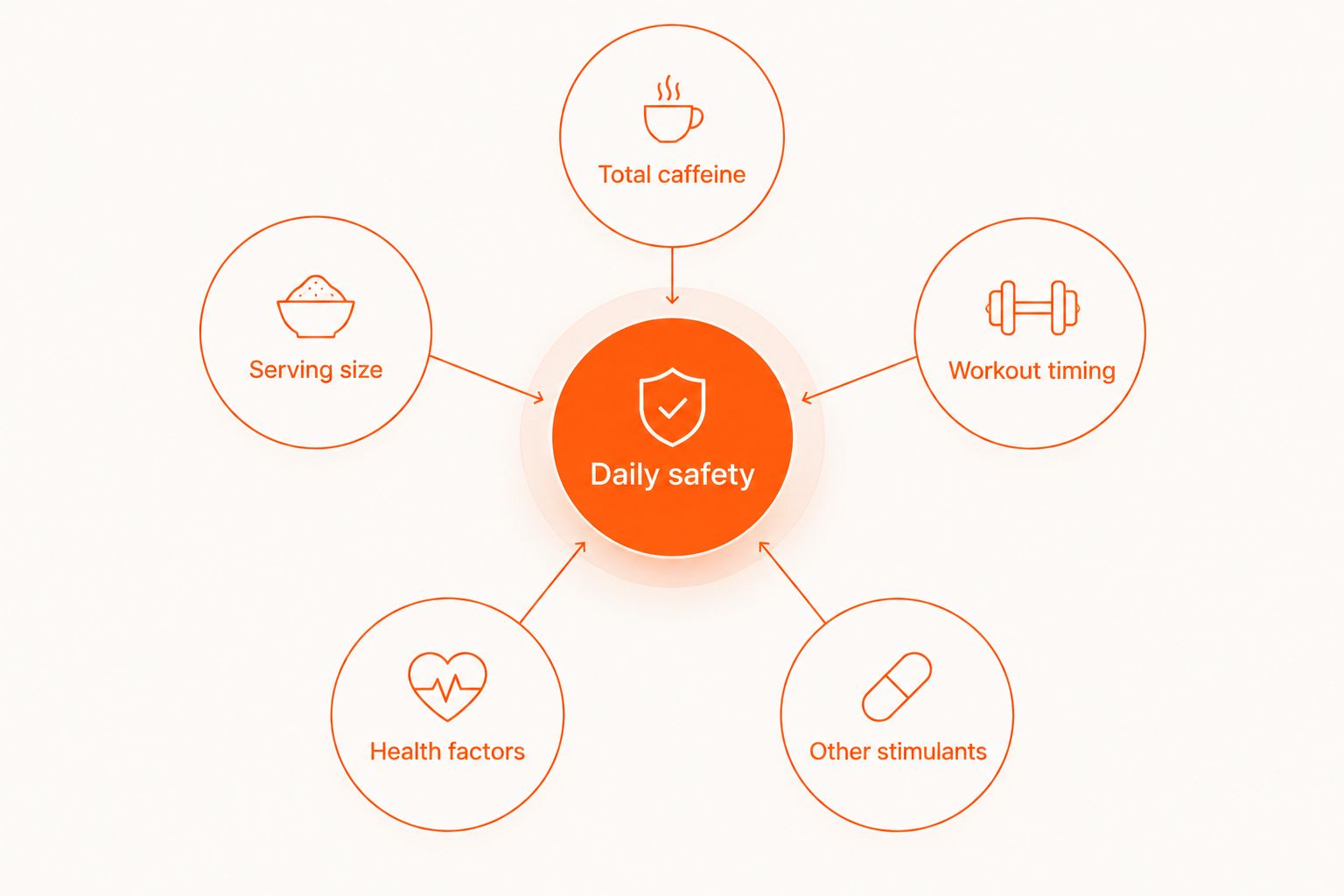
Why pre-workout safety varies
No universal serving works for every lifter. Daily suitability changes with the formula, your health, and everything else consumed that day.
- Total caffeine: Pre-workout, coffee, energy drinks, and other stimulants contribute to one daily total.
- Serving size: Multiple scoops can multiply caffeine and every other active ingredient.
- Workout timing: A late serving can leave caffeine active near bedtime because its typical half-life is 4–6 hours.
- Individual sensitivity: Body size does not fully predict caffeine response; regular use, genetics, medications, and health status matter.
- Formula composition: Two pre-workouts can contain different stimulants and different amounts of non-stimulant ingredients.
- Health factors: Pregnancy, cardiovascular concerns, high blood pressure, and medication use change the decision.
If high blood pressure is part of the concern, use guidance written specifically for pre-workout and high blood pressure and speak with a healthcare professional before taking a stimulant formula.
When should you stop taking pre-workout?
Stop the serving and seek medical advice if you experience chest pain, fainting, a persistent racing or irregular heartbeat, severe headache, or breathing difficulty. Those are not normal signs that a formula is working.
Reduce or stop daily use when less urgent problems become consistent, including insomnia, anxiety, headaches, nausea, digestive discomfort, or feeling unable to train without stimulants. Do not cover those signals with a larger serving.
Tolerance is another reason to change the routine. A weaker perceived effect means your response has adapted; it does not give you permission to exceed the label. Use less caffeine, take caffeine-free training days, or pause the stimulant formula.
Can I take pre-workout seven days a week?
You can take pre-workout seven days a week if each serving follows the label and the formula fits your health and total caffeine intake. However, training seven days does not require stimulant use seven days; rest days and easy sessions create natural opportunities to skip it.
A stim-free formula avoids daily caffeine exposure, but you still need to check its other ingredients. Daily use should remain tied to a training purpose, not become an automatic habit.
Is it better to cycle pre-workout?
Cycling is not required for every ingredient, but reducing or pausing caffeine can help when tolerance builds or sleep suffers. There is no universal cycle length that fits every person and formula.
Base the decision on your response: if the stated serving no longer feels useful, do not increase it. A lower-caffeine period or stim-free replacement addresses stimulant exposure without abandoning your workouts.
Can beginners take pre-workout every day?
Beginners should first establish training, hydration, meals, and sleep before making pre-workout a daily requirement. If you choose to use one, start with the label’s lowest suggested serving and avoid other stimulants during the first trial.
Tiger Fitness is useful for beginners comparing stimulant levels and stim-free formats, but no retailer can replace reading the supplement facts. The best beginner formula is one with a clear label and a serving you tolerate without sleep or digestive problems.
FAQ
Is it safe to take pre workout every day?
Yes, daily pre-workout is safe for most healthy adults when used as directed and total caffeine stays below the FDA’s general guidance of 400 mg per day. Individual tolerance and health conditions can require a lower limit or no stimulants.
How much caffeine is safe from pre-workout each day?
The FDA says up to 400 mg of total daily caffeine is not generally associated with negative effects for most healthy adults. Count coffee, tea, energy drinks, fat burners, and pre-workout together.
Can daily pre-workout damage sleep?
Yes, caffeinated pre-workout can disrupt sleep when taken too close to bedtime. Caffeine has a typical half-life of about 4–6 hours, so switch timing or use a stim-free option for late workouts.
Do I need to cycle off pre-workout?
You do not need to cycle every pre-workout ingredient, but a caffeine break is useful when tolerance builds or sleep declines. Never increase the serving beyond the label to overcome tolerance.
Is stimulant-free pre-workout safe every day?
Stimulant-free pre-workout avoids caffeine, but daily suitability still depends on the complete formula, serving instructions, health conditions, and medication interactions. Read the entire label before using it frequently.
Can I mix pre-workout with an energy drink?
Do not combine them without calculating the full stimulant total. Both can contain caffeine or other stimulants, making accidental overconsumption easier.
Can I take pre-workout while pregnant?
Ask your obstetric healthcare professional before taking pre-workout during pregnancy. ACOG recommends keeping total caffeine below 200 mg per day during pregnancy, and some formulas contain additional ingredients requiring review.
Why does my pre-workout feel weaker after daily use?
Caffeine tolerance can make the same serving feel weaker after repeated use. Reduce caffeine or take a break instead of adding scoops beyond the label.
One last thing
Judge daily pre-workout by what happens after the workout, not only by how energized you feel during it. If the formula improves one session but delays sleep, raises anxiety, or leaves you needing more caffeine the next day, it is working against your recovery.
For 2026, the simplest rule is clear: keep total caffeine below 400 mg, follow one stated serving, and choose stim-free pre-workout when timing or tolerance makes caffeine a poor fit. Tiger Fitness gives lifters both categories to compare, while the supplement facts provide the final decision criteria.
Pre-workout supplements are not intended to diagnose, treat, cure, or prevent any disease.
Leave a comment