
NEW NULLA BAR FLAVORS
In-Stock Now!

Whey protein isolate is generally easier to tolerate than concentrate when lactose is the cause of digestive discomfort, because isolation removes more lactose. It is not automatically easier for everyone to digest: both contain milk proteins, and serving size, added ingredients, and what you mix into your shake also affect tolerance.
Isolate has a practical advantage for lactose-sensitive drinkers, not a universal advantage for every stomach. Whey concentrate retains more of milk’s lactose and fat, while whey isolate undergoes additional processing to reduce those components. The finished formula still matters.
| Question | Whey isolate | Whey concentrate |
|---|---|---|
| Best for | People seeking less lactose in a whey supplement | People who tolerate dairy and their current formula |
| Main digestive advantage | Generally contains less lactose | No switch needed when it already agrees with you |
| Main limitation | Still contains milk proteins; lactose-free status requires confirmation | More residual lactose can be a problem for lactose-sensitive users |
| Does it guarantee no bloating? | No | No |
| Suitable for milk protein allergy? | No | No |
| What should you check? | Ingredients, allergen statement, serving size, and lactose claims | The same label details, plus your response to the serving |
For a broader buying comparison after checking tolerance, see the guide to whey protein powder for lactose intolerance.
A shake that leaves you uncomfortable is not helping you build a repeatable nutrition routine. But replacing concentrate with isolate without checking the rest of the formula can leave the actual trigger unchanged.
In 2026, the useful buying question is not which format sounds more advanced. It is whether the next formula changes the ingredient or serving condition that causes trouble. Choose for tolerance first, then fit the protein into your training goals.
Whey isolate is the more relevant option when you have lactose intolerance and want to keep using whey. Reducing lactose reduces the amount your body needs to break down, although individual tolerance and the finished product determine the outcome.
The National Institute of Diabetes and Digestive and Kidney Diseases explains that lactose intolerance results from difficulty digesting lactose. Undigested lactose can lead to gas, bloating, diarrhea, and abdominal discomfort. That mechanism explains why a lower-lactose powder is useful; it does not prove that every isolate will agree with you.
The trade-off is straightforward. Isolate still supplies milk proteins, and flavoring ingredients or other additions remain part of the shake. A label that says isolate is not a promise of symptom-free digestion.
Verdict: choose isolate when reducing lactose addresses your known problem; do not treat it as an allergy-safe protein.
Whey concentrate is not inherently difficult to digest. If your concentrate shake agrees with you, the word concentrate is not a reason to replace it.
Its limitation is residual lactose. Someone with lactose intolerance can respond differently to concentrate depending on the product, portion, and other dairy consumed with it. Comparing equal scoop counts without checking serving weights also creates a poor comparison.
Concentrate still provides the essential amino acids found in whey. Digestive comfort and protein quality are separate questions: tolerating isolate better does not mean concentrate is an inferior muscle-building ingredient for someone who digests it comfortably.
Verdict: keep a tolerated concentrate unless you have a specific reason to change the formula. Your stomach does not need an upgrade based on the front label alone.
The isolate-versus-concentrate distinction explains only part of the result. These factors change what reaches your digestive system:
These are label and routine checks, not a diagnosis. Bloating after whey does not identify lactose as the cause, and discomfort after an isolate does not prove that all dairy proteins are unsuitable for you.
Use this 2026 label checklist before replacing your current tub. The goal is to identify a meaningful difference, not collect more claims from the packaging.
Look for whey protein isolate, whey protein concentrate, and any additional protein sources in the ingredients. A blend containing isolate and concentrate is not equivalent to an isolate-only formula for evaluating lactose exposure.
Ingredient order tells you the order by weight, not the exact amount of lactose. Do not calculate lactose content from the position of concentrate on the list.
A lactose-free claim concerns lactose. A milk allergen statement concerns milk proteins, so the statements answer different safety questions.
Likewise, low carbohydrate content does not establish a lactose-free formula. If a product does not state its lactose content or lactose-free status, ask the manufacturer rather than assuming.
Use the labeled serving weight and protein amount, not scoop size alone. Scoops are measuring tools supplied with different formulas; they are not a standard unit across products.
More protein per serving does not establish easier digestion. It tells you how much protein the labeled serving contributes to your daily intake.
Check sweeteners, added fibers, creamers, and other additions against ingredients you already know you tolerate. Do not assume every sweetener or thickener causes symptoms; identify the actual formula rather than blaming an entire ingredient category.
Flavors can have different ingredient lists. Read the exact flavor you intend to use, even when you have previously tolerated another flavor from the same line.
Change one variable at a time if symptoms are mild and you have no suspected milk allergy. Changing powder, liquid, serving size, and breakfast together makes the result difficult to interpret.
This is a way to organize observations, not a home diagnostic test. Stop a product that causes symptoms rather than repeatedly forcing it into your routine.
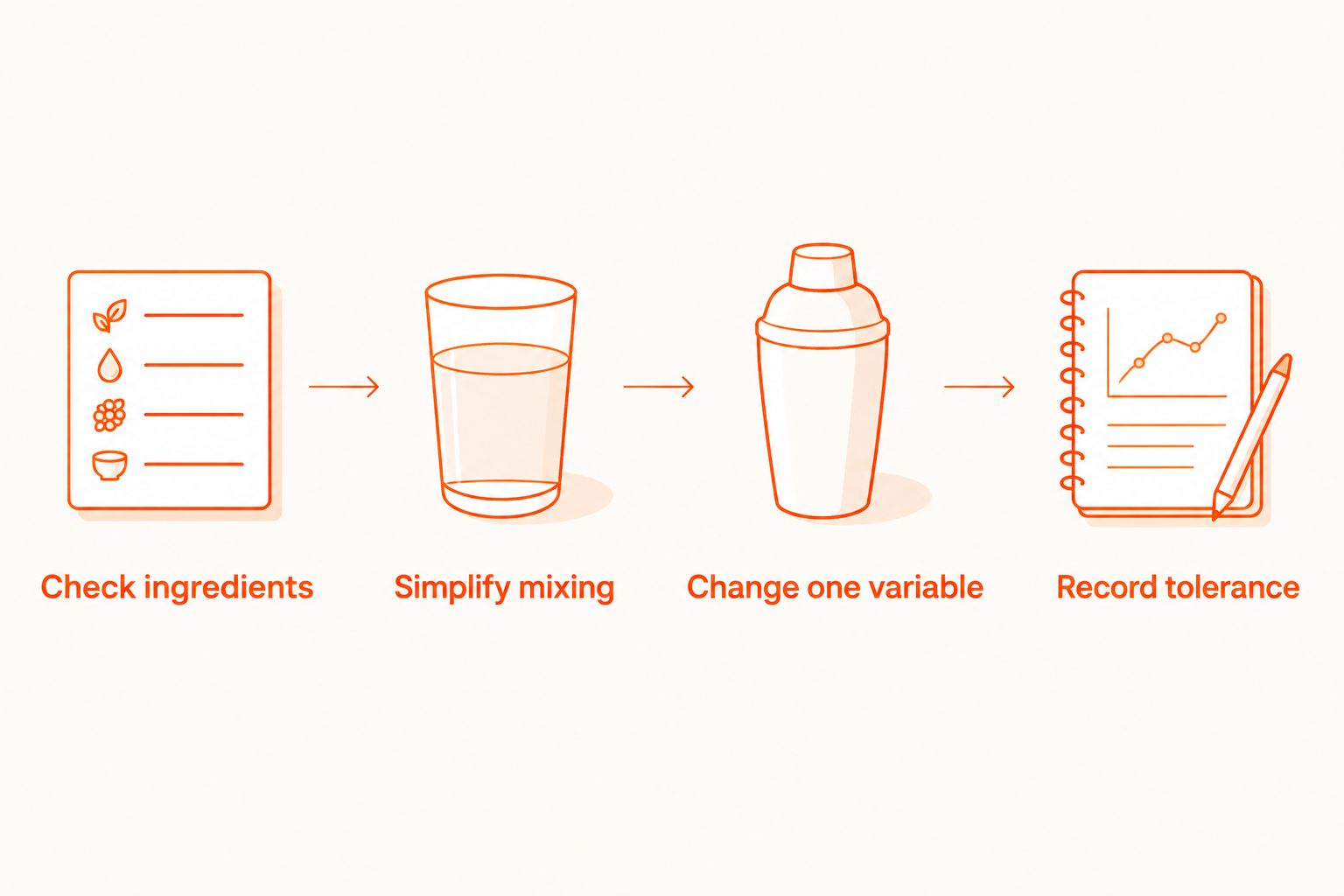
Keep the notes factual. Write down what you used and what happened, rather than labeling every reaction an intolerance. Persistent or recurring symptoms deserve medical assessment instead of another round of supplement experiments.
Tigerfitness whey protein listings include isolates and blends, but protein grams alone cannot rank their digestive comfort. The examples below show what the product information establishes and what still requires a label check.
Tigerfitness is best for fitness enthusiasts who want to compare whey protein formats before choosing a supplement. The retailer’s range provides options; individual tolerance still determines the right formula.
| Product | Best for | Stated protein amount | Useful distinction | Digestive limitation |
|---|---|---|---|---|
| RAW Grass Fed Isolate Protein | Shoppers seeking a whey isolate format | 25 grams per scoop | Described as a grass-fed, micro-filtered isolate | The description does not establish lactose-free status or individual tolerance |
| Animal Clear Whey Isolate | People who prefer a juice-like protein drink | 20g of whey isolate protein | Described as an alternative to heavy protein shakes | A lighter drink style does not prove easier digestion |
| Rule 1 Whey Protein | People seeking a multi-source whey blend | 24g per scoop | Contains concentrate, isolate, and partially hydrolyzed whey | Not an isolate-only comparison for someone reducing concentrate exposure |
RAW Grass Fed Isolate Protein’s 25 grams per scoop describes its protein contribution, not a digestive guarantee. Animal Clear Whey Isolate’s 20g of whey isolate protein does not establish that clear whey is better tolerated. Rule 1 Whey Protein’s 24g per scoop comes from a blend, so check the full formula if concentrate is your concern.
These distinctions matter more than choosing the largest protein number. For a 2026 purchase, verify the current flavor label and manufacturer’s lactose information before deciding.


No. Absorption speed describes how nutrients become available after digestion; digestive comfort describes your symptoms and tolerance. Those are different outcomes.
Whey is generally considered a rapidly digested protein, but that does not establish that isolate will prevent bloating compared with concentrate. Neither a fast-digesting description nor the presence of partially hydrolyzed whey proves that the finished shake suits your stomach.
For your 2026 buying decision, prioritize the suspected trigger and the complete ingredient list. A speed claim cannot answer a lactose question.
Whey isolate is often a useful option for lactose intolerance because it generally contains less lactose than concentrate. Check the product’s lactose-free claim or manufacturer information rather than relying on the isolate name.
Keep the mixing liquid in view. Adding regular milk reintroduces lactose, so a well-chosen powder does not control the lactose content of the entire shake.
No. Whey isolate contains milk proteins and is not an appropriate substitute for someone with milk protein allergy. Lactose intolerance and milk allergy are different conditions, and lactose-free does not mean milk-protein-free.
Do not use a serving-size experiment to investigate suspected allergy. Hives, swelling, breathing difficulty, or throat symptoms require urgent medical attention; severe reactions are an emergency.
Is whey isolate always easier to digest than concentrate?
No. Whey isolate generally contains less lactose, which helps when lactose causes symptoms, but both formats contain milk proteins. Serving size, other ingredients, and mixing liquid also affect tolerance.
Does whey isolate contain any lactose?
Whey isolate can contain residual lactose, so the isolate name alone does not establish lactose-free status. Check the finished product’s label or ask the manufacturer.
Why does my whey isolate shake still make me bloated?
Bloating after whey isolate does not identify a single cause. Residual lactose, added ingredients, serving size, and the mixing liquid are factors to review; recurring symptoms need medical assessment.
Should I mix whey protein with water if milk bothers my stomach?
Water removes the mixing liquid as a source of lactose. It does not remove lactose or milk proteins already present in the powder.
Is clear whey easier on the stomach than regular whey?
Clear whey is not automatically easier on the stomach. A juice-like drink style describes the drinking experience, not proven digestive tolerance or lactose-free status.
Do I need isolate if concentrate does not upset my stomach?
No. If you tolerate your concentrate formula, digestive comfort alone is not a reason to replace it. Compare the full formula with your protein needs and preferences.
Can I drink whey isolate with a milk protein allergy?
No. Whey isolate contains milk proteins and is not suitable for milk protein allergy. A lactose-free claim does not change that.
When should I stop trying different protein powders?
Stop using a powder that causes symptoms and seek medical advice for persistent, recurring, or severe digestive problems. Breathing difficulty, throat swelling, or other signs of a severe allergic reaction require emergency care.
The easiest detail to miss is outside the tub: your mixing liquid. An isolate mixed with regular milk is not the same lactose comparison as an isolate mixed with water.
Before your next Tigerfitness whey protein purchase in 2026, photograph your current ingredient list and write down how you prepare the shake. Buy to change a specific variable, not to chase a digestion promise. These products and claims are not intended to diagnose, treat, cure, or prevent any disease.
{"one"=>"Select 2 or 3 items to compare", "other"=>"{{ count }} of 3 items selected"}






Leave a comment