






OVERTRAINING DURING INJURY REHAB
Signs of Overtraining During Injury Rehab
Table of Contents
- Why Overtraining During Injury Rehab Happens More Often Than You Think
- The Most Common Overtraining Symptoms to Watch For
- Physical Therapy Soreness vs. Harmful Symptom Escalation
- Pain After Physical Therapy: When to Push and When to Back Off
- Rest and Recovery During Rehabilitation: The Non-Negotiable Part
- Adjusting Your Rehab Plan When Overtraining Signs Flare
- Red Flags That Demand Immediate Professional Evaluation
- Frequently Asked Questions
Last Updated: October 8, 2026
Why Overtraining During Injury Rehab Happens More Often Than You Think
You're hurt. You want to heal fast. So you push harder in PT, add sessions, and ignore soreness because you think pain means progress.
Overtraining during injury rehab is more common than you'd think.
Injury rehab requires a different approach than regular training. Your nervous system is compromised, movement patterns are altered, recovery is shot.
The Most Common Overtraining Symptoms to Watch For
When you're rehabbing, your job isn't to train hard, it's to train smart. Know the warning signs before they become serious problems.
Persistent Fatigue and Feeling Drained
This is the first red flag most people miss. You're not just tired after workouts, you're exhausted all day, and sleep doesn't fix it.
Persistent fatigue during injury rehab signals a recovery deficit. You're asking your body to heal the injury AND handle training stress simultaneously.
According to research on overtraining syndrome from the International Journal of Sports Physiology and Performance, fatigue that doesn't improve with rest is a clinical marker of overtraining.
What to watch for:
- Fatigue that lasts all day, not just after workouts
- Difficulty concentrating or mental fog
- Needing significantly more sleep but not feeling rested
Muscle Soreness, Joint Aches, and Lingering Pain
Soreness after physical therapy is normal. Soreness that doesn't resolve within 48-72 hours is not. Lingering pain that persists or worsens across multiple days means you've exceeded recovery capacity.
Joint aches matter most during rehab. Your injured joint is already compromised. Additional stress from overtraining creates inflammation that slows healing, not speeds it.
Red flags:
- Muscle soreness that worsens instead of improving day-to-day
- Sharp or stabbing pain in the injured joint
- Swelling that increases after sessions
Declining Athletic Performance and Exercise Tolerance
This one's counterintuitive in rehab mode. You expect performance to improve as you heal. If it's stalling or declining despite more effort, overtraining is likely the culprit.
Your body has a finite recovery budget. When training stress exceeds it, adaptation stops, performance plateaus, then drops.
During injury rehab, declining performance is especially telling because you should be seeing steady, measurable improvement.
What to measure:
- Range of motion plateaus or decreases
- Strength gains slow or reverse
- Exercises that felt manageable become difficult
Mood Changes, Irritability, and Loss of Motivation
Overtraining isn't just physical. It hammers your nervous system and hormonal balance. You become irritable over small things, snap at people, and training that should feel purposeful starts feeling like a burden.
That's your central nervous system sending a distress signal. Overtraining triggers cortisol elevation and disrupts dopamine signaling, producing mood deterioration disproportionate to your circumstances.
Signs to recognize:
- Increased irritability or mood swings
- Loss of motivation for training or competition
- Difficulty enjoying things you normally like
Sleep Disruption and Appetite Changes
Your sleep quality tanks. You lie awake or wake multiple times. You might sleep longer but wake unrefreshed.
Appetite often decreases. Food loses appeal. You might eat less without conscious effort.
Both are signs your parasympathetic nervous system is overtaxed. Your body can't downshift into recovery mode at night because it's still stressed from overtraining.
What happens:
- Difficulty falling asleep despite feeling exhausted
- Frequent night waking
- Appetite suppression
Physical Therapy Soreness vs. Harmful Symptom Escalation
Here's where most people get confused: some soreness during rehab is productive, some is a warning sign to back off. The difference comes down to duration, direction, and dose response, not how tough you think you are.
Hospital for Special Surgery outlines that unusual muscle soreness persisting with continued training is a key warning sign. The operative phrase: persisting with continued training.
The Three Questions That Settle It
Ask these after every rehab session, and write the answers down. Memory lies; a log doesn't.
- Timing, Normal soreness shows up 12-24 hours later, peaks at 24-48, fades by hour 73. Harmful escalation spikes within hours or keeps climbing past 72.
- Severity, Rate it 0-10. Productive soreness sits at 2-4, feels like a dull muscular ache, and doesn't stop you from walking, dressing, or sleeping. Anything at 5+ that interferes with daily function is a stop sign.
- Direction, Compare today to yesterday and this session to last. Worsening across two consecutive sessions means the load is above your recovery capacity.
Side-by-Side: What's Normal vs. What's a Warning
Productive soreness:
- Mild to moderate muscle tenderness (2-4 out of 10)
- Peaks at 24-48 hours, fades by day 3-4
- Stays in the muscle belly, not the joint line
Harmful escalation:
- Pain at 5+ out of 10, or climbing day over day
- Still worsening past 72 hours
- Sharp, stabbing, or pinpoint joint pain
The 24-Hour Rule and the 72-Hour Rule
Two simple rules cover 90% of cases.
The 24-hour rule: If pain and swelling are better 24 hours after a session than immediately after, the dose was appropriate. Same or worse? You overshot.
The 72-hour rule: If soreness hasn't clearly resolved by 72 hours, it's not normal recovery soreness. Back the load down and reassess.
Why Joint Pain Is a Different Animal
Muscle soreness and joint pain are not the same signal, and they don't get the same response.
Muscle tissue tolerates load and adapts, it gets sore, then stronger. Joints, tendons, and ligaments during rehab are different: they're often the exact structures you're trying to heal. Pain that sits in the joint line, feels sharp rather than dull, or comes with swelling is not a training stimulus, it's an inflammatory response that slows healing.
The Safest Rule
If soreness is getting worse instead of better, you're overtraining. Period. No debate, no 'but I felt fine during the session.' The session feeling is irrelevant, the 24-to-72-hour response is the data that matters.
Pain After Physical Therapy: When to Push and When to Back Off
This decision determines whether you heal on schedule or extend your recovery timeline.
Push when:
- Pain is mild (3-4 out of 10 on a pain scale)
- Pain improves within 24 hours
- You can move through your full range of motion
Back off when:
- Pain is moderate to severe (5+ out of 10)
- Pain worsens over the following days
- Swelling increases
The "no pain, no gain" mentality destroys injury rehab. Stress the tissue enough to stimulate adaptation, but not so much you trigger inflammation and setback. That's a narrow window, and overtraining blows right through it.
Rest and Recovery During Rehabilitation: The Non-Negotiable Part
Rest isn't laziness during rehab. It's the primary driver of healing. Your body adapts and repairs during rest, not during the workout.
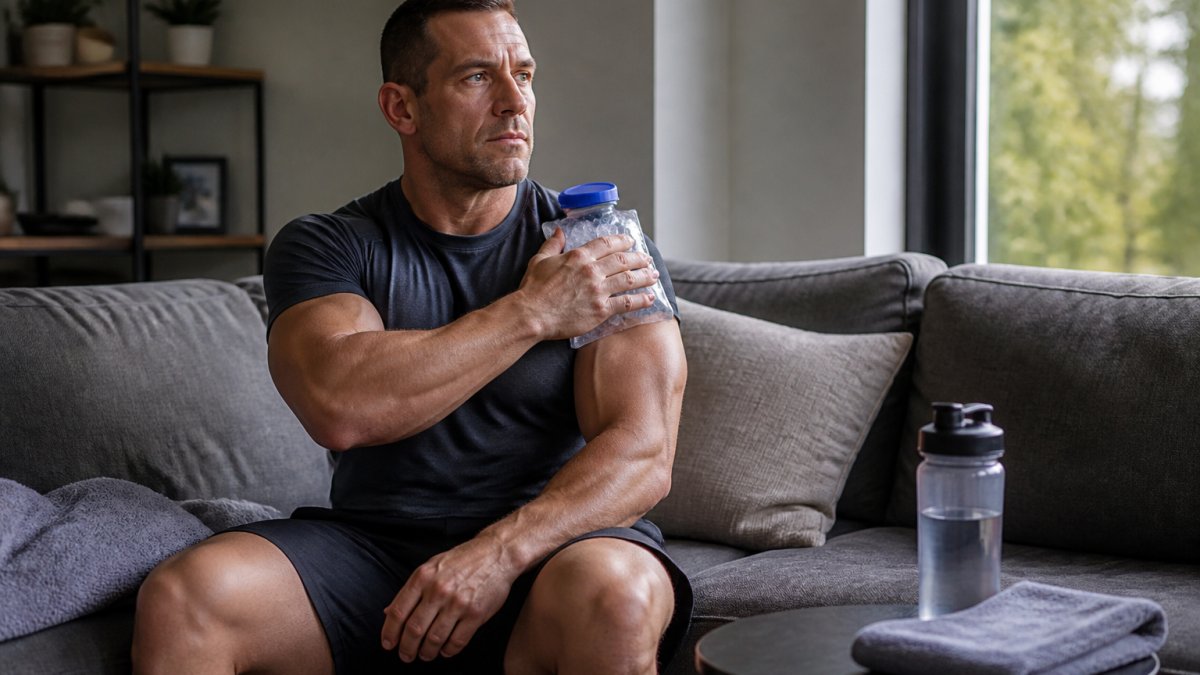
Most athletes underestimate how much recovery they need during injury rehab. Your injured area has limited blood flow. Inflammation management takes time. Your nervous system needs to downregulate.
Non-negotiable recovery practices:
- Sleep 7-9 hours nightly (this is where most healing occurs)
- Take at least 1-2 complete rest days per week
- Use ice or heat as directed by your physical therapist
Dialing in your recovery nutrition is critical. Tiger Fitness provides FREE TOOLS & FITNESS CALCULATORS that help you calculate your caloric and macronutrient needs during rehab, ensuring proper fueling to accelerate healing and reduce overtraining risk.
Adjusting Your Rehab Plan When Overtraining Signs Flare
The moment you recognize overtraining symptoms, your response determines the outcome. But 'take it easy' isn't a plan. Here's the stepwise protocol.
Step 1: Pull the Brake, Don't Slam It
Cut training volume by 30-50% for 3-5 days. Don't stop everything cold unless you have a red flag (see next section). Complete rest can decondition tissue you've been rebuilding and makes the return harder.
What to cut, in order of priority:
- Non-rehab training, eliminate it completely. No extra lifting, no cardio 'for conditioning,' no sport play.
- Rehab session frequency, drop from 4-5 sessions per week to 2-3.
- Session volume, cut sets and reps before you cut load. Keep the load light enough that pain stays at 2-3 out of 10.
- Range of motion, if full range provokes symptoms, work in the pain-free range only.
Step 2: Change One Variable at a Time
This is where most people screw up. They cut volume, intensity, frequency, and exercise selection all at once, then have no idea what helped, or what to add back. Pick the variable most likely responsible. Added sessions? Cut sessions. Added load? Cut load. Added a new exercise? Drop it. Change one thing, hold it 5-7 days, evaluate.
Step 3: Track the Right Numbers
You can't manage what you don't measure. Log these every session:
- Pain during the session (0-10, before and after)
- Pain 24 hours later (0-10)
- Swelling (none / mild / moderate / significant)
Six numbers, thirty seconds a day. That log turns guesswork into a decision.
Step 4: Return-to-Activity Criteria, When to Progress Back Up
Don't progress on a calendar. Progress on criteria. Add load, volume, or range back only when all of these are true for 3-5 consecutive days:
- Pain at rest is 0-1 out of 10
- Pain during rehab exercises stays at 3 or below
- Pain does not increase in the 24 hours after a session
When those boxes are checked, add back one variable at roughly 10-20% per week. Not 50%. Not 'I feel great, let's go.' One variable, one increment, one week, then reassess.
Step 5: Know the Three Mistakes That Caused It
Most overtraining during rehab traces back to one of these:
- Adding volume too fast, you felt good, so you doubled the session. The tissue wasn't ready.
- Skipping rest days, you treated rehab like a training program instead of a healing program.
- Training through pain, you applied gym mentality to a joint that needed inflammation control, not more stimulus.
Identify which one you did. That's the one you watch for next time.
Step 6: Bring the Log to Your Clinician
Your physical therapist can't adjust what they can't see. Bring your pain, swelling, range-of-motion, and sleep log to your next appointment. Ask specific questions:
- 'Is this response expected for this stage of healing?'
- 'Should we change load, range, or exercise selection?'
- 'What pain level is acceptable during this exercise?'
That conversation beats any generic recovery advice online. The log makes it possible.
Key Takeaway Overtraining during rehab isn't fixed by resting harder. It's fixed by changing one variable, tracking the response, and progressing only when measurable criteria are met. Guesswork extends recovery. Data shortens it.
Watch Out If you have sudden sharp pain, significant overnight swelling, loss of range of motion, numbness or tingling, or signs of infection, stop adjusting your plan yourself and get evaluated. Those are not overtraining symptoms, they're potential complications.
Red Flags That Demand Immediate Professional Evaluation
Some symptoms require professional assessment before you adjust training yourself.
Contact your physical therapist or doctor immediately if you experience:
- Sudden sharp pain in the injured area
- Significant swelling that appears overnight
- Loss of range of motion
These aren't overtraining issues. These are potential injury progressions or complications that need professional evaluation.
Frequently Asked Questions
What are the main signs of overtraining during injury rehab?
The primary signs include persistent fatigue despite adequate sleep, muscle soreness and joint pain that doesn't improve with rest, declining performance during exercises you previously tolerated, mood changes like irritability or depression, and disrupted sleep or appetite. According to research, overtraining syndrome is diagnosed clinically based on decreased performance persisting despite weeks of rest and recovery. If you notice multiple signs together, not just soreness alone, reassess your training load with your physical therapist immediately.
How can I tell the difference between normal rehabilitation soreness and overtraining symptoms?
Normal post-therapy soreness typically peaks 24-48 hours after a session, improves with light movement, and doesn't prevent you from completing your prescribed exercises. Overtraining symptoms persist despite rest days, worsen over consecutive sessions, and cause you to underperform on movements you've already mastered. If your muscle pain and joint aches linger for more than a few days or escalate despite following your rehab protocol, you're likely overdoing it. Communication with your physical therapist is critical, they can distinguish between productive challenge and harmful stress on your injury.
Should I continue exercising if my injury hurts more after rehab sessions?
Increased pain after rehab is a red flag that demands adjustment, not persistence. While some discomfort during controlled rehabilitation is expected, pain that worsens after you finish or escalates over multiple sessions signals overtraining. Scale back your training volume or intensity immediately, add extra rest days, and report the pain pattern to your physical therapist. Pushing through escalating pain doesn't rebuild strength faster, it delays recovery and risks re-injury. Your rehab plan should challenge the injury without aggravating it.
How long should I rest if my rehab symptoms get worse?
If symptoms flare during rehabilitation, take at least 2-3 consecutive rest days before resuming activity, then restart at 50-60% of your previous training load. Use this time to ice, elevate, and monitor whether the flare subsides. If symptoms persist beyond 3-4 days of rest, contact your physical therapist or physician before resuming, you may need to modify your rehab protocol entirely. Overtraining syndrome diagnosis requires decreased performance persisting despite weeks of rest, so early intervention with load reduction prevents that outcome.
Overtraining during injury rehab is preventable. The key is understanding that rehabilitation demands a different approach than regular training. Your goal isn't to push hard, it's to progress intelligently within your current capacity.
Track your symptoms. Adjust before problems escalate. Prioritize recovery. And when in doubt, back off rather than push forward. The athletes who come back strongest are the ones who respect the rehab process, not the ones who fight it.
Leave a comment