
NEW NULLA BAR FLAVORS
In-Stock Now!

Last Updated: October 21, 2026
Building muscle on a plant-based diet requires precision, and vegan meal prep tips for bodybuilders start with understanding the numbers. The numbers have to work, or you're spinning your wheels.
A 2023 cross-sectional study found that vegan bodybuilders may struggle to meet protein needs during a calorie deficit. This isn't a knock against veganism, it's a reality check.
At Tiger Fitness, we've worked with athletes across all dietary approaches. Use our FREE TOOLS & FITNESS CALCULATORS to dial in your exact calorie and protein targets based on your body weight and training intensity, no guessing required.
You need to eat more calories than you burn to build muscle. Non-negotiable.
Start with maintenance calories. A rough baseline: multiply body weight in pounds by 14-16.
Add 300-500 calories on top. That surplus drives muscle growth without excessive fat gain.
Track your weight weekly. If you're not gaining 0.5-1 pound per week after two weeks, add another 200 calories.
This is where vegan bodybuilders often stumble. You need lots of protein.
Target 0.8-1 gram of protein per pound of body weight. At 180 pounds, that's 144-180 grams daily.
Plant proteins are less bioavailable than animal proteins, so push toward the higher end of that range, closer to 1 gram per pound.
Split this across your meals.
You need variety. A single protein source creates nutritional gaps and makes meal prep monotonous.
These are your foundation.
Tofu: 10 grams of protein per 100 grams. Neutral flavor, absorbs marinades well.
Tempeh: 19 grams of protein per 100 grams. Firmer than tofu, with a nutty flavor.
Seitan: 25 grams of protein per 100 grams. The closest plant-based match to meat texture.
Legumes: Lentils (9g per cooked cup), chickpeas (15g per cooked cup), black beans (15g per cooked cup).
Whole foods alone often can't hit your protein targets without massive volumes. That's where supplements matter.
Healthline's vegan bodybuilding diet guide recommends planning 5-7 days of meals and ingredients, and protein powder simplifies this.
Tiger Fitness carries plant-based options like GHOST Vegan Protein V2, which delivers 100% plant-based protein sources and supports muscle recovery and growth.

Ambrosia Planta uses organic brown rice and pea proteins plus sunflower-sourced amino acids to maximize your amino acid profile.
Don't skip the powder.
Planning beats improvisation every time, which is why vegan meal prep tips for bodybuilders focus on a systematic workflow. But a plan without a workflow is a wish list. Here's a systematic approach: one prep day, a fixed staple rotation, proper storage, and a reheating plan so nothing goes to waste and nothing makes you sick.
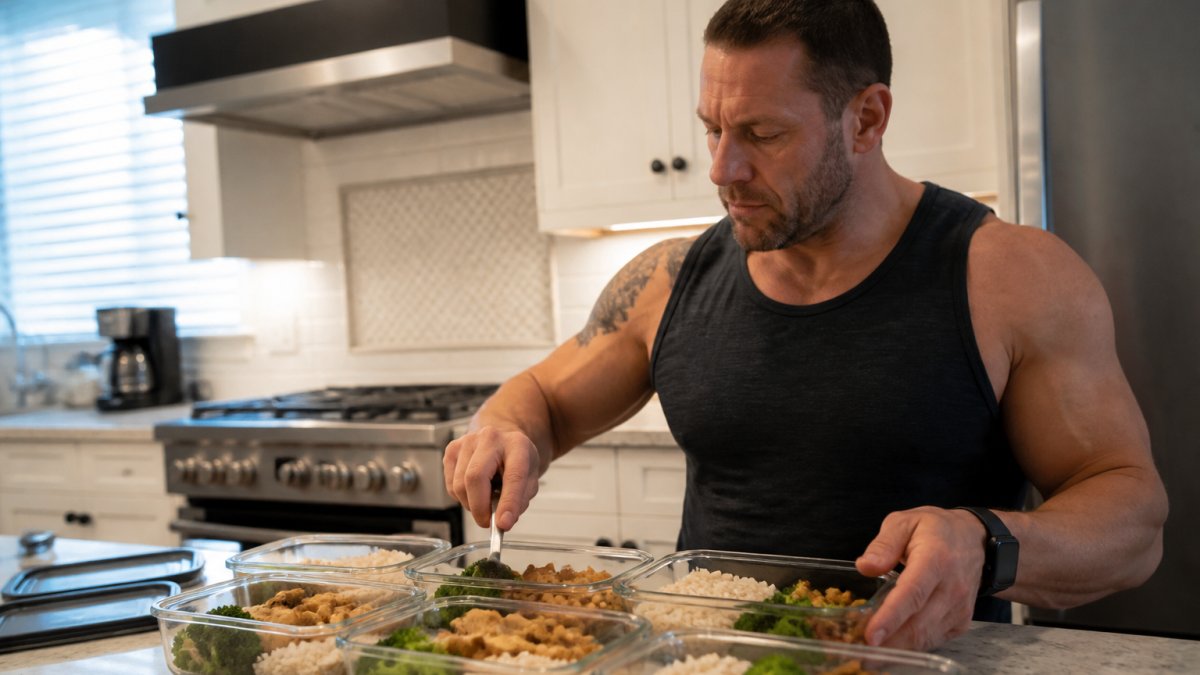
Pick one day, Sunday works for most people, and block 90 to 120 minutes. Do it in this order so nothing sits out too long:
That is the whole workflow. Five staples, one session, done.
This is where most meal-preppers get lazy, and it's where you can actually get sick. Follow these cold, hard rules:
Use glass containers. They don't stain, don't hold odors, and are safe to reheat.
A typical container: 150g cooked rice (about 190 calories), 100g tofu (about 70 calories), 150g broccoli (about 45 calories), 50g lentils (about 60 calories).
| Container | Protein | Calories | Carbs | Fat |
|---|---|---|---|---|
| Rice + Tofu + Broccoli | 18g | 365 cal | 48g | 4g |
| Lentil + Potato | 12g | 280 cal | 52g | 1g |
| Tempeh + Greens | 22g | 310 cal | 18g | 12g |
Stack containers vertically so you can see what you have. Label with the date. Eat oldest first. Now execute.
Structure matters. Random meals don't build muscle.
Don't load all your protein into dinner. Your body can only synthesize roughly 30-40 grams per meal into muscle tissue; beyond that, excess protein becomes calories.
Spread it evenly. Four meals with 40 grams each beats two meals with 80 grams.
Meal 1 (Breakfast): Oats with pea protein powder, banana, almond butter
Meal 2 (Mid-Morning): Chickpea salad with olive oil and vegetables
Meal 3 (Lunch): Rice, tempeh, steamed broccoli
Meal 4 (Dinner): Seitan, sweet potato, sautéed spinach
Snack: Nutritional yeast on popcorn, NOW Foods Nutritional Yeast Flakes adds 8g protein and B-vitamins

Total: 178g protein, 2,250 calories. Adjust portions based on your targets.
Start your day with carbs and protein for training fuel.
Eat your largest meal 2-3 hours pre-workout so it digests without sitting heavy.
Post-workout, eat protein and carbs within 60 minutes. This accelerates recovery. Your muscles are primed to absorb nutrients.
Spread remaining meals evenly. Consistency beats perfection.
Timing matters less than total daily intake, but it still matters.
Pre-Workout (2-3 hours before): 40g carbs, 20g protein, minimal fat
Post-Workout (within 60 minutes): 40g carbs, 30g protein
Carbs replenish glycogen. Protein triggers muscle protein synthesis. Fat slows digestion, save it for meals further from training.
You don't need special supplements. A shake with GHOST Vegan Protein V2 and a banana covers it.
The template changes by goal. Same prep day, same staples, different portions, calorie density, and protein targets. Here's how to build each one.
Calories: Maintenance plus 300 to 500. Protein: 0.8 to 1g per pound of body weight. Priority: calorie-dense foods that don't fill you up before you hit your numbers.
Calories: Maintenance minus 300 to 500. Protein: 1g per pound or higher, this is non-negotiable when calories drop. Priority: high-volume, low-calorie foods that keep you full.
Calories: Maintenance. Protein: 0.7 to 0.8g per pound. Priority: balance and consistency, you're maintaining what you built.
The prep process stays the same across all three goals. Only the portions and calorie density change. Build the habit first, then adjust the numbers. That's how you make it stick.
Mistake 1: Guessing protein intake. You think you're eating enough. You're not.
Mistake 3: Skipping micronutrient tracking. Plant foods are lower in iron, B12, and zinc.
Mistake 5: Prep without a schedule. Sunday prep works because it's consistent.
Building muscle on a vegan diet requires diligent planning, tracking, and execution.
Tiger Fitness provides the tools to make this work. Our FREE TOOLS & FITNESS CALCULATORS help you dial in your calorie and protein targets with precision. Our selection of plant-based proteins like GHOST Vegan Protein V2 and Ambrosia Planta removes the guesswork from supplementation.

Get started with Tiger Fitness and get the vegan meal prep system that actually works.
Aim for 0.8 to 1 gram of protein per pound of bodyweight. A 2023 cross-sectional study on vegan bodybuilders noted that meeting protein needs during a calorie deficit requires intentional planning and varied plant protein sources. Use Tiger Fitness's free fitness calculators to dial in your exact target based on your current weight and goals, then structure your vegan meal prep to hit that number consistently across multiple meals.
Prioritize tofu, tempeh, seitan, lentils, chickpeas, beans, and quinoa as your foundation. Pair whole foods with plant-based protein powders like GHOST Vegan Protein V2 or Ambrosia Planta to fill gaps and boost post-workout recovery. Nutritional yeast adds B-vitamins and savory flavor. Combine these sources across meals to ensure complete amino acid profiles and hit your daily protein target without relying on a single source.
Yes. The key is meeting your calorie surplus and protein target consistently. A 2023 study found that vegan bodybuilders can build muscle effectively when they address the challenge of reaching protein needs during a calorie deficit through strategic meal planning and food selection. Batch cooking staple foods, distributing protein across meals, and using supplemental plant-based protein powders all support muscle gain on a vegan diet.
Cooked grains, legumes, and tofu-based dishes stay fresh in sealed glass containers for 4-5 days in the refrigerator. Raw vegetables and prepared salads last 3-4 days. For longer storage, freeze portions in airtight containers for up to 3 months. Thaw overnight in the refrigerator before reheating. Label all containers with the prep date to stay organized and avoid waste.
{"one"=>"Select 2 or 3 items to compare", "other"=>"{{ count }} of 3 items selected"}

Leave a comment