
NEW NULLA BAR FLAVORS
In-Stock Now!

Best overall: a beef protein powder with a disclosed source and complete amino acid profile. Best for custom shakes: an unflavored formula that meets those same standards. Best for adding collagen specifically: clearly labeled collagen peptides not a replacement for your main muscle building protein. This 2026 guide ranks formulation choices so you can separate useful nutrition from front-label claims.
You buy protein powder to fill a gap in your nutrition. The protein source matters, but a beef label alone does not tell you whether a formula fits that job.
Beef-derived ingredients include different protein materials. Collagen is animal protein, yet its amino acid profile differs from muscle meat and milk protein. Treating every beef-derived powder as interchangeable misses the most important buying distinction.
For Tigerfitness protein powder shoppers, the best choice is the formula that fits both your dietary restrictions and your daily protein goal. Start with your reason for switching: avoiding milk, changing your shake routine, or adding collagen are different goals. You can browse Tigerfitness while keeping those goals separate.
Use these criteria before comparing flavors or front-label claims:
A formula does not need an elaborate ingredient list to earn a place in your routine. It needs to supply the protein you intend to consume without conflicting with your diet.
These rankings describe formulation choices, not a brand by brand performance test. The first two categories overlap: an unflavored beef isolate still needs to pass the same source and amino acid checks as a flavored version.
| Rank | Option | Best for | Standout feature | Key limitation |
|---|---|---|---|---|
| 1 | Complete profile beef protein isolate | A primary beef-derived protein supplement | Lets you evaluate essential amino acid coverage | The isolate label alone does not establish that coverage |
| 2 | Unflavored complete profile beef protein | Custom shakes and ingredient control | Leaves flavor selection to you | Unflavored does not guarantee a neutral taste |
| 3 | Clearly labeled collagen peptides | Adding collagen specifically | Makes the protein type explicit | Not a complete standalone protein source |
A beef protein isolate belongs on your shortlist when you specifically want a beef-derived powder for daily protein intake. The deciding evidence is the ingredient disclosure and amino acid profile not the animal pictured on the container.
Look for all essential amino acids and useful information about their amounts. A list that merely names amino acids is less informative than a quantified profile tied to the serving.
Complete-profile beef isolate pros:
Complete-profile beef isolate cons:
Best for: You specifically want beef-derived protein and can verify that the formula fits your nutritional needs.
Do not assume a powder provides steak-like iron, vitamin B12, or other nutrients unless its nutrition information states those amounts. Protein extraction and processing change what ends up in the container.
Verdict: Buy only after checking the source, amino acid profile, and dietary fit.
An unflavored beef protein formula gives you control over the ingredients you add to your shake. It is a practical format choice, not a separate standard of protein quality.
Apply the same amino acid requirements used for any primary protein supplement. Removing flavoring does not fix an incomplete or poorly disclosed protein source.
Unflavored beef protein pros:
Unflavored beef protein cons:
Best for: You want control over shake ingredients and are willing to judge the base powder on its own merits.
Read preparation directions before using the powder in hot drinks or recipes. Do not assume beef protein behaves like whey, casein, or flour simply because all arrive as powders.
Verdict: Buy for ingredient control, not as a shortcut around label checks.
Collagen peptides are a distinct protein ingredient. They are rich in certain amino acids but lack tryptophan, an essential amino acid, so collagen is not a complete standalone protein source.
That distinction matters when your goal is choosing a primary protein supplement for muscle-building nutrition. A beef-derived collagen powder should not inherit the nutritional reputation of a serving of beef.
Collagen peptides pros:
Collagen peptides cons:
Best for: You deliberately want collagen alongside an otherwise adequate diet—not a substitute for your main complete protein source.
You do not need to treat collagen as useless. You need to assign it the right job and avoid comparing its protein grams with another powder without considering amino acid composition.
Verdict: Skip as your primary muscle-building protein; consider separately for a specific collagen goal.
For your 2026 shortlist, work through the label before judging promotional claims. This sequence keeps a familiar ingredient name from making the decision for you.
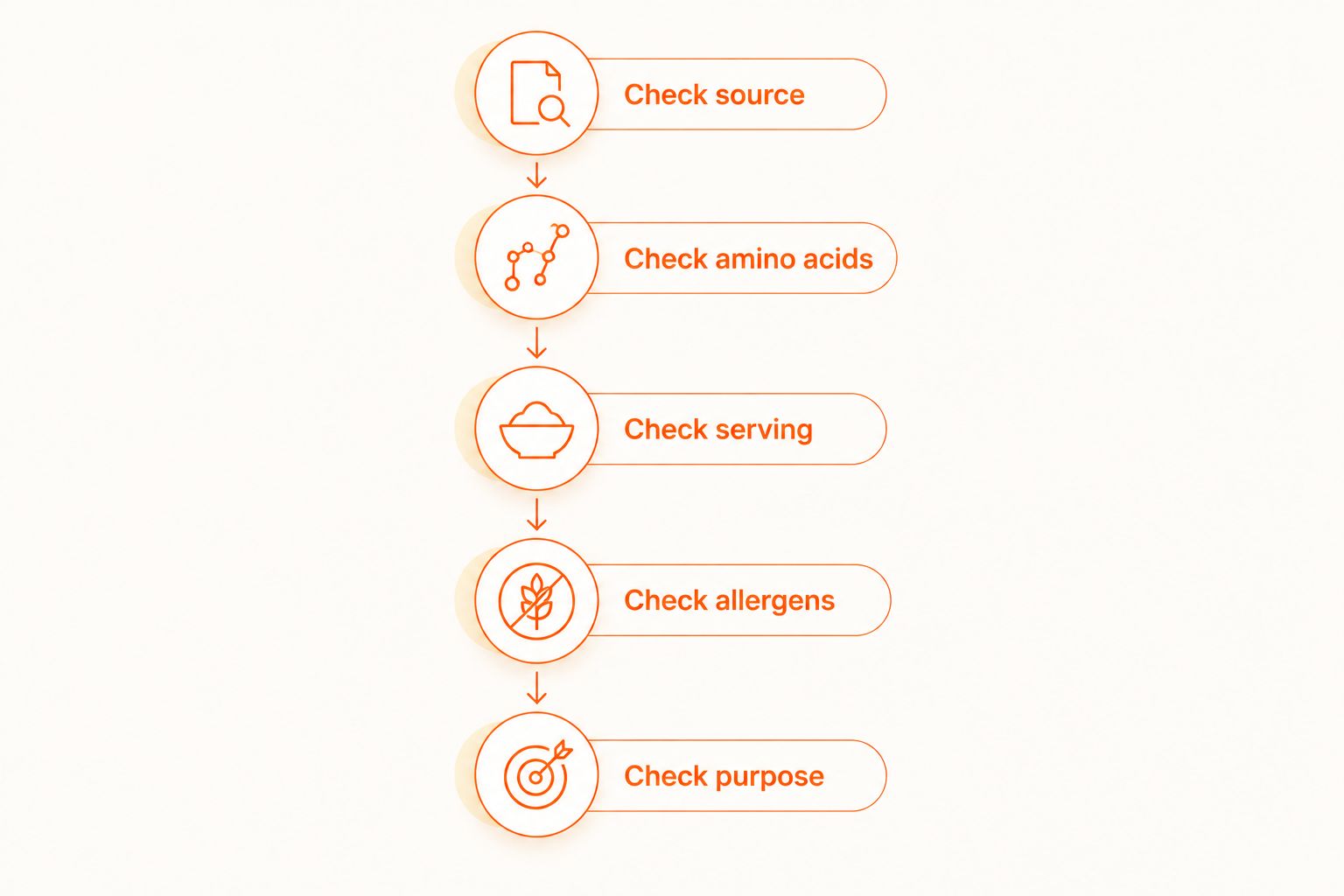
Hydrolysis breaks proteins into smaller peptides. It does not add a missing essential amino acid or prove that a product builds more muscle than another protein.
Apply the same rule to claims about rapid digestion. Faster processing or absorption is not, by itself, a reason to ignore the full formula or your total daily intake.
A beef-derived protein ingredient is not milk protein. The finished product still requires its own ingredient and allergen review.
Lactose intolerance and milk allergy are also different conditions. If you have a diagnosed food allergy, follow your clinician's guidance rather than using the protein source as a safety guarantee. People with alpha-gal syndrome need medical advice before using mammalian-derived supplements.
If you want beef protein because another shake did not suit you, identify what actually needs to change. Switching protein sources, removing a flavor ingredient, and avoiding milk are different decisions.
Tigerfitness protein powder options include whey and plant-based formulas. The products below are alternatives to beef protein, not beef protein recommendations; their stated protein amounts help illustrate why the whole label matters.
| Product | Best for | Disclosed protein detail | Main limitation |
|---|---|---|---|
| RAW Grass Fed Isolate Protein | Shoppers specifically seeking whey isolate | 25 grams per scoop | Whey is milk-derived |
| RAW Vegan Protein | Shoppers seeking a vegan formula | 20 grams per scoop | Vegan labeling alone does not quantify essential amino acids |
| Rule 1 Whey Protein | Shoppers seeking multiple whey sources | 24 grams per scoop | Contains milk-derived whey sources |
RAW Grass Fed Isolate Protein is a whey isolate option with a stated 25 grams of protein per scoop. Best for: You want whey isolate rather than beef-derived protein.
Verdict: Buy if whey isolate fits your diet; skip if you need to avoid milk protein.
RAW Vegan Protein supplies a stated 20 grams of protein per scoop. Best for: You want a vegan protein powder instead of an animal-derived option.
Verdict: Buy for a vegan preference after reviewing the full label.
Rule 1 Whey Protein supplies a stated 24 grams of protein per scoop from whey concentrate, whey isolate, and partially hydrolyzed whey. Best for: You prefer a blend of whey sources.
Verdict: Buy for a whey-blend preference, not for an assumed advantage over beef.
Choose the category first, then compare products within it. Do not let a larger protein number override an ingredient you need to avoid.
The 2026 ranking puts primary protein suitability first, customization second, and collagen-specific use third. Source disclosure, essential amino acid information, dietary fit, and practical use determine the order.
Flavor preference cannot establish nutritional quality. Neither can the words beef, isolate, or hydrolyzed in isolation. Choose the formula you can evaluate, not the label that asks you to assume the most.
Choose a complete profile beef protein powder if you specifically want beef-derived protein and its label supports that use. Pick an unflavored version only when controlling shake ingredients matters to you.
If you simply need a convenient protein supplement, compare beef with suitable whey and plant-based options. You do not need a beef formula to make progress, and you do not need to abandon a protein source that already fits your diet.
What's the Best Beef Protein powder for building muscle?
The best beef protein powder for primary muscle-building nutrition has a disclosed protein source and a complete essential amino acid profile. Do not choose a collagen-forward formula solely because it carries a beef label.
Is Beef Protein powder better than whey?
Beef protein powder is not automatically better than whey. Compare amino acid composition, dietary fit, and the finished formula rather than assuming the animal source determines results.
Is Beef Protein powder the same as collagen?
Beef protein powder and collagen are not interchangeable terms. Read the ingredient disclosure and amino acid profile to establish what a particular formula contains.
Does hydrolyzed Beef Protein build more muscle?
The word hydrolyzed does not establish greater muscle gains. Hydrolysis describes protein processing, not a guarantee of amino acid completeness or better training results.
Can I use Beef Protein powder if I have a milk allergy?
A beef protein label alone does not establish safety for someone with a milk allergy. Review every ingredient and relevant allergen disclosure with your clinician's guidance.
Is Beef Protein powder equivalent to eating steak?
Beef protein powder is not nutritionally equivalent to eating steak. Do not assume it supplies the same iron, vitamin B12, fats, or other nutrients unless those amounts appear in its nutrition information.
How much Beef Protein powder should I take?
Use beef protein powder to fill the gap between your food intake and your individual protein target. Base the amount on labeled protein grams, not scoop size alone, and follow the product directions.
Before buying beef protein powder in 2026, write down the exact problem you want it to solve. If your answer is simply more daily protein, beef is a preference not a requirement.
A large scoop is not proof of a high-protein serving, and a beef label is not proof of a steak-like amino acid profile. Read the back panel before letting the front panel choose your shake.
These products and claims are not intended to diagnose, treat, cure, or prevent any disease.
{"one"=>"Select 2 or 3 items to compare", "other"=>"{{ count }} of 3 items selected"}








Leave a comment