



How to Choose a Pre-Workout With No Artificial Sweeteners
Table of Contents
- Why Artificial Sweeteners Matter in Pre-Workout
- Common Artificial Sweeteners to Avoid
- Natural Sweetener Alternatives: Stevia and Monk Fruit
- Natural Pre-Workout Ingredients That Deliver Performance
- How to Read Supplement Facts Labels for Clean Formulas
- Pre-Workout Without Sucralose: What to Look For
- Third-Party Testing and Transparency: Non-Negotiable Standards
- Frequently Asked Questions
Last Updated: September 1, 2026
Why Artificial Sweeteners Matter in Pre-Workout
Look, if you're serious about your training, you need to understand what goes into your body before you drink it. The question of how to choose a pre-workout with no artificial sweeteners isn't about being trendy, it's about performance and long-term health.
Artificial sweeteners like sucralose, aspartame, and acesulfame potassium were engineered to taste sweet without calories. That sounds great on paper. But here's what most people miss: your body processes these compounds, and the research shows they can trigger unnecessary stress responses, alter your gut bacteria, and create blood sugar dysregulation even though they contain zero sugar. When you're training hard, your system is already under stress. Adding compounds that trigger additional metabolic confusion is counterproductive.
Clean-label pre-workouts, formulas without artificial sweeteners, artificial colors, and proprietary blends, are growing at a compound annual growth rate of approximately 13.5%, nearly double the overall market rate (Dataintelo, 2026). That's not hype. That's athletes and fitness professionals voting with their wallets because they've felt the difference.
The clean pre-workout market exists because athletes discovered something: natural sweeteners like stevia and monk fruit deliver taste without the metabolic baggage. More importantly, when you strip away the artificial additives, you can actually see what's driving your performance, the proven ingredients like beta-alanine, citrulline malate, and natural caffeine.
At Tiger Fitness, we've built our pre-workout selection around this principle. You shouldn't have to choose between performance and transparency.

Common Artificial Sweeteners to Avoid
Three artificial sweeteners dominate the pre-workout category, and you need to know exactly what they are.
Sucralose (Splenda) is the most common culprit. It's 600 times sweeter than sugar, zero calories, and it's in roughly 70% of flavored pre-workouts on the shelf. The problem: sucralose doesn't break down the way manufacturers claim. It passes through your system largely intact, but not before interacting with your gut microbiome.
Aspartame is the second offender. It breaks down into phenylalanine and aspartic acid in your digestive system. For most people, that's fine. But aspartame is metabolized differently than whole foods, and it triggers a mild insulin response even though it has no calories. That's the opposite of what you want pre-workout, you need stable blood glucose, not false signals that trigger your pancreas.
Acesulfame potassium (Ace-K) rounds out the trio. It's often blended with sucralose to mask the aftertaste of either ingredient used alone. The combination is worse than either alone because your system has to process multiple synthetic compounds simultaneously.
The reality: these sweeteners taste good, they're cheap to use, and they don't add calories. That's why manufacturers love them. But they're not inert compounds. They interact with your gut bacteria, they can suppress beneficial bacteria, and they create an inflammatory response in sensitive individuals. If you're training hard and eating clean, why would you sabotage yourself with compounds that trigger unnecessary inflammation?
Read the label. If you see sucralose, aspartame, or Ace-K listed, move on.
Natural Sweetener Alternatives: Stevia and Monk Fruit
When you eliminate artificial sweeteners, you're left with two legitimate options that actually work: stevia and monk fruit.

Stevia comes from the stevia rebaudiana plant. The active compounds are steviol glycosides, specifically Reb-A and Reb-M. Stevia is 200-300 times sweeter than sugar, zero calories, and it doesn't trigger an insulin response. More importantly, stevia doesn't alter your gut microbiome the way artificial sweeteners do. Some people report a slight aftertaste, that's real, and it depends on the extraction quality. High quality stevia (Reb-M blends) tastes cleaner than older Reb-A formulations.
Monk fruit comes from the luo han guo fruit and contains mogrosides. It's 150-250 times sweeter than sugar, zero calories, and it has a cleaner taste profile than stevia for most people. Monk fruit also contains antioxidants that stevia doesn't, which means you're getting a functional benefit beyond just sweetness. The downside: monk fruit is more expensive to source, so fewer pre-workouts use it.
Here's the practical difference: if you're sensitive to stevia's aftertaste, monk fruit is your answer. If cost matters and you can tolerate stevia, it's a solid choice. Both are infinitely better than sucralose or aspartame because neither one disrupts your gut bacteria or triggers false metabolic signals.
research on natural sweeteners and metabolic health shows that stevia and monk fruit maintain stable blood glucose levels, which is exactly what you want before training. You get the taste without the metabolic interference.
The trade-off is real: natural sweeteners cost more. Pre-workouts sweetened with stevia or monk fruit run higher per container instead of cheaper sucralose-based formulas. But you're paying for a product that actually supports your training instead of working against it.
Natural Pre-Workout Ingredients That Deliver Performance
Removing artificial sweeteners only matters if the rest of the formula actually works. Here's what separates a legitimate pre-workout from marketing noise.
Natural caffeine is non-negotiable. Coffee bean extract, green tea extract, or yerba mate deliver caffeine the way your body expects it, alongside cofactors that slow absorption and prevent the crash. Synthetic caffeine (anhydrous caffeine) hits fast and drops hard. Natural caffeine sources provide sustained energy without the jitters because the plant compounds buffer the stimulant effect.
Beta-alanine (3-5 grams per serving) increases muscle carnosine levels, which delays fatigue during high-rep sets. This is one of the few supplements with consistent research backing. You'll feel a tingling sensation, that's normal and harmless. Beta-alanine works best over 4-6 weeks of consistent use, not immediately.
L-citrulline malate (6-8 grams) increases nitric oxide production, which improves blood flow and nutrient delivery to working muscles. More blood flow means better pumps, better endurance, and faster recovery. This is the ingredient that separates a mediocre pre-workout from a good one.
Creatine monohydrate (3-5 grams) is the most researched supplement on the market. It increases ATP availability in muscle cells, which means more strength and more reps. It's cheap, it works, and there's zero reason to avoid it unless you're specifically looking for a creatine-free formula.
Agmatine sulfate (500-1000 mg) is an underrated nitric oxide booster that works synergistically with citrulline. It also has neuroprotective properties, which means better focus and mind-muscle connection.
The formula matters more than any single ingredient. A pre-workout with natural caffeine, citrulline malate, beta-alanine, and agmatine will outperform a formula with 10 ingredients where half are underdosed proprietary blends.
International Society of Sports Nutrition position stand on pre-workout supplements confirms that these ingredients, when properly dosed, deliver measurable performance improvements.
How to Read Supplement Facts Labels for Clean Formulas
This is where most people fail. They see a label and assume everything listed is in a meaningful dose. That's how you end up with a pre-workout that tastes good but does nothing.
Start with the serving size. A single scoop or two scoops? That matters because all the dosages listed are per serving. If the label says 3g of beta-alanine per serving and you're only taking half a scoop, you're getting 1.5g, which is ineffective.
Look for full transparency. Legitimate pre-workouts list every ingredient with its exact dose. If you see "proprietary blend" or "performance matrix" without individual ingredient amounts, that's a red flag. The company is hiding something, usually because the doses are too low to be effective or too high to be safe.
Check the order of ingredients. Ingredients are listed by weight, highest to lowest. If caffeine is listed third or fourth, the formula is underdosed on stimulants. If citrulline is near the bottom, you're not getting enough for a real pump.
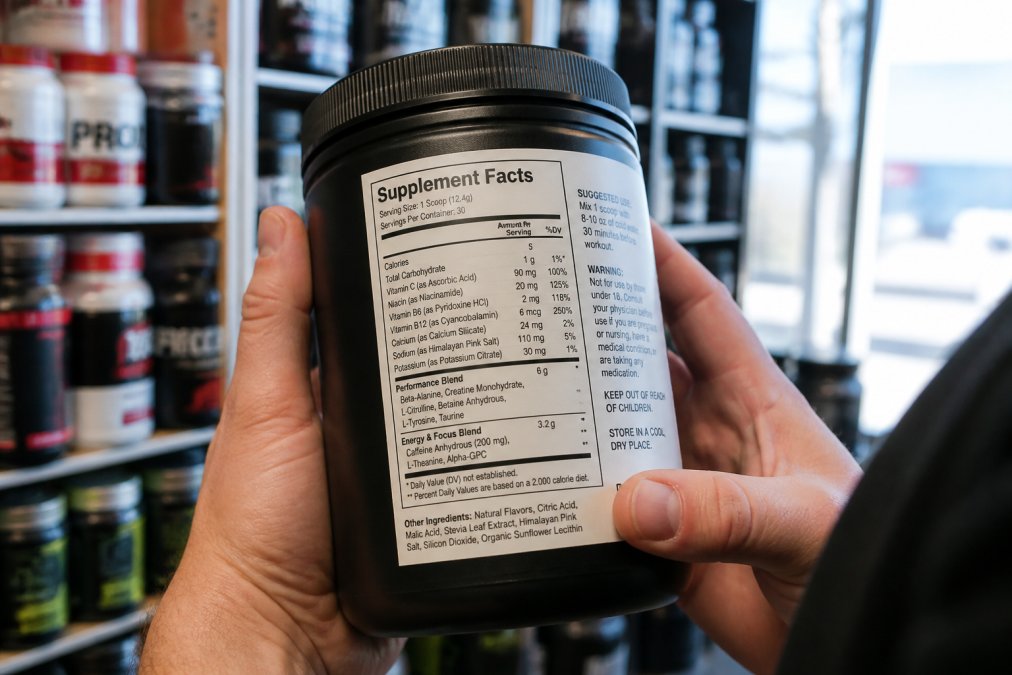
Verify sweetener type. This is the whole point of this article. The sweetener should be stevia, monk fruit, or erythritol. If it's sucralose, aspartame, or Ace-K, put it back.
Count the artificial additives. Artificial colors (FD&C Yellow, FD&C Red, etc.) and artificial flavors serve no purpose except marketing appeal. A clean formula uses natural colors (like beta-carotene or anthocyanins) and natural flavors. This isn't about being precious, it's about not consuming compounds your body has to process and eliminate.
Check for third-party testing. Legitimate companies send their products to independent labs (NSF Certified for Sport, Informed Choice, or similar) to verify the label matches what's actually in the container. If the label doesn't mention third-party testing, ask why.
The supplement facts panel is your contract with the company. If they're hiding ingredients, using artificial sweeteners, or underdosing key compounds, that label tells you everything you need to know. Use FREE TOOLS & FITNESS CALCULATORS to track your supplement intake and monitor how different pre-workouts affect your performance over time.
Pre-Workout Without Sucralose: What to Look For
Sucralose is the most aggressive artificial sweetener in pre-workouts, so let's address it directly. When you're specifically hunting for a pre-workout without sucralose, you're making a smart choice.
Sucralose-free formulas typically use stevia, monk fruit, or a blend of both. The taste is cleaner, the ingredient list is shorter, and your gut bacteria will thank you. But not all sucralose-free pre-workouts are created equal.
Some companies remove sucralose but replace it with erythritol, a sugar alcohol that can cause digestive distress in high doses (anything above 20-30 grams per serving). Check the label. If you see erythritol as the primary sweetener and the serving size is large, you might experience bloating or cramping.
The best sucralose-free pre-workouts combine stevia and monk fruit, stevia for sweetness, monk fruit for taste smoothness and antioxidant benefit. This combination masks any aftertaste while keeping the ingredient list clean.
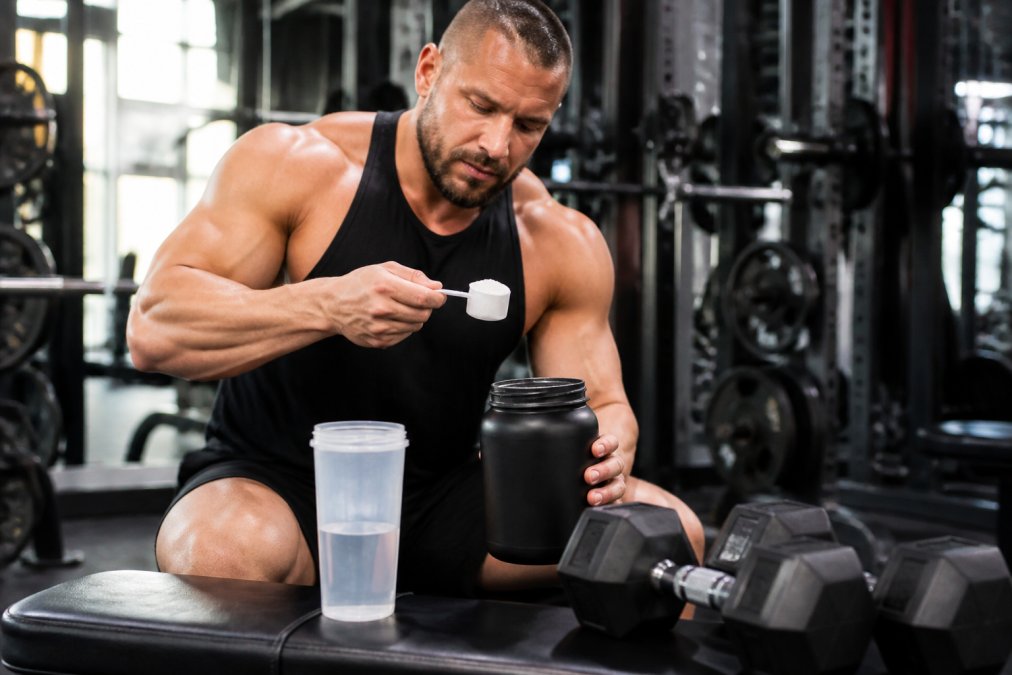
When evaluating a sucralose-free option, ask three questions: What's the sweetener blend? Are the performance ingredients (caffeine, citrulline, beta-alanine) properly dosed? Is there third-party testing?
If the answer to all three is yes, you've found a legitimate product. If any answer is no, keep looking.
| Consideration | What to Look For | Why It Matters |
|---|---|---|
| Sweetener | Stevia, monk fruit, or erythritol (low dose) | Avoids metabolic interference and gut disruption |
| Caffeine source | Natural (coffee bean, green tea) | Sustained energy without crash |
| Key ingredients | Citrulline (6-8g), beta-alanine (3-5g), creatine (3-5g) | Proven performance benefit when properly dosed |
| Transparency | Full ingredient list with exact doses | Ensures you're getting what the label claims |
| Third-party testing | NSF Certified for Sport, Informed Choice | Verifies purity and label accuracy |
Third-Party Testing and Transparency: Non-Negotiable Standards
Here's the hard truth: the supplement industry has minimal FDA oversight compared to pharmaceuticals. That means the company's reputation is your only real guarantee that what's on the label is actually in the container.
Third-party testing solves this problem. Independent labs test finished products for:
- Label accuracy: Does the product contain the doses listed?
- Contaminant screening: Are there heavy metals, bacteria, or banned substances?
- Banned substance testing: For athletes competing under anti-doping rules, this is critical.
The major certifications are NSF Certified for Sport, Informed Choice, and BSCG (Banned Substances Control Group). If a pre-workout carries one of these seals, the company paid for independent verification. That investment signals they're confident in their product.
Why does this matter? Because some pre-workout manufacturers cut corners. They'll use lower-quality ingredients, reduce doses to cut costs, or contaminate batches with heavy metals from poor sourcing. Third-party testing catches all of this.
FDA guidance on dietary supplement manufacturing and quality control outlines the standards, but enforcement is weak. Third-party testing fills that gap.
Transparency goes beyond testing. A legitimate company will:
- Publish their test results publicly
- List the exact dose of every ingredient
- Explain why they chose each ingredient
- Acknowledge potential side effects
- Provide customer service contact information
If a company hides behind vague language, uses proprietary blends, or refuses to share testing data, that's your signal to move on. You're putting this stuff in your body, you deserve to know exactly what it is and where it came from.
Tiger Fitness partners with brands that meet these standards because we know our customers demand transparency. When you're buying a pre-workout from us, you're getting products that have been vetted for quality and effectiveness.
Choosing a pre-workout with no artificial sweeteners is straightforward once you know what to look for. The market has evolved, clean formulas with stevia or monk fruit now deliver the same performance as their artificial counterparts without the metabolic baggage. Read labels carefully, verify third-party testing, and prioritize transparent companies that stand behind their formulas. Your training deserves a pre-workout that supports your goals instead of working against them. Tiger Fitness carries pre-workout options that deliver natural caffeine, proven performance ingredients, and full transparency, no artificial sweeteners, no proprietary blends, no compromises.
Frequently Asked Questions
What are the most common artificial sweeteners to avoid in pre-workout?
The three most common artificial sweeteners in pre-workout are sucralose (Splenda), acesulfame potassium (Ace-K), and aspartame. These provide zero calories but can trigger jitters, anxiety, and digestive issues in some athletes. Look at the ingredient label, if you see any of these names, move on. Natural alternatives like stevia and monk fruit deliver sweetness without the side effects.
Does a pre-workout without artificial sweeteners still provide the same energy boost?
Yes. Natural pre-workout formulations can deliver equivalent performance benefits to synthetic alternatives when properly dosed with clinically validated ingredients. The real driver of performance is natural caffeine, beta-alanine, l-citrulline, and creatine monohydrate, not the sweetener. The sweetener only affects taste and how your gut handles the formula. Clean-label pre-workouts are growing at 13.5% annually because athletes see no performance sacrifice, only better digestion and no crash.
How do I identify hidden artificial sweeteners on a supplement label?
Check the ingredient list for sucralose, aspartame, and acesulfame potassium by name. These must be listed. Also look for 'artificial flavors' or 'food dyes', these often accompany artificial sweeteners in cheap formulas. Third-party testing verifies what's actually in the product. Transparency in labeling is non-negotiable: if a brand won't list every ingredient with exact amounts, skip it. Reputable brands show everything, no proprietary blends.
Are natural sweeteners like stevia better for pre-workout performance?
Stevia and monk fruit don't improve performance directly, they just taste good without triggering digestive issues or blood sugar spikes. Stevia (Steviol Glycosides Reb-A and Reb-M) and monk fruit (mogrosides) provide sweetness at zero calories. The real advantage is what they don't do: they don't cause jitters, anxiety, or the crash that artificial sweeteners can trigger. For athletes focused on body recomposition, avoiding blood glucose response swings matters for energy stability during training.
Leave a comment