
NEW NULLA BAR FLAVORS
In-Stock Now!

Last Updated: November 14, 2026
Quick Summary
A vegan protein powder with complete amino acids supplies all nine essential amino acids your body cannot make on its own, and the best option shows you the numbers rather than just the word complete. Look for at least 20 grams of protein per serving, a published EAA breakdown, and roughly 2 to 2.5 grams of leucine.
A vegan protein powder with complete amino acids supplies all nine essential amino acids your body cannot make on its own. That is the entire definition. Nothing mystical, nothing marketing-driven.
Here is the problem most labels hide. A 2018 analysis led by SHM Gorissen found essential amino acid content of 27% for soy protein, 28% for brown rice, 30% for pea, 32% for corn, and 37% for potato protein.
Below, we break down what "complete" really means, which formulas deliver, and how to compare them without getting played by label copy.
Your body needs nine essential amino acids: histidine, isoleucine, leucine, lysine, methionine, phenylalanine, threonine, tryptophan, and valine. Miss one in large enough quantity and muscle protein synthesis stalls.
Leucine is the trigger. It flips the switch on muscle protein synthesis more than any other amino acid. The other eight build the structure. Leucine gives the signal.
This is why a protein blend beats a single source. Pea protein runs low on methionine. Rice protein runs low on lysine. Combine them and the gaps close. That is not marketing spin.
The best vegan protein powder with all essential amino acids is the one that shows you the numbers, not just the word "complete" on the front of the tub.
Most tubs give you protein per serving. Very few give you the EAA breakdown. That is where the comparison gets honest.
Here is how we score a formula before it goes on our shelves:
If you want to line up your daily protein target before you shop, run your numbers through our science-backed daily protein intake formula. It takes two minutes and it tells you exactly how many grams you need, which makes the cost-per-serving math easy.
A complete protein powder plant-based formula is real. The old rule about combining specific plant foods at every meal is outdated.
So where does the confusion come from? Two places.
First, "complete" is a claim, not a measurement. A formula can be complete on paper and still deliver a weak leucine dose. Second, amino spiking. Some manufacturers dump cheap free amino acids into a tub to inflate the protein number on the nutrition facts.
What most guides miss: the word "complete" tells you nothing about quantity. Two tubs can both say complete, and one can deliver half the leucine of the other. Read the amino acid panel. If there is no panel, that is your answer.
Here is where we get specific. We carry three plant formulas we would put in our own shaker, and each one earns its spot for a different reason. But before the reviews, understand the rule we apply to every tub: a "complete" claim is worthless without the amino acid panel behind it.
Price: $49.99. GHOST Vegan Protein V2 is 100% plant-based and designed for a smooth, enjoyable shake without the chalky consistency associated with many plant proteins.
On the numbers: Check the label for the full amino acid profile before you buy. What we watch for is leucine, the amino acid that flips the muscle protein synthesis switch.
Best for: anyone who wants a plant shake that actually tastes good post-workout. Skip if: you are chasing the absolute lowest cost per serving.
You can grab GHOST Vegan Protein V2 here and read the full label before you commit.
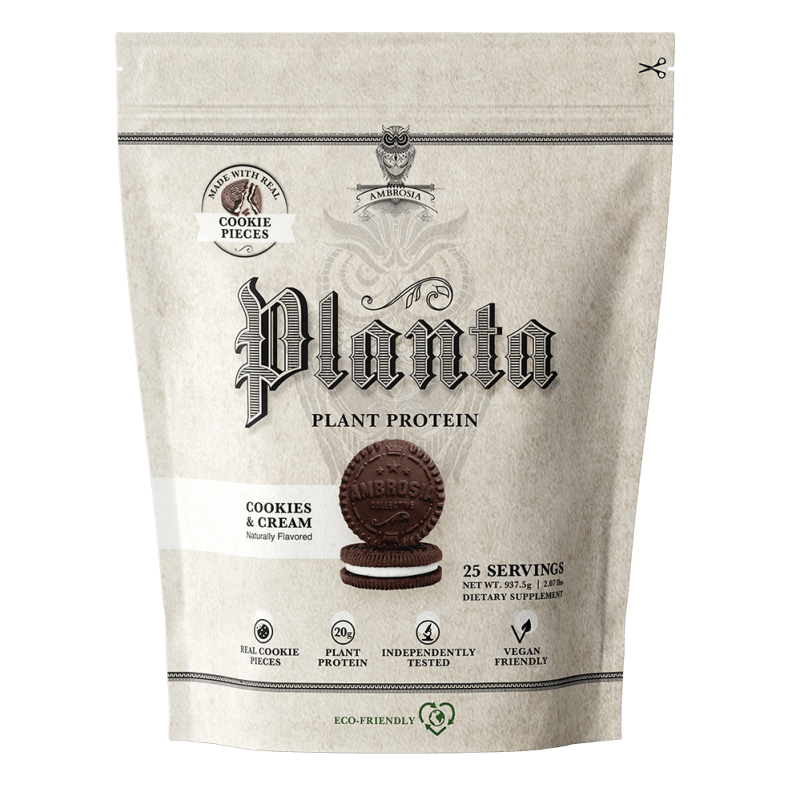
Price: $52.99. Planta pairs organic brown rice and organic pea proteins, then adds sunflower sourced SunBCAA to sharpen the amino acid profile.
That last point matters more than any flavor claim.
On the blend: pea runs low on methionine, rice runs low on lysine. Pair them and the gaps close. That is the mechanism behind every serious plant formula, and Planta is a clean example of it done right.
Best for: the lifter who wants a verified label and a refined amino acid profile. Skip if: budget is the deciding factor.
Check the full Ambrosia Planta plant-based protein specs on our product page.
Price: $32.99. Rule 1 Plant Protein covers the basics: plant-based protein for daily intake, muscle recovery support, and a dairy-free formula that mixes easily into shakes and smoothies. Multiple flavors, no fuss.
Here is the honest trade-off. At this price point you are buying a daily driver, not a premium amino acid profile. Check the product label for protein per serving and the source blend before you buy. For general nutrition and hitting a daily protein target, it does the job.
Best for: daily use on a tight budget, especially for college students. Skip if: you want the smoothest texture on the market.
We used one consistent method so the comparison means something. Where a brand does not disclose a full profile, we say so, that is a data point, not a disqualifier. A complete amino acid profile is not the same as protein quality; quality is about digestion and absorption.
Protein quality is the measure of how well your body digests and absorbs a protein source, and it is the number nobody prints on the tub. Plant proteins generally carry more fiber and fewer of certain amino acids than animal proteins, which affects digestibility.
Third-party testing is your only real check. A certificate of analysis confirms the protein content matches the label and screens for contaminants. Ambrosia states every batch of Planta is tested to meet label claims. That is the standard to look for from any brand.
Our advice: ask for the certificate. If a brand cannot produce one, walk.
A $32.99 tub and a $52.99 tub can cost the same per gram of protein. Serving size and protein per scoop decide it, not the sticker price.
The formula: divide the tub price by the number of servings, then divide again by the protein grams per serving.
Here is the normalized comparison using the three formulas above. Serving counts and protein per scoop vary by flavor, so confirm the exact label on the tub you buy before you trust any number, including ours.
| Formula | Price | Best For | Standout Feature |
|---|---|---|---|
| Rule 1 Plant Protein | $32.99 | Budget daily use | Lowest entry price |
| GHOST Vegan Protein V2 | $49.99 | Taste and texture | Smooth, chalk-free shake |
| Ambrosia Planta | $52.99 | Verified label | Batch-tested, no amino spiking |
Price
Run the math on your own tub. A formula that costs more upfront but delivers more protein per scoop often wins on cost per 25 grams.
But cost per 25 grams is only half the value story. The other half is amino acid quantity per serving, specifically leucine.
One more layer competitors skip: protein quality scoring.
So the honest value formula is three numbers, not one: cost per 25 grams of protein, leucine per serving, and whether the brand publishes a quality score or batch testing. A tub that wins on all three is the one worth your money. A tub that wins only on price is a gamble.
Match the formula to the job. That is the whole game.
If you want a fourth option to compare, our Core Vegan Protein and Raw Vegan Protein both fit a complete plant-based plan. Stack them against the three above and pick the one that hits your protein target at the price you can sustain.
One warning: do not buy a plant protein because the front of the tub says "complete." Buy it because the amino acid panel and the price per gram back it up.
The challenge is simple. Most plant proteins fail on one of three fronts: taste, amino acid profile, or price per gram. Finding one that clears all three takes reading labels, not trusting them.
At Tiger Fitness, we stock plant proteins and offer fast shipping and personalized customer service. Our free fitness calculators can help you plan the whole process. If you want a formula you can verify, start with the three above and let the panel decide.
Stop guessing which plant protein actually delivers. Tiger Fitness carries batch-tested vegan formulas, free fitness calculators, and a rewards program that pays you back on every order.
A complete protein contains all nine essential amino acids in amounts your body can use. Plant sources like pea, brown rice, and soy each fall short somewhere, which is why blends exist. Plant sources like pea and brown rice each have gaps in their amino acid profile, which blends are designed to close. Check the nutrition facts for a full EAA panel, not just total protein grams.
No. Current nutrition guidance indicates there is no need to combine specific plant foods at every meal to ensure proteins are complete. Your body maintains an amino acid pool, so what matters is total intake across the day, not perfect pairing at each meal. That said, a blended vegan protein powder with complete amino acids removes the guesswork entirely. A pea-and-rice blend can help you cover amino acid needs without planning food combinations.
Yes, if you hit your total protein target and the amino acid profile is solid. Plant isolates generally carry less essential amino acid content than whey, so you may need a slightly larger serving to match the leucine dose. A common baseline is 0.8 grams of protein per pound of bodyweight, then adjust from there. Pair it with progressive strength training and track your lifts. The powder supports the work; it doesn't replace it.
Always. Plant proteins can carry contaminants from growing conditions. Look for brands that publish batch testing and back their label claims. Amino spiking is the practice of adding cheap free-form amino acids to inflate protein readings. If a company won't show you a certificate of analysis, walk away. Independent verification is the difference between a label claim and a fact you can trust.
{"one"=>"Select 2 or 3 items to compare", "other"=>"{{ count }} of 3 items selected"}







Leave a comment