
NEW NULLA BAR FLAVORS
In-Stock Now!

Last Updated: November 12, 2026
Quick Summary
Effective hydration strategies for faster injury healing mean spreading fluid intake evenly across the day, since water carries oxygen and nutrients to damaged tissue and supports circulation and waste removal. Start with a tracked baseline, then adjust for sweat loss, fever, heat, and your recovery stage.
Hydration strategies for faster injury healing start with one fact: your body runs on water, and damaged tissue needs it delivered on schedule. A review on hydration and recovery in athletes published through PubMed Central in 2021 ties hydration to performance, injury prevention, and recovery. Fluid balance is the foundation under everything else.
Here's what most guides get wrong: they tell you to "drink more water" and stop there. That's lazy advice.
Water carries oxygen and nutrients to damaged tissue. It supports circulation, blood flow, and waste removal through your kidneys and liver. It keeps skin integrity and dermal water balance intact, which matters because a review on hydration in wound healing notes that disrupting skin integrity disturbs dermal water balance.
Below, we break down exactly how much to drink, what to drink, and how to adjust your plan by recovery stage.
There is no single official number for wound healing. Anyone who hands you one is guessing. What we can tell you is how to build a target that fits you.
Start with a baseline you can track:
From there, adjust. Urine that stays pale yellow suggests you're in range. Dark yellow means add fluids. Clear as tap water all day means you may be overdoing it.
Your fluid needs rise with sweat loss, fever, hot weather, and training volume. They also rise after surgery or a significant wound, when your body is rebuilding tissue and losing water through the healing process itself.
Watch out: chugging a gallon in one sitting does nothing for you. Spread intake across the day so your body actually absorbs it.
Water is your first answer, and for most people it's enough. But "what to drink to speed up wound healing" has a second layer that most guides skip: electrolytes, and specifically sodium.
Here's the mechanism. Sodium is the primary driver of fluid balance outside your cells. When you sweat, you lose sodium along with potassium, magnesium, and calcium. Replace the water without the minerals and you dilute your own extracellular fluid, which can leave you feeling flat, cramping, or lightheaded after heavy training. That's not a healing problem, it's a fluid-balance problem, and it's fixable.
When water alone may not be enough:
Practical options we'd actually use:
Watch out: don't assume a sports drink speeds healing. There is no solid evidence that extra electrolytes or sugary drinks accelerate wound closure or tissue repair. Electrolytes support the fluid balance your body needs during recovery.
If you want to compare options, browse our full Endurance Electrolytes Hydration lineup and pick a format that fits your day.
Electrolytes for injury recovery matter most when you're sweating hard or healing from something significant. Sodium and potassium drive fluid balance. Magnesium and calcium support muscle function. Lose them through sweat and you need to put them back.
When water alone isn't enough:
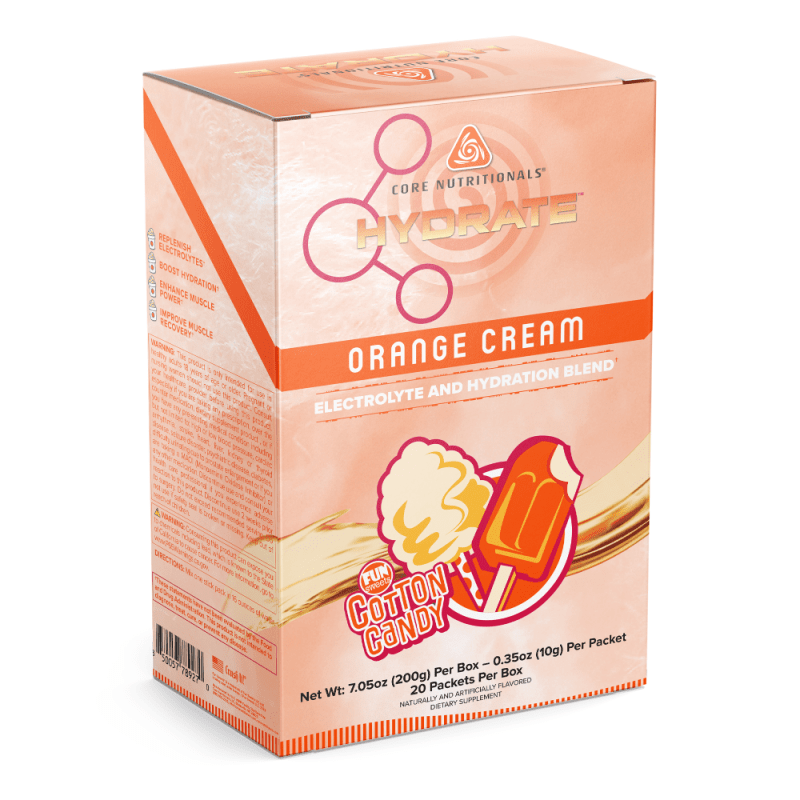
For those situations, we keep Core Nutritionals Hydrate Electrolyte Hydration Support on hand. It's a straightforward way to put minerals back without guessing.
Hydration for muscle recovery matters for lifters. Muscle is roughly water by weight, and cellular repair depends on fluid delivery.

What this looks like in practice:
A common mistake is treating hydration as separate from nutrition. It isn't. Fluid balance and balanced meals work together. If you're rebuilding after an injury, our four phase muscle rebuild plan lays out the full sequence.
Monitoring hydration is simple if you use signals you already have. No lab required. But the checkpoints only matter if you know how to turn them into a personal target, and that's where most guides stop short.
Use these checkpoints:
Now personalize. There is no universal water target that fits everyone, so adjust your baseline by these factors:
Watch out: these indicators are imperfect. Use them together, not in isolation.
One caution: if you have kidney or heart conditions, or a doctor has told you to limit fluids, follow that guidance. Fluid-restriction cautions are real. Talk to your physician before changing your intake.
If you're healing a specific injury, our guide on speeding up stress fracture healing with diet pairs well with this one.
Use these checkpoints together, not in isolation, to gauge your fluid balance.
| Checkpoint | Target or signal | What it means |
|---|---|---|
| Morning urine color | Pale yellow | In range |
| Morning urine color | Dark yellow | Add fluids |
| Morning urine color | Clear all day | May be overdoing it |
| Body weight | Drop of 2% or more from baseline | Signals dehydration |
| Thirst | Lagging indicator | Don't wait for it |
| Sweat rate | Weigh before and after training | Every pound lost is roughly 16 ounces |
Here's a daily hydration plan you can start today:
That's it. No gimmicks. Just a routine that supports fluid balance during recovery.
When you're ready to build the full plan, shop our muscle recovery supplements to support the work.
Recovery is a grind, and hydration is the cheapest edge you've got. Tiger Fitness stocks the electrolytes, hydration support, and recovery supplements that make the plan easy to follow. We offer the lowest prices, the largest selection, fast shipping, and a rewards program that pays you back. Get started with Tiger Fitness and give your body the fluids it needs to heal faster.
Staying hydrated supports the conditions your body needs to repair tissue. A 2021 review in PubMed Central notes that hydration plays a role in athletic performance, injury prevention, and recovery, and a separate review indexed on PubMed explains that skin hydration is important for effective wound healing because disrupting skin integrity disturbs dermal water balance. Water carries oxygen and nutrients to damaged tissue and helps remove waste. It is not a magic accelerator, but consistent fluid balance gives the healing process what it needs to work.
There is no single number that fits everyone. Your needs depend on body size, sweat losses, climate, and the type of injury. A practical starting point is to drink enough that your urine stays pale yellow and you are not thirsty through the day. If you are sweating heavily or training around the injury, add electrolytes. For a personalized target, use a fitness calculator and adjust based on how you feel and how your recovery is progressing.
They can be, especially if you are sweating a lot or training in heat. Electrolytes for injury recovery help maintain fluid balance when water alone is not enough. Sodium, potassium, magnesium, and calcium are lost through sweat and support muscle function. A ready-to-drink option like Jocko Fuel Hydrate RTD or a stick pack like Cwench Hydration can make it easier to stay consistent. Plain water is still the base; electrolytes are the add-on when your losses are high.
Dehydration can work against the healing process. The PubMed-indexed review on skin hydration and wound healing notes that disrupting dermal water balance interferes with effective wound healing. Staying ahead of thirst is the simple fix.
{"one"=>"Select 2 or 3 items to compare", "other"=>"{{ count }} of 3 items selected"}






Leave a comment