
NEW NULLA BAR FLAVORS
In-Stock Now!

Last Updated: November 20, 2026
Quick Summary
Iron supplements for female weightlifters with low ferritin should follow a clinician's plan, with research suggesting 16 to 60 mg of elemental iron daily may benefit iron-deficient high-level female athletes. Take your dose with vitamin C, keep calcium, coffee, and tea at least 2 hours away, and retest on your clinician's schedule.
Low ferritin matters for female weightlifters because iron builds the hemoglobin that carries oxygen to working muscle, and heavy training plus monthly blood loss drains those stores fast. A 2024 review in Pengelly et al. on iron deficiency in female athletes found that iron deficient high level female athletes may benefit from 16 to 60 mg of elemental iron daily. That is a research range, not a prescription.
Here is the part most lifters miss. Iron deficiency shows up as flat sets, slow recovery, and breathlessness between heavy squats long before any lab flags anemia. Women grinding through strength blocks with nothing left in the tank often describe this pattern.
Low ferritin is a marker of depleted iron stores. It is not a diagnosis on its own.
Common causes beyond menstruation:
If you are a female weightlifter chasing strength gains, see our supplement guide for CrossFit athletes for the bigger nutrition picture.
There is no single ferritin number that fits every female athlete. Optimal ferritin levels for female athletes depend on symptoms, training load, and the full iron panel, not one value in isolation. Anyone who quotes you one magic number is selling you something.
Ferritin is the storage protein. Serum iron, hemoglobin, hematocrit, transferrin saturation, and total iron-binding capacity round out the picture. A clinician reads them together, and so should you before you buy a bottle.
Here is how the markers actually fit together:
Watch out: a ferritin number pulled from a single test, without hemoglobin and saturation, can mislead you. Get the full panel, and get it drawn under consistent conditions so you can compare apples to apples on retest.
A 2026 clinical trial record on ClinicalTrials.gov study NCT07084298 describes research into oral iron's effects on muscle iron levels in females with suboptimal iron status. That tells you researchers are looking beyond blood markers alone, and it is a reminder that bloodwork is a snapshot, not the whole story.
For a weightlifter, the practical takeaway is this: bring your full panel to your appointment, ask what each number means in the context of your training, and do not let a single ferritin value drive a decision on its own.
Food first, always. How to increase iron levels quickly with food comes down to two things: heme iron and smart pairing. But for a female weightlifter, it also comes down to fitting iron-dense meals around training, because the best iron meal in the world does nothing if you skip it during a strength block.
Heme iron from red meat, poultry, and fish absorbs better than plant iron. Plant sources like lentils, spinach, and fortified cereal still count, especially with vitamin C at the same meal. The catch is volume: you need more plant iron to match a smaller serving of heme iron, and that matters when you are already eating to support heavy training.
Practical moves that fit a lifting schedule:
Watch out: loading up on iron foods for a week will not fix months of depletion. Food moves the needle slowly, and if your ferritin is genuinely low, a clinician may recommend supplementation alongside diet rather than instead of it.
Ostrim Grass-Fed Beef Sticks are a real option here. Each stick provides iron and amino acids as part of its protein content. Grab them at grass-fed beef sticks for $24.99.
One more thing lifters get wrong: restrictive eating and low energy availability drain iron stores faster than any single meal can refill them. If you are cutting hard for a meet or a weight class, that is exactly when your iron intake needs attention, not less.
What helps absorb iron supplements is vitamin C and an empty-ish stomach. What blocks them is calcium, tea, coffee, and certain minerals taken at the same time.
Timing rules that actually work:
A common mistake is swallowing iron with a protein shake loaded with milk. That calcium competes. Move the shake.
Here is the timing cheat sheet for getting iron in without fighting your own stack.
| Item | Effect on iron | Timing rule |
|---|---|---|
| Vitamin C or citrus drink | Helps absorption | Take with your dose |
| Calcium supplements and dairy | Blocks absorption | Keep 2 hours away |
| Coffee and tea | Blocks absorption | Skip for an hour around your dose |
| Zinc and magnesium | Blocks absorption | Separate from iron |
| Protein shake loaded with milk | Calcium competes | Move the shake |
Iron bisglycinate is a chelated form that many lifters tolerate better than ferrous sulfate, which is the cheap workhorse linked to stomach upset. Tolerability is the trade-off.
Gastrointestinal side effects drive poor adherence. If a form makes you quit, it does nothing.
Label reading checklist:
Browse the Iron Bisglycinate category to compare forms side by side.
Dosing belongs to your clinician, but the routine around it is yours to control.
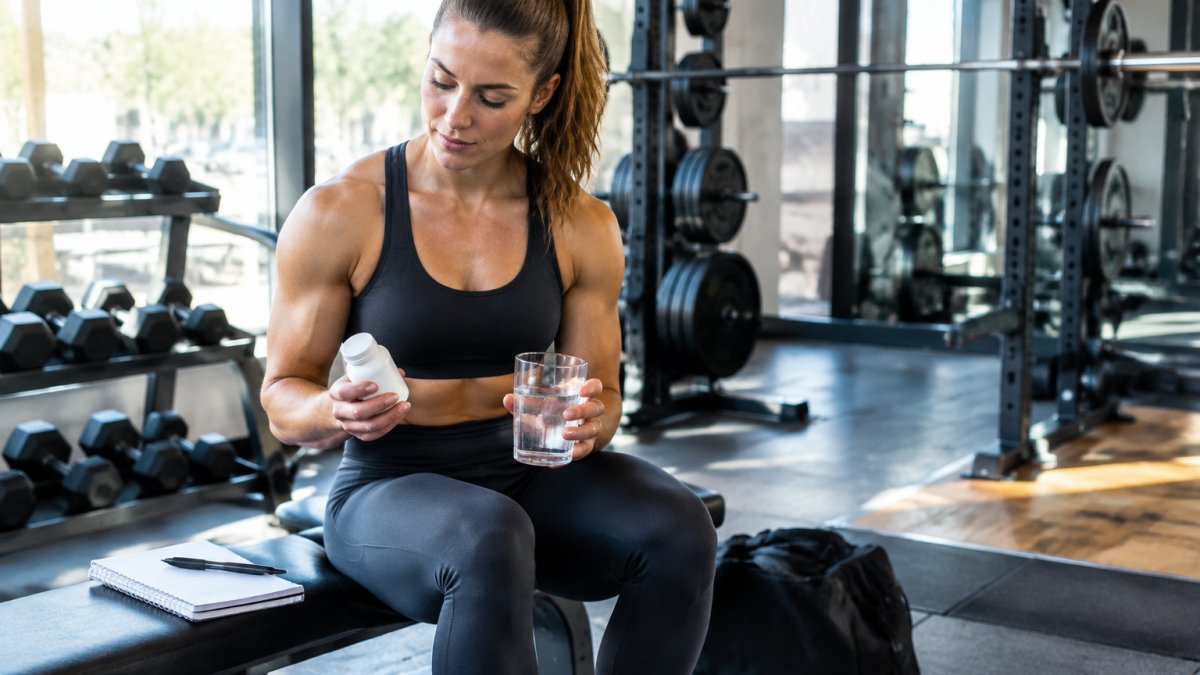
A simple daily framework:
Follow-up is where most plans fall apart. A 2024 review by Cohen et al. states oral iron therapy for iron deficiency should run at least three months, per the adolescent iron review. Retesting too early tells you nothing.
See a clinician if you have:
The American Medical Association guidance is blunt: take iron only if you are deficient and a doctor recommends it. Improved markers do not guarantee better performance either.
We keep this simple. Get tested, get a plan, then buy what fits it.
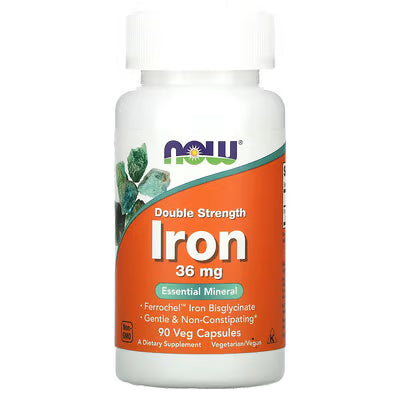
NOW Foods Iron 36 mg delivers 36 mg elemental iron per capsule in a highly bioavailable form, non-GMO and vegetarian, for $9.78. Take one daily with a meal or as your healthcare professional directs. Keep it out of reach of children.
Build the rest of your stack with our free fitness tools and calculators and our NOW Foods Iron listing.
Low ferritin will quietly cap your strength gains if you let it. Get the labs, fix the diet, and choose a tolerable form you will actually stick with. Tiger Fitness stocks NOW Foods Iron, Ostrim beef sticks, and the guides to support the plan, all at low prices with fast shipping and real customer service. Get started with Tiger Fitness and train with your iron stores working for you, not against you.
Low ferritin means your iron stores are running thin, and iron is central to oxygen transport and energy production. Iron deficiency can limit performance, and research on iron repletion in athletes is mixed on how much it changes training output. Treat low ferritin as a limiter to fix, not a verdict on your training.
Only with confirmed deficiency and a clinician's guidance. Take iron supplements only if you are iron deficient and your doctor recommends them. Get ferritin, hemoglobin, and transferrin saturation tested first, then let your clinician set the dose and duration based on your labs.
Expect months, not days. Expect months rather than days, and plan on retesting with your clinician rather than on a fixed guess.
Iron bisglycinate is a chelated form many lifters tolerate better than ferrous sulfate, though tolerability varies person to person. Ferrous sulfate remains the most studied form, and a 2026 meta-analysis found it significantly improved hemoglobin and ferritin in active females. Whichever form you choose, take it with food if stomach upset hits, and split doses across the day. Gastrointestinal side effects are the main reason people quit early, so adherence matters more than the label.
{"one"=>"Select 2 or 3 items to compare", "other"=>"{{ count }} of 3 items selected"}

Leave a comment