




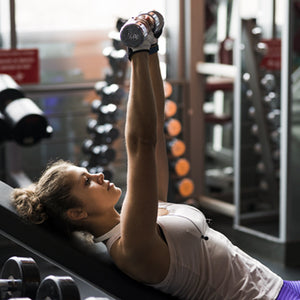
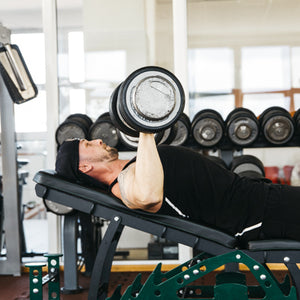


About this workout
This is the first month. Not the month you get lean, not the month you get strong; the month you become a person who trains. Three full body sessions a week for four weeks, built on dumbbells, machines and your own bodyweight. Thirty to forty-five minutes a session. No barbell, and that is deliberate. Your job in the next four weeks is not to move a big number. It is to finish twelve workouts, learn what a clean rep feels like, and walk into the gym without having to talk yourself into it.
Who This Program Is For
- The true beginner who has never followed a written program, or has not trained in years and is starting over from zero.
- Anyone who wants general health and general fitness first: better energy, better posture, a body that handles stairs and suitcases without complaint.
- Men and women who can commit to three days a week, thirty to forty-five minutes a day, and want a plan that fits inside that budget instead of pretending it does.
- The lifter who is intimidated by the barbell area and wants a month of real training before going anywhere near it.
Who this is NOT for: anyone who already trains consistently. If you have six solid months behind you, this is too little volume and too little load to move you, and you will be bored by week two. It is also not for someone chasing a specific competition, a contest prep, or a hard fat loss deadline. This program does not have a number on it. It has a habit on it. If you want to see what fifteen or twenty pounds of muscle costs, that conversation starts in month three, not here.
What You'll Need
- Dumbbells in a range of weights. You need light pairs for lateral raises and curls and something meaningfully heavier for goblet squats and rows. A commercial gym rack covers this; a home set with adjustable dumbbells from roughly 10 to 50 pounds also works.
- Three machines: a leg press, a leg extension and a lying leg curl. If your gym is missing one of them, the substitutions are in the FAQ. No barbell and no rack are required anywhere in this program.
- Bodyweight space and one elevated surface. A mat or a clear patch of floor about six feet long for planks, glute bridges and the dumbbell lunges, which are done in place, not walking, plus a bench, box, or sturdy rail at roughly knee to hip height to put your hands on for incline push-ups and to sit in front of for bench dips. That is the full list.
The Program
Three full body days a week, on non-consecutive days. Monday, Wednesday and Friday is the standard, but Tuesday, Thursday and Saturday works exactly as well; what matters is a rest day between sessions so your legs are not wrecked when you show up again. Every session hits legs, an upper body push, an upper body pull and some core, so if life eats one workout you have still trained your whole body twice that week. Each day runs six exercises, fifteen or sixteen total working sets, which keeps the whole session inside forty minutes with the warm-up included. The heavier compound movements come first while you are fresh. You will see the same row on Day 1 and Day 3 on purpose; a beginner gets more from repeating a pattern than from a new exercise every session. And you will not see a barbell, because month one is about showing up and learning to move. The barbell comes next, and it will be there when you are ready for it.
| Day 1 | |||
|---|---|---|---|
| Full Body A | |||
| Exercise | Sets | Reps | Rest |
| Goblet Squat | 3 | 8-10 | 90 sec |
| Push Ups | 3 | 5-10 | 75 sec |
| Bent Over Dumbbell Row | 3 | 8-10 | 90 sec |
| Leg Extension | 2 | 12-15 | 60 sec |
| Dumbbell Lateral Raise | 2 | 12-15 | 45 sec |
| Plank | 2 | 30-45 sec hold | 45 sec |
| Day 2 | |||
|---|---|---|---|
| Full Body B | |||
| Exercise | Sets | Reps | Rest |
| Leg Press | 3 | 10-12 | 90 sec |
| Standing Dumbbell Shoulder Press | 3 | 8-10 | 75 sec |
| Dumbbell Rear Delt Row | 3 | 12-15 | 75 sec |
| Dumbbell Romanian Deadlift | 3 | 8-10 | 90 sec |
| Dumbbell Curls | 2 | 10-12 | 60 sec |
| Side Plank | 2 | 20-30 sec per side | 45 sec |
| Day 3 | |||
|---|---|---|---|
| Full Body C | |||
| Exercise | Sets | Reps | Rest |
| Dumbbell Lunges | 3 | 8-10 per leg | 90 sec |
| Incline Push-ups | 3 | 10-15 | 60 sec |
| Bent Over Dumbbell Row | 3 | 10-12 | 90 sec |
| Lying Leg Curl | 2 | 12-15 | 60 sec |
| Bench Dips | 2 | 10-12 | 60 sec |
| Glute Bridge | 2 | 12-15 | 45 sec |
How to Progress
Four weeks, four jobs. One per week, in this order.
Week 1. Learn the movements and go too light on purpose. Every working set should finish with four or five reps still in the tank. If you are guessing on a weight, guess low; you cannot learn a movement pattern while you are fighting the load. Write down what you used on every exercise. That log is the program. Do not skip it, and do not try to remember it.
Week 2. Same weights, better reps. Slow the lowering phase to about two seconds, pause for a beat at the bottom of the squat and the top of the row, and stop every set two reps before failure. Most of you will be sore after week 1 and less sore after week 2. That is the adaptation working, not the program getting easier.
Week 3. Now you add load. On any exercise where you hit the top of the listed rep range on every set with clean form, go up next session: five pounds on the dumbbell movements, ten to twenty on the leg press. On the bodyweight movements you add reps instead of weight; when Push Ups hit 10 clean, keep going to 12, and when Incline Push-ups hit 15, lower the surface you are pushing from. On the planks, add ten seconds to the hold.
Week 4. Repeat week 3's weights and try to beat the reps you logged, then finish the month. No max attempts, no testing, no "let me see what I can do" on the last day. The point of the final week is to arrive at twelve completed sessions with your form intact. Then, and only then, roll into month two: add a fourth day, or move to a program that puts a barbell in your hands.
Warm-Up and Recovery Notes
Five to six minutes, every session, no exceptions. Three to four minutes of easy cardio to get warm and breathing, then eight to ten unloaded Body Squat reps, ten arm circles each direction, and one easy set of the first exercise of the day at about half the weight you plan to use. That last set is the real warm-up; it tells you whether today is a good day or a grinding one before you have committed to anything heavy. Do not stretch cold and do not spend fifteen minutes on the foam roller. Warm up, then train.
Here is what month one actually feels like, so nothing surprises you. You will be sore after the first two or three sessions, sometimes badly, and it will fade by week two and mostly stop by week three. Your strength will go up fast, faster than it ever will again, and almost none of that is new muscle; it is your nervous system learning to recruit what you already have. And you will see very little in the mirror. Four weeks is not enough time for visible change on a beginner, and anyone telling you otherwise is selling something. That is normal. Month two is where the mirror starts to catch up, and it only happens if month one gets finished. Sleep seven to nine hours, walk on the off days, and take a full rest day between sessions. That rest day is part of the program, not a gap in it.
Nutrition and Supplementation
Do not overhaul your diet in the same month you start training. Pick two things and hold them: get roughly 0.7 to 1 gram of protein per pound of bodyweight per day, and eat a real vegetable or piece of fruit at most meals. That is it. If fat loss is a goal, run a 300 to 500 calorie deficit off your maintenance intake and expect half a pound to a pound a week, which over these four weeks is two to four pounds. If you are underweight and want to add size, add 250 to 300 calories a day instead. Drink water, and eat something with protein and carbs in the two hours before you train so you are not running the session on fumes.
You do not need a supplement to make this program work, and I am not going to pretend otherwise on a beginner plan; if you want two things that genuinely fill gaps after your food is handled, a protein powder makes the daily protein number easier to hit on busy days, and a basic multivitamin covers what a still-improving diet misses. Both are optional, and both come after the eating, not instead of it.
FAQ
My gym does not have a leg press, a leg extension or a lying leg curl. Now what? Substitute inside the plan. Leg Press becomes a second set block of Goblet Squat at 10-12 reps. Leg Extension becomes Step Up. Lying Leg Curl becomes Dumbbell Romanian Deadlift for 10-12, which loads the hamstrings without duplicating the Glute Bridge already on Day 3. None of these swaps change the shape of the program.
Why is there no bench press, squat or deadlift in a beginner program? Because the barbell versions of those lifts need a rack, a bench and a coach's eye, and none of that is the bottleneck in month one. Your bottleneck is showing up three times a week. Dumbbells and machines let you learn to squat, hinge, push and pull with far less that can go wrong, and the strength you build here transfers directly. You get the barbell in month two, when you have twelve sessions of practice behind you instead of zero.
Can I add cardio, or extra days? Walk as much as you like; it is the best thing you can add and it costs you nothing in recovery. If you want structured cardio, put twenty to thirty minutes of easy work on one or two off days, not after your lifting sessions, and keep it easy enough to hold a conversation. Do not add a fourth lifting day inside these four weeks. Finish the twelve sessions as written first, then expand.


Questions and results
Ask a coach
Running this program? Tell us what week you are on and how the progression is going. A coach answers every question here.