
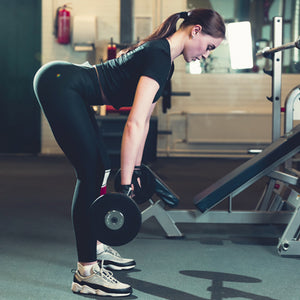



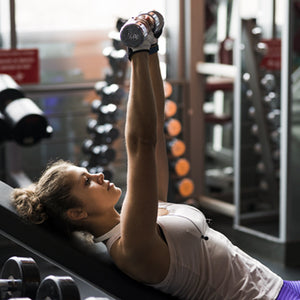
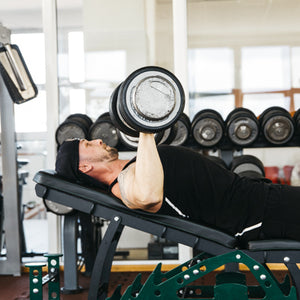


About this workout
It is 5pm. Every rack is taken, there is a line for the bench, and someone is doing curls in the squat rack with headphones on. You have 50 minutes before you have to leave. Most people handle this by standing around waiting, then bailing on half the session. This plan handles it differently. Every single exercise here has a second exercise listed next to it that trains the same thing. If the first one is busy, you take the swap and keep moving. You are never waiting, you are never negotiating, and you are never driving home having done four sets in an hour.
Who This Program Is For
- You train at a commercial gym between 4pm and 8pm and the place is packed.
- You have been lifting for at least six months and know how to run a set properly.
- You want four full body sessions a week that still work when half the equipment is occupied.
- You are tired of losing 20 minutes a session standing next to a bench waiting for someone to finish.
Who this is NOT for: If you are brand new to lifting, learn the movements at a quiet hour first; making judgment calls about swaps mid session is easier once the lifts themselves are automatic. This is also not for you if you are training for a powerlifting meet, because you need the competition lifts done in a specific order with a specific bar, and no swap list changes that. Train at 6am instead.
What You'll Need
- A commercial gym with dumbbells, cable stations and selectorized machines.
- 45 to 60 minutes, four days a week.
- A written log, on paper or on your phone, so you can track what you actually did and which version you used.
The Program
Four full body days a week. Monday, Tuesday, Thursday and Friday is the cleanest setup, but any four days with at least one rest day in the middle works. Each session trains legs, a push, a pull and some smaller work, so nothing depends on one specific day going perfectly. Every row in every table lists a main exercise and a swap. The swap is not a downgrade, it is a second correct answer. Walk in, look at what is free, and start there. If exercise one is occupied, do exercise three, then come back. Order inside a session matters far less than people think; what matters is that all the sets get done. The only rule is that you finish the day's list before you leave.
| Day 1 | |||
|---|---|---|---|
| Full Body A | |||
| Exercise | Sets | Reps | Rest |
| Leg Press | 4 | 10-12 (swap: Hack Squat) | 90 sec |
| Dumbbell Bench Press | 4 | 8-10 (swap: Incline Dumbbell Bench Press) | 90 sec |
| Lat Pulldown | 4 | 8-10 (swap: Seated Cable Rows) | 90 sec |
| Dumbbell Romanian Deadlift | 3 | 10-12 (swap: Lying Leg Curl) | 90 sec |
| Dumbbell Lateral Raise | 3 | 12-15 (swap: Cable Lateral Raise) | 45 sec |
| Tricep Pushdown | 3 | 12-15 (swap: Lying Dumbbell Tricep Extension) | 45 sec |
| Cable Crunch | 3 | 15-20 (swap: Weighted Crunch) | 45 sec |
| Day 2 | |||
|---|---|---|---|
| Full Body B | |||
| Exercise | Sets | Reps | Rest |
| Goblet Squat | 4 | 10-12 (swap: Dumbbell Squat) | 90 sec |
| Seated Cable Rows | 4 | 10-12 (swap: One Arm Dumbbell Row) | 90 sec |
| Incline Dumbbell Bench Press | 3 | 10-12 (swap: Standing Cable Chest Press) | 90 sec |
| Hip Thrust (Weighted Hip Extension) | 3 | 10-12 (swap: Cable Pull Through) | 90 sec |
| Dumbbell Shoulder Press | 3 | 10-12 (swap: Cable Shoulder Press) | 60 sec |
| Cable Hammer Curl | 3 | 10-12 (swap: Hammer Curls) | 45 sec |
| Standing Calf Raise | 3 | 12-15 (swap: Calf Press) | 45 sec |
| Day 3 | |||
|---|---|---|---|
| Full Body C | |||
| Exercise | Sets | Reps | Rest |
| Hack Squat | 4 | 10-12 (swap: Leg Press) | 90 sec |
| Close Grip Pulldown | 4 | 10-12 (swap: Dumbbell Pullover) | 90 sec |
| Dumbbell Flys | 3 | 12-15 (swap: Pec Dec Butterfly) | 60 sec |
| Dumbbell Walking Lunges | 3 | 10-12 per leg (swap: Dumbbell Step Ups) | 90 sec |
| Face Pulls | 3 | 15-20 (swap: Reverse Flyes) | 45 sec |
| Cable Rope Overhead Tricep Extensions | 3 | 12-15 (swap: Bench Dips) | 45 sec |
| Wood Chop | 3 | 12-15 per side (swap: Russian Twist) | 45 sec |
| Day 4 | |||
|---|---|---|---|
| Full Body D | |||
| Exercise | Sets | Reps | Rest |
| Bulgarian Split Squat | 3 | 10-12 per leg (swap: Dumbbell Reverse Lunge) | 90 sec |
| One Arm Dumbbell Row | 4 | 10-12 per arm (swap: T Bar Row) | 90 sec |
| Hammer Grip Dumbbell Bench Press | 3 | 10-12 (swap: Pec Dec Butterfly) | 90 sec |
| Lying Leg Curl | 3 | 10-12 (swap: Standing Cable Leg Curl) | 60 sec |
| Arnold Press | 3 | 10-12 (swap: Alternating Cable Shoulder Press) | 60 sec |
| Preacher Curl | 3 | 10-12 (swap: Incline Dumbbell Curls) | 45 sec |
| Reverse Grip Tricep Pushdown | 3 | 12-15 (swap: One Arm Seated Overhead Tricep Extension) | 45 sec |
How to Progress
Eight weeks in three phases. Log the weight, the reps and which version of the exercise you used, because a swap you cannot compare to last week is a set you cannot progress.
Weeks 1 to 2. Set your baselines, and set them twice. Find a working weight for the main exercise and for its swap, and write both down. That second number is the whole point; it is what lets you take the swap in week 5 without guessing. Stop every set two or three reps short of failure. This phase feels too easy and it is supposed to.
Weeks 3 to 5. Push the weight. When you hit the top of the rep range on every set of a movement, add load the next time you do it. On a machine that is usually one plate on the stack. On dumbbells it is the next pair up. Your reps will drop back to the bottom of the range when the weight jumps, which is correct, so climb again. If the gym is a zoo and you take the swap, progress the swap on its own numbers; the two lifts do not have to move in lockstep.
Weeks 6 to 8. Add a fourth set to the first three exercises of each day and take the final set of your isolation work to within one rep of failure. Sessions will run closer to 60 minutes now, so this is the stretch where the swap list earns its keep. At the end of week 8, retest your top weights on both the mains and the swaps, then run the eight weeks again from the new numbers.
Warm-Up and Recovery Notes
Five minutes on a bike, treadmill or rower, then one or two ramp up sets on the first exercise you actually get your hands on. Notice the wording. If the leg press is occupied and you start on the pulldown instead, warm up the pulldown; do not warm up for a machine you are not using yet. Peak hour makes people skip this because they feel rushed and watched, which is exactly backwards, since going in cold on a heavy first set is how you end up hurt in a crowded room. Two light sets cost you 90 seconds. Save the long stretching for after.
Four training days means three rest days, and those three days are doing real work. Sleep seven to nine hours; nothing in this plan matters more than that. Keep the off days easy: walk, ride, get outside. If you are still wrecked 72 hours after a session, the problem is almost always food or sleep, not the program, so fix the input before you cut the volume. One more thing specific to training at 5pm: a busy gym is stressful, and that stress is real. If a night comes where the place is unbearable and you are already fried from work, do the first four exercises hard and go home. Four honest exercises beats an hour of standing around.
Nutrition and Supplementation
You cannot swap your way out of a bad diet. To build muscle, eat roughly 250 to 400 calories above maintenance and get about one gram of protein per pound of goal body weight every day. If you want to lean out instead, run the exact same training and eat 300 to 500 below maintenance with the same protein target. That is the whole thing. Because you are training at the end of the workday, get a real meal in two to three hours before you lift, or you will show up to a packed gym running on nothing and wonder why every weight feels heavy. Weigh in once a week under the same conditions and judge the trend over a month, not over three days.
Keep it boring: a protein powder so hitting your protein number is realistic, creatine monohydrate at five grams a day, and a multivitamin. Food and training first, always.
FAQ
When is the best time to go to a busy gym? Before 7am or after 8pm, and Friday evening is quieter than you think. That is the honest answer, and for a lot of people it is not a usable one, which is why this plan exists. If you can move even two of your four sessions to an off peak slot, do it; you will get through those two faster and you can save the heavier work for them. If you cannot move any of them, stop treating 5pm as a problem to solve and start treating it as the condition you train in.
How do I superset without hogging equipment? At peak hour, do not superset two separate stations. Camping on a bench and a cable stack at the same time is the fastest way to annoy everyone in the room, and someone will eventually just take one of them anyway. If you want the density, superset two things you can do from one spot: a pair of dumbbells lets you press and then row without moving. Or pair a loaded exercise with something that needs no equipment at all. Save the two station supersets for the quiet hours.
Are machines as good as free weights for building muscle? For building muscle, yes, close enough that it should not change your decision. Muscle responds to hard sets taken near failure through a full range of motion, and it does not know what the resistance is attached to. Free weights ask more of your stabilizers and carry over better to athletics; machines let you push closer to failure safely and are easier to load in small jumps. Both grow you. In a crowded gym the machine that is free right now is better than the barbell you are waiting for.


Questions and results
Ask a coach
Running this program? Tell us what week you are on and how the progression is going. A coach answers every question here.