





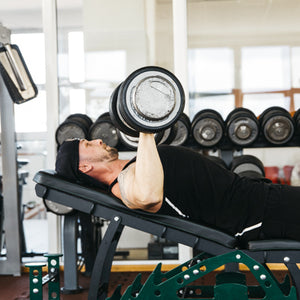


About this workout
The handstand push up looks like a party trick. It is not. It is a pressing strength standard that most lifters never earn because they skip the boring part and go straight to kicking up against a wall. This is a 12-week plan that builds the press from the floor up: pike push ups first, then loaded wall holds, then wall handstand push ups, then the first honest freestanding reps. Three days a week, 30 to 45 minutes, bodyweight only. It will make your shoulders stronger and more durable. It will not make you good at handstands in a month, because nothing does.
Who This Program Is For
- Lifters who can already do 15 clean push ups and hold a solid plank, and want a real vertical pressing goal instead of another set of lateral raises.
- People training at home or in a garage with a wall, a pull up bar, and a couple of resistance bands.
- Anyone whose overhead pressing has stalled and who suspects the problem is shoulder stability and midline control, not effort.
- Intermediate trainees, men and women, who are willing to spend 12 weeks on one skill and accept that the wall is a tool, not a failure.
Who this is NOT for: Beginners. If you cannot do 10 push ups with your chest touching the floor, or you cannot get your arms overhead without your ribs flaring and your lower back arching, this program will hand you a shoulder problem. It is also not for anyone with a current shoulder, elbow, or wrist injury, or anyone with unmanaged blood pressure or a condition that makes being upside down a bad idea. Go get those cleared first. Nobody has ever regretted waiting eight weeks to start a handstand program. Plenty of people regret rushing it.
What You'll Need
- A clear wall with about six feet of floor in front of it, and a flat, non-slip surface. Carpet is worse than hardwood for wrist position.
- A pull up bar or something you can hang from, plus a bench or sturdy chair, and a set of dip bars or parallettes if you have them.
- A light and a medium resistance band, and a couple of books or a low box to elevate your feet for pike work.
The Program
Three sessions a week with at least one full day off between them. Day 1 is the strength day: heavy pike pressing, wall holds, and the accessory work that keeps your shoulders healthy while the load climbs. Day 2 is the position day: longer wall holds, hard midline work, and pulling volume to balance all the pressing. Day 3 is the skill day, where the actual handstand push up lives, backed by supporting pressing volume and rear delt work. The order matters. Skill and heaviest pressing happen when you are fresh, never at the end of a session when your shoulders are already cooked.
| Day 1 | |||
|---|---|---|---|
| Vertical Press Strength | |||
| Exercise | Sets | Reps | Rest |
| Band Shoulder Dislocate | 2 | 10-12, slow and wide | 30 sec |
| Pike Push Up | 5 | 5-8, feet elevated, 3 sec down | 2 min |
| Wall Handstand Hold | 4 | 20-40 sec, chest to wall | 90 sec |
| Decline Push Ups | 3 | 8-12 | 75 sec |
| Bench Dips | 3 | 10-15 | 60 sec |
| Banded Lateral Raise | 3 | 15-20 | 45 sec |
| Banded Pull Apart | 3 | 20-25 | 45 sec |
| Day 2 | |||
|---|---|---|---|
| Position, Midline and Pull | |||
| Exercise | Sets | Reps | Rest |
| Thoracic Spine Rotation | 2 | 8 per side | 30 sec |
| Wall Handstand Hold | 5 | 30-60 sec, stack ribs over hips | 90 sec |
| Hollow Body Hold | 4 | 20-40 sec | 60 sec |
| Inverted Row | 4 | 8-12, 2 sec pause at the top | 75 sec |
| Dead Hang | 3 | 30-45 sec | 60 sec |
| Side Plank | 3 | 30-45 sec per side | 45 sec |
| Banded Face Pull | 3 | 15-20 | 45 sec |
| Day 3 | |||
|---|---|---|---|
| Skill and Pressing Volume | |||
| Exercise | Sets | Reps | Rest |
| Handstand Push Ups | 5 | 1-5, or 5 sec negatives to a pad | 2-3 min |
| Pike Push Up | 3 | 8-12 | 90 sec |
| Chest Dips | 3 | 6-10 | 90 sec |
| Push Ups | 3 | 15-20 | 60 sec |
| Banded Reverse Fly | 3 | 12-15 | 45 sec |
| Banded Face Pull | 3 | 15-20 | 45 sec |
| Superman | 3 | 12-15, 2 sec hold | 45 sec |
How to Progress
Twelve weeks, four blocks, and one rule: leverage before reps.
Weeks 1 to 4. Build the base. Keep your pike push up feet on the floor or a low step and add one rep per set each week before you raise the elevation. Wall holds are chest to wall, not back to wall, because chest to wall teaches the line you actually need. On Day 3, skip the handstand push up and do 5 second negatives into a stack of cushions instead. If you cannot control the negative, you have no business doing the rep.
Weeks 5 to 8. Raise the pike. Feet go up to bench height, which shifts more bodyweight onto your shoulders and turns the pike push up into a real vertical press. Wall holds climb toward 60 seconds. Start partial range handstand push ups on Day 3: top half only, controlled, stopping well before your head reaches the floor. Add depth only when the rep quality holds for all five sets.
Week 9, the deload. This is not optional and it is not a week off. Cut every set count by roughly 40 percent, keep the same exercises, and stop every set two or three reps short of failure. Wall holds drop to 20 seconds. No negatives, no partials, no testing. Your shoulders and elbows have been under overhead load for eight straight weeks and this is the week the connective tissue catches up. Skip it and week 11 is where you find out why it was in the plan.
Weeks 10 to 12. Full range wall handstand push ups, head lightly touching a folded towel, driving to a locked out elbow. Work up to 3 sets of 3 clean reps. In the last two weeks, add 3 to 5 kick up attempts to a freestanding hold at the start of Day 2, when you are fresh. Freestanding holds are a balance skill and they need short, frequent, unfatigued practice, not grinding. Retest your best set of pike push ups and your longest wall hold at the end of week 12.
Warm-Up and Recovery Notes
Never go upside down cold. Spend eight to ten minutes first: two minutes of easy movement to raise your temperature, then wrist work with your palms flat on the floor rocking forward and back and then side to side, then Band Shoulder Dislocate for two sets of 10, then Banded Pull Apart for two sets of 20, then five to eight ramp up push ups. Wrists are the joint that fails first in this program and almost nobody prepares them. If your wrists hurt, spread your fingers wider, grip the floor, and consider working on parallettes or a slightly elevated surface.
Three days a week is the ceiling here, not the floor to build on. Handstand work is central nervous system heavy and it is easy to feel fine while accumulating shoulder fatigue you cannot see. Take the full rest between hard sets, sleep seven to nine hours, and if your shoulders feel pinchy at the top of a press, stop the session and fix your position before you add another rep. Progress in a skill program comes from consistent quality reps across months, not from a heroic Tuesday.
Nutrition and Supplementation
You are moving your own bodyweight overhead, so bodyweight matters. If you are carrying extra fat, a modest deficit of 300 to 500 calories under maintenance will make every rep in this program easier, and no amount of clever programming replaces that. If you are already lean, eat at maintenance or slightly above. Either way, hit 0.8 to 1 gram of protein per pound of goal bodyweight, keep carbs high enough to fuel three quality sessions a week, and do not try to build a new skill in a crash diet. Strength skills and aggressive deficits do not cooperate.
Most people cover the gap between what they eat and what they need with a daily protein powder to hit their intake without another chicken breast and a multivitamin to keep the basics covered while training hard.
FAQ
Can I skip the wall and go straight to freestanding? You can, and you will spend six months building a bad handstand instead of three months building a good one. The wall gives you the line and the time under tension you need to press. Freestanding balance is a separate skill layered on top of that strength, and it belongs in weeks 10 to 12, not week 1.
What if I finish 12 weeks and still cannot do a full handstand push up? That is a normal outcome, not a failure. Many intermediate lifters need 18 to 24 weeks. Run the program again from week 5 with your new numbers. If your pike push ups went from a low step to bench height and your wall hold went from 20 seconds to a minute, the program worked whether or not you hit the rep.
Will this build shoulder size or just skill? Both, but be realistic. Pike pressing, wall holds, and dips give your delts and triceps real mechanical tension, and most people add visible shoulder and upper back development in 12 weeks. If pure size is your only goal, loaded overhead pressing with progressive weight is a more direct route. This plan trades some hypertrophy efficiency for a skill you keep.


Questions and results
Ask a coach
Running this program? Tell us what week you are on and how the progression is going. A coach answers every question here.