







BEST FOODS TO EAT BEFORE A WORKOUT
7 Foods for Sustained Workout Energy That Actually Work
Last Updated: October 26, 2026
Quick Summary
Eat carb-rich, low-fat foods like oatmeal, bananas, dates, or white rice to secure sustained workout energy, timing a full meal 2-3 hours before training or a light snack 30-60 minutes before. Keep pre-workout fat and fiber low so food digests fast without sitting heavy in your gut.
- Eat a full meal 2-3 hours before training, or a light snack 30-60 minutes before.
- One medium banana delivers roughly 25 grams of carbs and easy to digest sugar.
- For sessions over 60-90 minutes, eat fast carbs during training to avoid hitting the wall.
- Scale carb ranges down under 150 lb and up over 200 lb, adding 10-20 grams.
- Test new fuel during training, never on game day, to avoid gut trouble.
Table of Contents
- Why Your Pre-Workout Meal Decides Your Whole Session
- Best Foods to Eat Before a Workout for Sustained Energy
- How Long Before a Workout to Eat (Timing and Portions)
- Pre-Workout Meals for Energy That Match Your Training
- What to Eat During a Workout to Avoid Hitting the Wall
- Hydration, Electrolytes, and Keeping Your Gut Calm
- Stock Your Gym Bag With Fuel That Works
- Frequently Asked Questions
Why Your Pre-Workout Meal Decides Your Whole Session
What you eat before training sets the ceiling on your performance and your sustained workout energy.
Here's the deal: your body runs on glycogen, the stored form of carbohydrate in your muscles and liver.
At Tiger Fitness, we hear from lifters and athletes every day who train hard but eat like they're guessing.
Below, we'll show you exactly what to eat for sustained workout energy, how much, and when.
Best Foods to Eat Before a Workout for Sustained Energy
The best foods to eat before a workout are carb-rich, low in fat, and easy to digest. They deliver glucose fast without sitting heavy in your gut.
Here are the top picks, and why each one works.
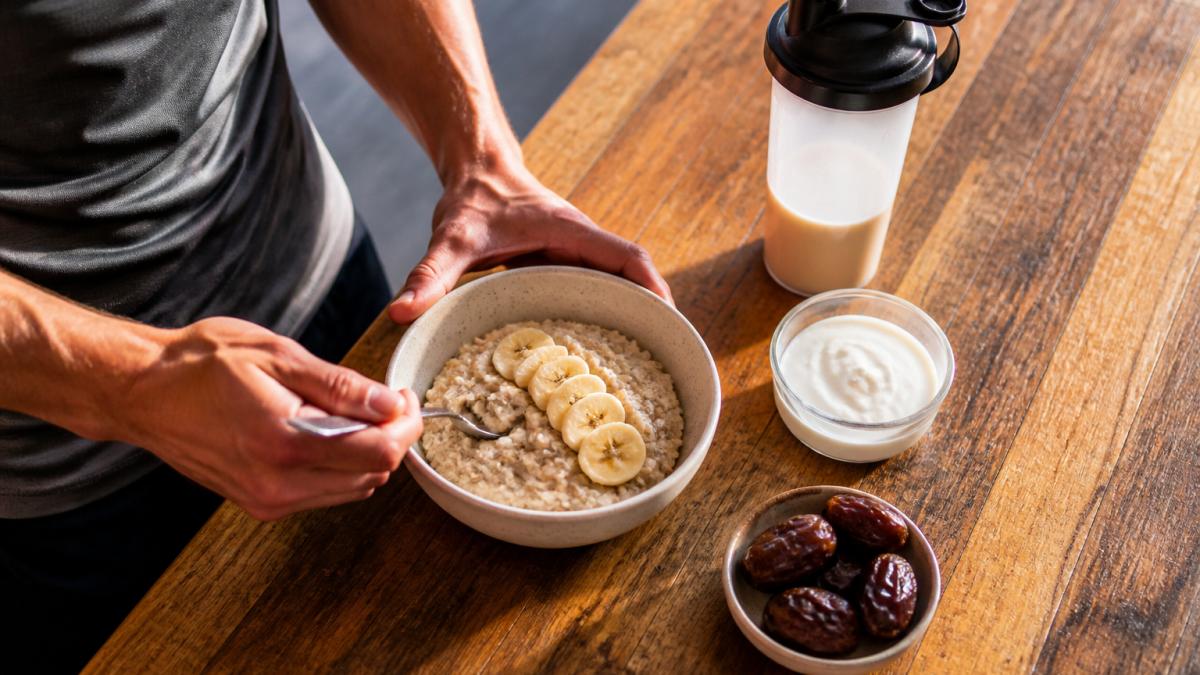
Oatmeal and Whole Grains
Whole grains are a top source of complex carbohydrates for sustained energy release. A 2024 review in a peer-reviewed journal recommends prioritizing complex carbs from whole grains, fruits, vegetables, and legumes for steady fuel and key vitamins (review on post-exercise recovery nutrition).
Oatmeal is the easiest option. It's cheap, fast, and gentle on the stomach.
- Oatmeal: 1 cup cooked, 1-2 hours before training
- Whole-grain toast: 2 slices with a little honey
- Rice: white rice digests faster than brown, which matters close to a session
For a fast-digesting carb source that fits a pre-workout meal, our Elev8 Creamy Rice mixes smooth and goes down easy.

Bananas, Dates, and Other Portable Fruit
Fruit is your best friend when time is tight. Bananas, dates, raisins, apples, and watermelon all deliver quick carbs with natural sugars.
Bananas are the classic gym-bag snack. One medium banana gives you roughly 25 grams of carbs and easy-to-digest sugar.
- Banana: 30-60 minutes before training
- Dates: 4-5 pieces, 30 minutes out
- Watermelon: high water content, good in the heat
Fruit also brings antioxidants and vitamin C, which help with recovery over time.
Greek Yogurt and Complete Protein
Protein doesn't fuel the workout. Carbs do. But protein before training helps with muscle repair and keeps you full.
Greek yogurt is the smart pick. It's a complete protein, easy to digest, and pairs well with fruit or honey for carbs.
- Greek yogurt: 1 cup with a banana
- Whey protein: 1 scoop in water, 60-90 minutes out
Keep fat low before training. Fat slows digestion, and slow digestion means a heavy stomach mid-session.
How Long Before a Workout to Eat (Timing and Portions)
Eat a full meal 2-3 hours before training, or a light snack 30-60 minutes before. The closer you get to your session, the smaller and simpler the meal should be. That's the rule. But the rule is useless without numbers. Here's exactly what to eat and how much, based on how long you have.
3 Hours Out: Full Meal
This is your best window for a mixed meal with protein, carbs, and some fat. You have time to digest, so you can eat real food.
- Carbs: 50-80 grams from rice, potatoes, oatmeal, or pasta
- Protein: 25-40 grams from chicken, lean beef, fish, eggs, or Greek yogurt
- Fat: keep it moderate, 10-15 grams from cooking oil, avocado, or nuts
That meal gives you roughly 70 grams of carbs and 40 grams of protein. It sits well for most lifters and leaves you fueled without feeling heavy.
2 Hours Out: Medium Meal
You still have time for solid food, but keep fat and fiber lower. This is where oatmeal and fruit shine.
- Carbs: 40-60 grams
- Protein: 20-30 grams
- Fat: under 10 grams
That's about 55 grams of carbs and 25 grams of protein. It digests clean and won't sit in your gut.
60 Minutes Out: Light Snack
Now you're in snack territory. Fast carbs, low fat, low fiber. No exceptions.
- Carbs: 30-40 grams
- Protein: optional, 10-15 grams if you tolerate it
- Example: 1 medium banana (25 grams carbs) plus 4-5 dates (20 grams carbs), or a rice cake with 1 tablespoon honey
Skip the protein bar here. Most are high in fat and fiber and will slow you down.
30 Minutes Out: Liquid or Small Snack
If you're eating this close to training, keep it liquid or very small. Your goal is to top off blood sugar, not fill your stomach.
- Carbs: 15-25 grams
- Example: 1 scoop of carb powder in 8-12 oz water, or half a banana
A common mistake is eating a heavy meal 30 minutes before lifting. That food sits in your gut while you're under the bar. Bad idea. If you already ate too close, don't panic, just keep the session moderate and save the heavy fuel for next time.
Adjust for Workout Duration and Intensity
The timing above assumes a typical 45-75 minute session. Adjust like this:
- Under 45 minutes, low intensity: a small snack 30-60 minutes out is plenty. 15-25 grams of carbs.
- 45-75 minutes, moderate to high intensity: follow the 2-hour or 60-minute plan. 40-60 grams of carbs.
- 75-120 minutes, high intensity: eat a full meal 3 hours out and a snack 60 minutes out. Total pre-workout carbs: 60-90 grams.
If you've ever felt flat or shaky mid-session, read our guide on how to manage a pre-workout crash after heavy training before your next heavy day.
Here's the timing and portion breakdown so you can fuel by the clock instead of guessing.
| Time before training | Carbs | Protein | Example |
|---|---|---|---|
| 3 hours out | 50-80 grams | 25-40 grams | Chicken breast, white rice, vegetables, olive oil |
| 2 hours out | 40-60 grams | 20-30 grams | Oatmeal with banana and whey |
| 60 minutes out | 30-40 grams | Optional, 10-15 grams | Banana plus 4-5 dates |
| 30 minutes out | 15-25 grams | Not specified | Carb powder in water or half a banana |
Pre-Workout Meals for Energy That Match Your Training
Your pre-workout meals for energy should match the work ahead. A 30-minute lift needs different fuel than a 2-hour endurance session. Most articles give you a food list and call it a day. That's lazy. Here's how to actually fuel for your training style, your body weight, and your gut.
Strength Training and Powerlifting
Heavy lifting runs on stored glycogen and creatine phosphate. You don't need a massive carb load before a 45-minute session, but you do need enough to support multiple heavy sets.
- Carbs: 30-50 grams, 1-2 hours out
- Protein: 20-30 grams
- Fat: keep low to moderate
If you train first thing in the morning, a banana and a scoop of whey in water 30 minutes out is enough. Don't overcomplicate it.
CrossFit and High-Intensity Interval Training
These sessions are glycolytic, they burn carbs fast. You need fast fuel going in and often during the session if it runs past 60 minutes.
- Carbs: 40-60 grams, 1-2 hours out
- Protein: 20-25 grams
- Example: 1 cup oatmeal with 1 banana and 1 scoop whey, or 2 rice cakes with honey and a protein shake
Endurance Training (Running, Cycling, Rowing)
Long efforts drain glycogen. You need more carbs before and during. This is where most people underfuel and hit the wall.
- Pre-workout meal (3 hours out): 80-100 grams of carbs from rice, pasta, or oatmeal, plus 20-30 grams of protein
- Snack (60 minutes out): 30-40 grams of carbs from a banana, dates, or a carb drink
- During (over 90 minutes): 30-60 grams of carbs per hour. Start early, don't wait until you feel flat.
A 2024 review in a peer-reviewed journal recommends prioritizing complex carbs from whole grains, fruits, vegetables, and legumes for steady fuel and key vitamins (review on post-exercise recovery nutrition). That's your base.
Adjust for Body Weight
The ranges above work for a 150-180 lb athlete. Scale them:
- Under 150 lb: use the lower end of each range
- 150-200 lb: use the middle
- Over 200 lb: use the upper end, and add 10-20 grams of carbs to pre-workout meals
GI Tolerance: Test, Don't Guess
Some athletes get cramps or nausea from certain foods. The fix is simple: try new fuel during training, never on game day. Keep pre-workout meals low in fat and fiber to avoid stomach upset. If you know you're sensitive, stick to white rice, bananas, and liquid carbs. Save the whole grains and high-fiber foods for meals far from training.
Carb Targets by Workout Type and Duration
Here's the summary:
- Under 60 minutes, moderate intensity: 20-30 grams of carbs, 30-60 minutes out
- 60-90 minutes, high intensity: 40-60 grams of carbs, 1-2 hours out
- 2+ hours, endurance: 80-100 grams of carbs 3 hours out, plus 30-60 grams per hour during
Lifters and CrossFit athletes fall in the middle. A bowl of oatmeal with a banana covers most sessions. Endurance athletes need more. Researchers studying five cyclists during the 22-day Tour de France found massive energy demands day after day (study on food intake during the Tour de France). That's the extreme end, but it shows how much fuel long efforts demand.
What to Eat During a Workout to Avoid Hitting the Wall
Eat fast carbs during any session lasting longer than 60-90 minutes.
Solid food gets hard to eat mid-workout. That's where portable fuel wins.
- Energy chews: easy to carry, easy to eat on the move
- Carb powders: mix in a bottle for steady sipping
- Bananas and dates: simple, real food options
Our Honey Stinger Energy Chews are built for this. For longer sessions, Karbolyn Fuel delivers fast fuel that holds steady without a crash.


The thing nobody tells you about hitting the wall: it's usually a fueling problem, not a toughness problem.
Hydration, Electrolytes, and Keeping Your Gut Calm
Dehydration kills performance before you feel thirsty. Even mild fluid loss drags down strength and endurance.
Water alone isn't always enough. When you sweat hard, you lose sodium and other electrolytes.
Here's how we'd handle it:
- Sip water throughout the day, not just around training
- Add electrolytes for sessions over an hour or in heat
- Test your fuel in training, never on game day
Gut trouble is the other issue. Some athletes get cramps or nausea from certain foods and drinks.
For a full breakdown, read how to use hydration supplements for better workouts.
Stock Your Gym Bag With Fuel That Works
The athletes who perform best aren't guessing. They plan their fuel the way they plan their training.
A 2026 Glanbia report on nutrition trends for active adults notes that consumers are reaching for sports drinks, electrolyte drinks, and high-protein, low-carb snacks to support sustained energy (Glanbia nutrition trends report).
One honest caveat: the evidence that low glycemic foods give a bigger performance edge isn't settled.
Build a simple gym bag kit:
- Carb chews or a carb powder
- A shaker bottle
- An electrolyte packet
That's your insurance policy against a flat session.
Frequently Asked Questions
What should I eat before a workout for lasting energy?
Build the meal around complex carbohydrates with a moderate amount of protein. Oatmeal with a banana, whole grain toast with yogurt, or rice with a lean protein all work. A 2024 review in Emerging Perspectives on Post-Exercise Recovery Nutrition points to whole grains, fruits, vegetables, and legumes as the complex-carb sources that release energy steadily. Keep fat and fiber low in the 60 to 90 minutes before training so digestion does not compete with your muscles.
How long before a workout should I eat?
Give yourself 2 to 3 hours for a full meal with protein, carbs, and some fat. A smaller snack of 200 to 300 calories needs about 60 to 90 minutes. If you are eating 15 to 30 minutes out, keep it to quick carbs like a banana or energy chews. The answer to how long before a workout to eat depends on portion size, not the clock alone. Test your timing on training days, not on race day.
Do carbohydrates help sustain workout energy?
Yes. Carbohydrates are the body's preferred fuel during hard training, and they refill glycogen, the stored fuel your muscles burn through. A 2024 review recommends complex carbohydrates from whole grains, fruits, vegetables, and legumes for sustained energy release. For sessions past 60 to 90 minutes, add quick carbs during the workout. Pair carbs with protein afterward to support recovery. Cutting carbs before training is the fastest way to hit the wall early.
What should I eat during a long workout?
For sessions over 60 to 90 minutes, take in 30 to 60 grams of easy-to-digest carbs per hour. Energy chews, a banana, dates, or a liquid carb source all work. Liquid fuel sits better for many athletes during high-intensity work because it empties from the stomach faster. Keep fat and fiber out of your intra-workout fuel. If you sweat heavily or train past an hour, add electrolytes to replace sodium lost through sweat.
Your training deserves fuel that matches the work. At Tiger Fitness, we stock the carbs, electrolytes, and snacks that keep you going, backed by the lowest prices and fast shipping. Use our free fitness calculators to dial in your intake, then get started with Tiger Fitness and train harder, recover faster, and perform your best.

Leave a comment