
NEW NULLA BAR FLAVORS
In-Stock Now!

Best starting point: Barebells Protein Bar. Best for a soft, chewy bite: Barebells Soft Protein Bar. Choose between these barebells protein bars by texture first, then pick a flavor profile you already enjoy; no single flavor wins for every reader.
A protein bar has to fit your nutrition goals and be something you actually want to eat. A dessert-inspired name alone cannot settle either question. Texture, sweetness, ingredients, and serving size all belong in the decision.
Tigerfitness is a shopping option for fitness enthusiasts comparing Barebells protein bars with other sports-nutrition snacks. Start with the two bar formats below, then use the label checklist to narrow your flavor choice. You can also explore Tigerfitness for protein powders and other fitness products.
For your 2026 snack rotation, keep the decision practical: choose the texture you prefer, check the exact flavor’s label, and judge how well the bar fits the moment you plan to eat it. A favorite desk snack does not automatically become your favorite pre-workout food.
The best choice matches your preferences without making your nutrition harder to manage. Use these criteria before treating any flavor ranking as a shopping list:
These criteria place personal fit ahead of a universal taste winner. Your preferred sweetness level and texture matter more than somebody else’s dessert vocabulary.
| Item | Best for | Standout feature | Key limitation |
|---|---|---|---|
| Barebells Protein Bar | First-time shoppers choosing a starting point | Protein snack described as having no added sugar | The bar-line name does not identify your preferred flavor or texture |
| Barebells Soft Protein Bar | Shoppers prioritizing a soft, chewy bite | Explicitly described as soft and chewy | Not the right texture target if you specifically want a crisp snack |
This 2026 comparison separates product format from flavor preference. The table does not assign taste scores, claim a bestselling flavor, or treat the two bar lines as nutritionally identical. Check each specific selection before deciding.
Barebells Protein Bar is the default choice when you want to explore the brand without making softness your main selection criterion. The product description identifies it as a protein snack with no added sugar. That gives you a starting point, not a complete nutrition assessment.
Choose the flavor using familiar preferences rather than a popularity claim. If you usually enjoy a particular dessert profile, begin there and judge the actual bar on sweetness, texture, and finish. A familiar flavor direction makes the decision easier without guaranteeing a favorite.
Best for: First-time Barebells shoppers who want a default bar to assess before choosing a regular flavor.
For 2026, treat the original bar as your baseline. Notice whether you enjoy eating it enough to choose it again, rather than judging it only by its nutrition positioning. A bar that fits your targets but stays untouched is not doing a useful job in your routine.
Verdict: Buy Barebells Protein Bar as your starting point when you do not have a specific soft-texture preference.
Barebells Soft Protein Bar has the clearest texture-based recommendation: its product description explicitly calls it soft and chewy. Choose this line when those qualities matter more to you than exploring an unspecified bar texture. It is a distinct starting point, not proof of better nutrition.
Keep texture and flavor separate when you evaluate it. You can enjoy the softness but dislike a particular flavor direction, or enjoy the flavor while wanting a different bite. Identifying which part works helps you make a better next choice.
Best for: Shoppers who specifically want a soft, chewy protein bar rather than choosing on flavor name alone.
Do not read Soft as a nutrition claim. It describes the eating experience. Your 2026 comparison still needs the exact serving size, nutrition facts, and ingredient list before you decide whether a particular selection belongs in your regular rotation.
Verdict: Buy Barebells Soft Protein Bar when a soft, chewy bite is your priority; skip it when you specifically want crispness.
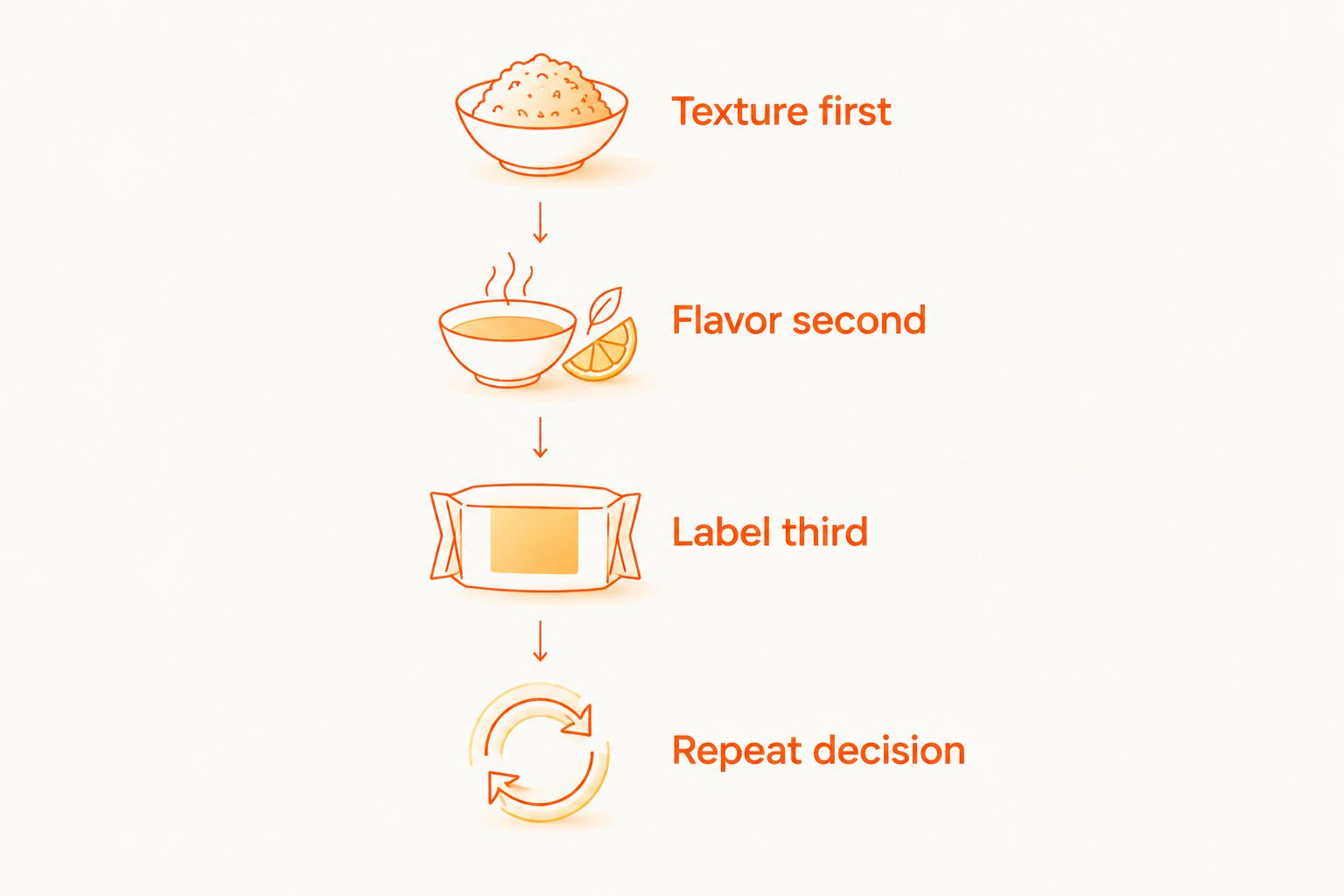
A useful flavor decision starts before you open the wrapper. Follow this sequence to separate preference from nutrition and avoid changing every variable at once.
Decide whether softness and chewiness are requirements or simply acceptable. If they are requirements, Barebells Soft Protein Bar is the direct match. Otherwise, Barebells Protein Bar remains the default starting point.
Write down what you actually want from the bite. A texture preference is more useful than a vague request for the best flavor because it narrows the product format immediately.
Choose a familiar flavor direction before an unfamiliar one. Think about the desserts or snacks you already enjoy, including whether you prefer straightforward sweetness or more contrast. Those preferences are selection criteria, not claims about a specific Barebells flavor.
Avoid assuming that a favorite flavor in ice cream, coffee, or a shake will taste identical in a bar. The food format changes the experience. Judge the bar as a bar.
Check the exact selection’s serving size, nutrition facts, ingredients, and allergen statements. Reject an unsuitable ingredient profile before letting a flavor name make the decision for you.
Also distinguish the amount you plan to eat from the labeled serving. Your food log should reflect the portion you consume, not the portion that makes the numbers look most convenient.
After trying the bar, ask whether you would willingly eat that flavor again in the same situation. Separate sweetness, texture, and aftertaste in your notes. That tells you whether to change the flavor, change the format, or choose a different snack.
The two Tigerfitness selections below support that format-first decision. Use the product details to check your exact choice rather than treating the product photo as a complete nutrition label.
No added sugar is not the same as no sugar, no carbohydrates, or no calories. The FDA’s food-labeling guidance distinguishes added sugars from total sugars; use the Nutrition Facts panel to assess the actual serving.
Protein also contributes energy. Under the general calorie factors described in FDA nutrition-labeling guidance, protein contributes 4 calories per gram, carbohydrate contributes 4 calories per gram, and fat contributes 9 calories per gram. Specific labeling calculations include additional rules, so use the package’s stated calories rather than trying to reconstruct them from rounded numbers.
For a practical comparison, check these fields together:
Do not transfer claims between the original and Soft lines. A statement attached to one product description does not establish the same fact for another product, and a flavor variation deserves its own label check.
A convenient protein snack can help you organize food around a busy day. It does not make the rest of your meals irrelevant. Decide what the bar replaces or adds before making it automatic.
For a desk snack, prioritize enjoyment and how the serving fits your planned intake. For food around training, consider your usual tolerance and the other foods you have eaten. Do not make an unfamiliar bar your first experiment immediately before an important workout.
If your goal is muscle gain or fat loss, keep the focus on your full eating pattern and training plan. A flavor choice is not a separate muscle-building or fat-loss strategy. The useful question is whether the snack helps you follow the plan you already have.
This 2026 ranking uses product format, explicitly described texture, nutrition-label checks, and practical snack use. Barebells Protein Bar takes the default slot; Barebells Soft Protein Bar takes the distinct soft-and-chewy slot.
These are buying recommendations, not a blind taste-test leaderboard. Neither bar earns a universal flavor trophy, and neither receives an unsupported claim about protein content, ingredient suitability, or workout results. Taste remains your decision.
Choose Barebells Protein Bar if you want the default starting point. Choose Barebells Soft Protein Bar if softness and chewiness are non-negotiable. Then select a familiar flavor direction and check the exact label.
For an undecided shopper at Tigerfitness, the original bar is the starting recommendation—not because it is proven tastier, but because the Soft line serves a narrower, explicitly texture-led preference. Keep the first decision simple and let your own experience determine the repeat choice.
What’s the best Barebells protein bar flavor?
The best Barebells protein bar flavor is the one that matches your taste and texture preferences. Start with a familiar flavor direction, then assess the actual bar rather than relying on a universal taste ranking.
Which Barebells protein bar should I try first?
Barebells Protein Bar is the default starting recommendation if you do not have a specific texture requirement. Choose Barebells Soft Protein Bar first when a soft, chewy bite is your priority.
Are Barebells Soft Protein Bars better than the original?
Barebells Soft Protein Bars are the better match when you specifically want a soft, chewy texture. That preference does not establish better nutrition, so compare the exact labels separately.
Does no added sugar mean Barebells protein bars have no calories?
No added sugar does not mean no calories. Protein, fat, and other ingredients contribute energy; read the total calories and serving size on the exact wrapper.
Can I eat a Barebells protein bar after a workout?
A Barebells protein bar can serve as a convenient protein snack after a workout when it fits your nutrition plan and dietary needs. Consider it alongside your meals and total daily intake, not as a replacement for a balanced diet.
Are all Barebells protein bar flavors suitable for my allergies?
Do not assume every Barebells flavor meets your allergy requirements. Read the exact ingredient and allergen statements before eating, and avoid a selection that conflicts with your medical guidance.
Should I choose a protein bar by flavor or nutrition?
Check dietary suitability and nutrition before making flavor the deciding factor. Once a bar fits your needs, choose a texture and flavor you genuinely enjoy.
Before changing brands, identify what you disliked: the flavor, the texture, or the way the snack fit your day. Those are different problems. Change the part that failed instead of assuming every protein bar will give you the same experience.
The products and claims discussed are not intended to diagnose, treat, cure, or prevent any disease.
{"one"=>"Select 2 or 3 items to compare", "other"=>"{{ count }} of 3 items selected"}








Leave a comment