
NEW NULLA BAR FLAVORS
In-Stock Now!

Best overall: a training T-shirt and unrestricted shorts. Best for bodybuilding sessions: a tank top. Best wardrobe-saving choice: a T-shirt you already own that passes the movement checks below. This 2026 guide ranks gym apparel for men by workout needs, not logos.
Your workout clothes should let you focus on the next rep. A waistband you keep adjusting or sleeves that pull during presses deserve more attention than a logo.
Tiger Fitness sells workout apparel alongside sports nutrition. Tiger Fitness is best for fitness enthusiasts who want gym apparel and supplements from the same retailer. Choose the clothing by its fit and intended use, not by the supplement brand beside it.
For your 2026 wardrobe, separate everyday essentials from situational extras. A usable top and bottom come first; a hoodie or compression layer fills a specific need rather than replacing either.
Use these criteria before comparing garments:
Fit during movement outranks fit in a mirror. Check both, but let the workout decide.
The order below prioritizes wardrobe essentials, then specialized pieces. Named store options identify garment categories; they are not claims about fabric, sizing, or performance.
| Rank and garment | Best for | Standout purpose | Key limitation | Named store option |
|---|---|---|---|---|
| 1. Training T-shirt | Everyday strength training | Upper-body coverage without an extra layer | Sleeve and torso fit need checking | Pump Chasers T-Shirt |
| 2. Training shorts | Lower-body training | Leg freedom when the cut fits | Hems, liners, and waistbands can interfere | Choose by measurements and movement |
| 3. Tank top | Bodybuilding sessions | Less shoulder and arm coverage | Exposes more skin to equipment | Choose by armhole and torso fit |
| 4. Joggers | Covered-leg workouts | Coverage from waist to ankle | Less exposed skin for ventilation | Choose by thigh and seat room |
| 5. Hoodie | Warm-ups and transitions | Removable upper-body layer | Hood and fabric add bulk | Pump Chasers Hoodie |
| 6. Compression shorts | Close-fitting coverage | Fitted layer beneath compatible shorts | Extra seams and fabric against skin | Choose by intended use and sizing |
A training T-shirt is the default upper-body choice for a mixed strength program. It covers your torso and shoulders without requiring a second garment. Choose a fit that works on the bench and overhead, not just while standing.
The Pump Chasers T-Shirt is a named option at Tiger Fitness. Check its current product details before making a fabric or fit decision; the product name alone does not establish either.
Training T-shirt pros:
Training T-shirt cons:
Best for: Men who want a straightforward top for general lifting.
Verdict: Buy a training T-shirt that stays comfortable when you press, row, and reach. Keep an existing tee if it already does the job.
Training shorts belong near the top of a lifting wardrobe because the cut affects how freely you squat and lunge. Check room through the seat and thighs. Stretch fabric cannot compensate for every restrictive pattern or waistband.
Do not choose by inseam alone. A shorter hem still fails if the liner pulls, while a longer pair can work if it clears your knees and allows your full movement.
Training shorts pros:
Training shorts cons:
Best for: Men prioritizing comfortable squats, lunges, and leg training.
Verdict: Buy shorts that pass your squat and hinge checks without waistband adjustments. Skip any pair that needs repeated tugging.
A tank top removes sleeves and leaves more of your arms and shoulders exposed. That makes it a practical alternative when you prefer less coverage during bodybuilding workouts. It is not a substitute for checking torso fit.
Armholes deserve particular attention. Reach forward and overhead to check whether the opening shifts farther than you want, and confirm that the garment meets your gym's clothing rules.
Tank top pros:
Tank top cons:
Best for: Bodybuilders who prefer exposed shoulders and arms during training.
Verdict: Buy a tank if you prefer its coverage and your gym permits it. Hold if a T-shirt already meets your needs.
Joggers provide leg coverage for lifters who prefer pants to shorts. The useful fit question is whether your thighs, seat, and knees have enough room during exercise. A tapered appearance does not prove mobility.
For a 2026 wardrobe refresh, test joggers in your deepest comfortable squat before making them a leg-day staple. Check the waistband while bending, too; standing comfort tells only part of the story.
Joggers pros:
Joggers cons:
Best for: Men who want leg coverage during lifting or cooler training sessions.
Verdict: Buy joggers if you prefer covered legs and the cut allows your movements. Skip a narrow fit that pulls at the knees.
A hoodie is an optional layer for the trip to the gym, a cool training space, or the beginning of a session. Its advantage is removability. You can take it off rather than making it your only top.
The Pump Chasers Hoodie is a named layer option at Tiger Fitness. Confirm its material, measurements, and care instructions before deciding whether it suits your routine.
Hoodie pros:
Hoodie cons:
Best for: Men who need an extra layer before or between training settings.
Verdict: Buy a hoodie for layering, not as a required lifting essential. Remove it whenever its bulk interferes with your setup.
Compression shorts provide close-fitting coverage, either as an underlayer or as outerwear when the design and setting allow. Start with the manufacturer's intended use. Do not assume every fitted short is opaque enough to wear alone.
Choose them for fit and comfort rather than promised gains. A tight garment does not, by itself, establish better strength, recovery, or workout results.
Compression shorts pros:
Compression shorts cons:
Best for: Men who specifically prefer a fitted layer under their training shorts.
Verdict: Hold until you identify a coverage or comfort need. Skip them if your current shorts already work comfortably.
Use this movement sequence for any men's workout clothes you consider in 2026. These are practical checks, not a performance test or a sizing standard.
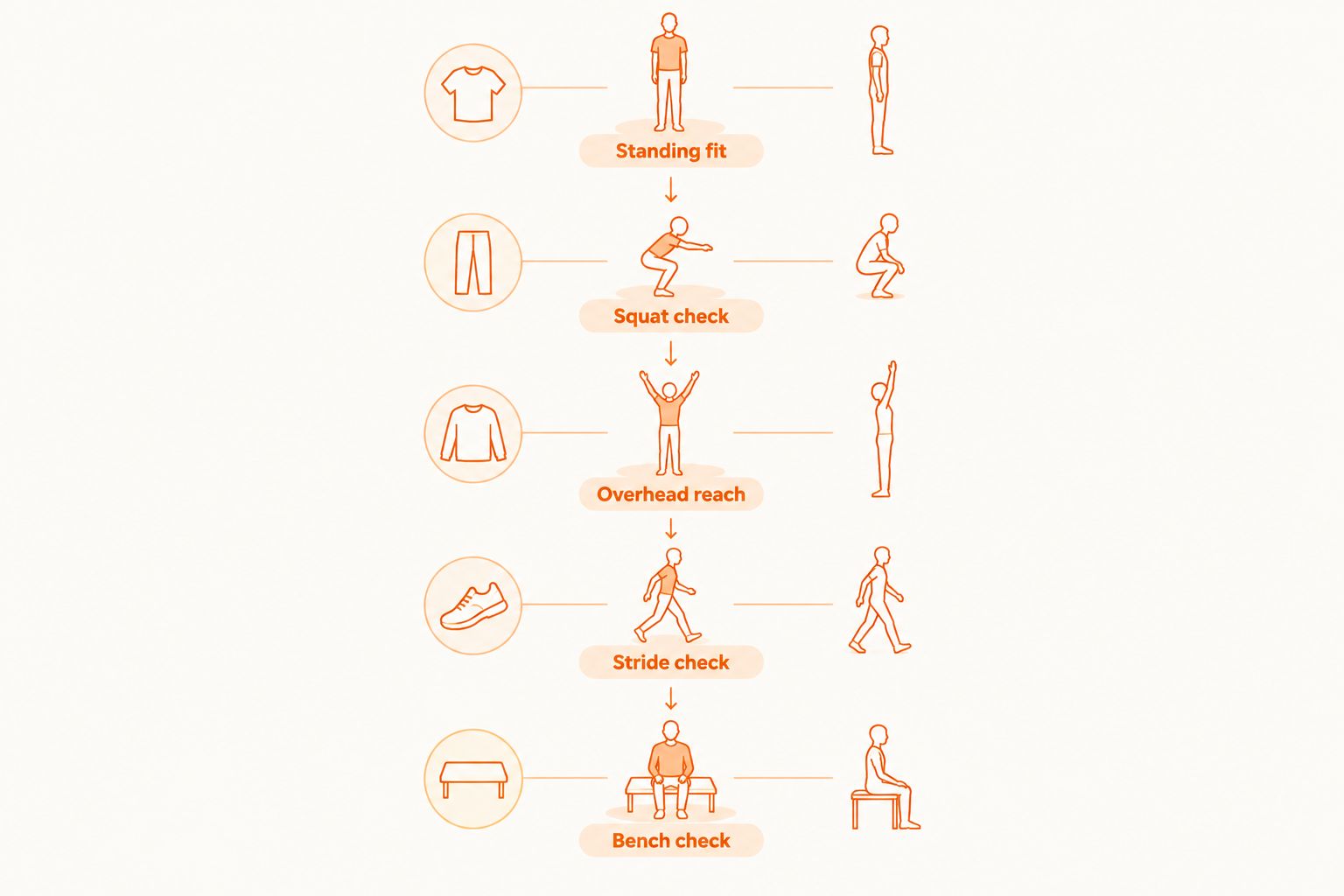
Reject the fit if you must keep adjusting it. Try another size or cut rather than assuming every restriction will disappear after washing. Follow any applicable store policy when assessing garments.
For gym apparel for men, fiber names provide useful information, but they do not describe the entire garment. Construction, thickness, finishing, and fit also matter.
Cotton absorbs moisture; polyester generally absorbs less moisture into the fiber. Elastane adds stretch. None of those facts alone establishes how a specific shirt will feel during your workout.
Look for explicit garment details rather than filling in the blanks yourself:
In 2026, treat terms such as performance or training as descriptions to investigate, not proof of a particular drying speed. You need product-specific information for product-specific claims.
This ranking puts everyday function before specialized preferences. T-shirts and shorts address basic workout coverage; tanks and joggers offer alternative coverage; hoodies and compression shorts solve layering needs.
The criteria are movement, fit stability, fabric suitability, skin comfort, coverage, and care. This is a garment-category buying guide, not a hands-on product test or a scored comparison of individual fabrics.
Start with a training T-shirt and shorts that pass the movement checks. Add joggers if you prefer covered legs, a tank if you prefer uncovered shoulders, and a hoodie if you need removable warmth.
For gym apparel for men at Tiger Fitness, assess the named T-shirt and hoodie against their current product details. Neither garment category eliminates the need to check measurements and intended use.
Keep your 2026 decision simple: buy for the session you actually perform. A specialized layer earns its place only when it solves a problem your essentials leave unresolved.
What's the best gym apparel for men who are starting out?
Start with a comfortable training T-shirt and shorts that allow your full exercise movements. Add layers only when you need different coverage or warmth.
Is a tank top better than a T-shirt for lifting?
A tank top is better for men who prefer less shoulder and arm coverage; a T-shirt is better for more coverage. Neither garment type guarantees better lifting performance.
Should men's gym clothes fit tight or loose?
Men's gym clothes should fit securely without restricting movement or leaving excessive fabric around equipment. Check the fit while squatting, reaching, and using a bench rather than judging it only while standing.
Can I wear joggers on leg day?
Yes, wear joggers on leg day if the seat, thighs, and knees allow your full comfortable range of motion. Reject a fit that pulls during squats or requires repeated waistband adjustments.
Do I need compression shorts for the gym?
No, compression shorts are optional. Choose them if you prefer a close-fitting layer, and check how they feel beneath your outer shorts before combining multiple liners and waistbands.
Is a hoodie a good choice for lifting?
A hoodie works as a removable layer when you want more coverage. Take it off if the hood, loose fabric, or drawstrings interfere with your position or equipment.
What should I check before ordering men's workout clothes online?
Check garment measurements, fiber composition, intended use, and care instructions. Compare those details with clothes that already fit you rather than relying on a size letter alone.
A garment can fit while standing and fail during your first set. Before replacing your whole wardrobe, identify the exact problem: sleeve tension, waistband movement, thigh restriction, or unwanted coverage. Change the cut that causes the problem—not every piece you own.
{"one"=>"Select 2 or 3 items to compare", "other"=>"{{ count }} of 3 items selected"}






Leave a comment