
Pick This Year's Olympia T-Shirt

Last Updated: September 3, 2026
The short answer: yes, for healthy individuals without pre-existing kidney or liver conditions, whey protein is safe when used appropriately. But "appropriate" is where most people get it wrong.

According to Canadian Science Publishing's systematic review, in healthy individuals, higher protein intakes, including from whey, have not been shown to affect kidney or liver function. That's the baseline. However, the same research shows that chronic and abusive use of whey protein, particularly when paired with a sedentary lifestyle, may lead to adverse effects on kidney and liver function.
Here's what matters: the difference between a safe dose and a problematic one comes down to total daily intake, consistency, and your individual health status. Most athletes use whey protein at reasonable levels (20-40 grams per day) without issue. The problems emerge when people treat protein powder like it's risk-free and consume excessive amounts, 100+ grams daily from supplements alone, while ignoring their overall diet and hydration.
At Tiger Fitness, we work with athletes and fitness enthusiasts who want to optimize their nutrition without unnecessary risk. The data shows that informed supplementation beats guessing.
The real concern isn't whey protein itself. It's contamination, individual sensitivities, and dosing patterns that most guides ignore entirely.
This is where the conversation gets serious. Recent testing has exposed a real problem in the supplement industry that nobody wants to talk about openly.
A Consumer Reports investigation published in October 2025 tested 23 protein powders and found that more than two-thirds contained more lead in a single serving than experts consider safe, approximately 0.5 micrograms per day. One serving of a major brand's whey protein powder contained 8.5 micrograms of inorganic arsenic, which is twice the limit scientists consider safe to consume daily.

The contamination pattern is stark: plant-based protein powders contained three times more lead than whey-based alternatives, according to Garage Gym Reviews analysis. A June 2026 report from independent lab testing found premium plant-based powders contained three times more lead than cheaper whey protein. Organic powders averaged three times the lead and twice the cadmium of regular whey.
Here's the critical data point: according to the Clean Label Project's 2025 analysis, 47% of protein powder products exceeded at least one federal or state regulatory set for safety, including California Prop 65, for heavy metals like lead and cadmium. That's nearly half of all tested products.
The issue isn't theoretical. A March 2026 report by Harvard Health highlighted that the Clean Label Project screened 134 protein powder products for 130 types of toxins and found that many contained heavy metals like lead, arsenic, cadmium, and mercury, as well as bisphenol-A (BPA) and pesticides. Some toxins were present in significant quantities, one protein powder contained 25 times the allowed limit of BPA.
The distinction between whey concentrate, whey isolate, and hydrolyzed whey matters here. Isolates undergo additional processing that removes more contaminants than concentrates. If you're concerned about heavy metal exposure, isolate-based products typically test cleaner than concentrate-based ones.
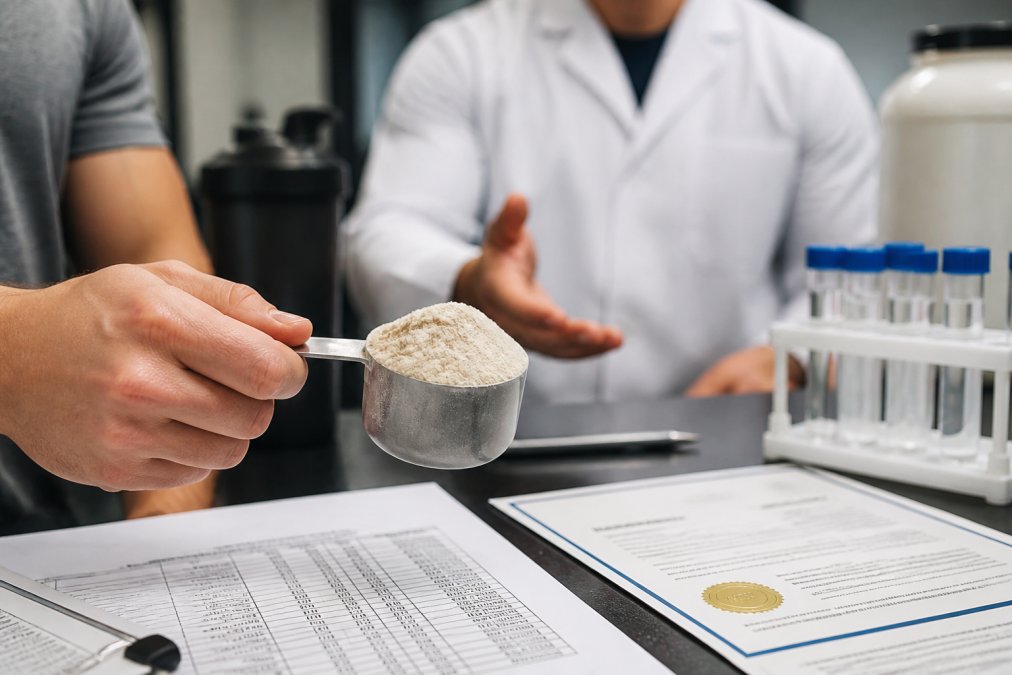
What most people miss: third-party testing is not mandatory in the supplement industry. A product can claim it's "tested" without any independent verification. This is why choosing brands that voluntarily submit to third-party testing, like NSF Certified for Sport or Informed Choice certification, reduces your contamination risk significantly.
The kidney myth is the most persistent false claim in fitness. Let me be direct: this narrative doesn't hold up under scrutiny for healthy people.
The evidence is clear. Research from Canadian Science Publishing found that in healthy individuals, higher protein intakes, including from whey, have not been shown to affect kidney or liver function. The studies showing kidney damage all involved either pre-existing kidney disease or extreme, chronic abuse, 100+ grams of supplemental protein daily combined with poor hydration and sedentary behavior.
Your kidneys filter metabolic waste. Protein creates more waste to filter than carbohydrates or fats. That's biochemically true. But "creates more work" is not the same as "causes damage." A healthy kidney handles increased protein load without issue. The organ is designed for this.
The danger zone appears only under specific conditions: pre-existing kidney disease, dehydration, or chronic abuse. If you have Stage 3 or higher chronic kidney disease, excessive protein is contraindicated, that's a conversation with your nephrologist, not a reason to avoid whey protein entirely if you're healthy.
The research on healthy individuals is consistent: moderate whey protein intake does not damage kidney function. What does cause problems is the combination of excessive protein, minimal water intake, and zero physical activity. That's abuse, not supplementation.
Most side effects from whey protein fall into three categories: digestive, allergic, and metabolic. Understanding which one applies to you changes your approach entirely.
Digestive Issues
Lactose intolerance is the most common culprit. According to Healthline research, lactose intolerance affects up to 65% of people worldwide. Whey protein concentrate contains more lactose than isolate or hydrolyzed forms. If you experience bloating, gas, or cramping after whey, this is likely your issue, not a sign that whey protein is unsafe.
The fix is straightforward: switch to whey isolate or hydrolyzed whey. Both remove most lactose through processing. Alternatively, take a lactase enzyme supplement before consuming whey concentrate. This solves the problem without eliminating whey from your diet.
Acne Flare-ups
Some individuals report acne aggravation with whey protein use. The mechanism isn't fully understood, but it appears linked to whey's amino acid profile and its effect on insulin-like growth factor (IGF-1). If you're prone to acne and notice worsening after starting whey, this is a legitimate signal to either reduce intake or switch to plant-based alternatives.
This is not universal. Most people experience zero acne changes. But if you're acne-prone, monitor your skin for the first two weeks of whey use.
Liver and Kidney Stress (with caveats)
According to October 2025 guidance from Tonum, while whey protein is generally safe for healthy individuals in moderate amounts, chronic or excessive use can lead to kidney stress, liver damage, acne flare-ups, and digestive issues, particularly in those with pre-existing conditions. Rare but documented cases of severe liver injury have been reported in otherwise healthy individuals using whey protein supplements.
These cases are outliers. They typically involve extreme dosing (200+ grams daily) combined with other hepatotoxic substances or pre-existing liver vulnerability. For context: millions of people consume whey protein daily without incident.
The practical takeaway: stick to 20-50 grams of whey per day, stay hydrated, and get annual bloodwork if you're a heavy user. That eliminates most risk.
Certain populations should either avoid whey entirely or use it under medical supervision.
People with diagnosed kidney disease (Stage 3 or higher) should limit protein intake overall, including whey. Your nephrologist can give you a specific target based on your GFR (glomerular filtration rate).
Those with severe dairy allergies cannot use whey protein. Whey is a milk protein. If you have IgE-mediated dairy allergy (not lactose intolerance), whey is off-limits. Plant-based alternatives are your option.
Individuals with pre-existing liver disease need medical clearance before using whey protein supplements. Excessive protein can stress a compromised liver.
People taking certain medications may have interactions. If you're on immunosuppressants or specific anticoagulants, discuss whey protein with your prescribing physician.
Athletes with a history of disordered eating should approach protein supplementation carefully. Supplements can become a tool for obsessive control. Work with a sports dietitian if this applies to you.
For everyone else, healthy individuals without pre-existing conditions, whey protein is safe at reasonable doses.
Quality matters more than brand recognition. Here's the framework I use.
Step 1: Verify Third-Party Testing
Non-negotiable. Look for NSF Certified for Sport, Informed Choice, or USP verification on the label. These certifications mean an independent lab tested the product for contaminants and banned substances. It's not perfect protection, but it's the best available.
Why this matters: the supplement industry is self-regulated. A company can claim "tested for purity" without any independent verification. Third-party certification removes that ambiguity.
Step 2: Check the Protein Source
Whey concentrate, isolate, and hydrolyzed whey each have trade-offs:
For most people, isolate is the sweet spot, better lactose tolerance than concentrate, faster absorption than concentrate, lower cost than hydrolyzed.
Step 3: Examine the Ingredient List
Fewer ingredients is better. You want whey protein, maybe a sweetener, maybe a small amount of flavoring. If the ingredient list reads like a chemistry experiment, move on.
Avoid products with:
Step 4: Review Third-Party Testing Results
If the brand publishes heavy metal testing data, read it. You want to see lead, cadmium, and arsenic levels below 0.5 micrograms per serving. This information should be publicly available, if it's not, that's a red flag.
At Tiger Fitness, we prioritize products that meet these standards. Machine Whey Protein and Rule 1 Whey Protein both use whey isolate and concentrate blends with third-party testing backing their safety claims. These options give you the amino acid profile for muscle recovery without the contamination risk of untested powders.
| Protein Type | Protein % | Lactose Content | Best For | Cost |
|---|---|---|---|---|
| Whey Concentrate | 70-80% | Higher | Budget-conscious, no lactose sensitivity | $ |
| Whey Isolate | 90%+ | Minimal | Lactose-sensitive, faster absorption | $$ |
| Hydrolyzed Whey | 90%+ | Minimal | Post-workout speed, premium quality | $$$ |
Here's what most people don't understand about supplement regulation in the United States.
The FDA does not pre-approve supplements before they hit the market. Unlike pharmaceuticals, which require clinical trials and FDA approval, supplements operate under a different framework. The manufacturer is responsible for ensuring safety and accuracy of label claims. The FDA can only act after a product is already on shelves, if they receive reports of harm or detect false claims.
This regulatory gap is why third-party testing exists. It's the private sector filling a public health void.
What Third-Party Testing Covers
NSF Certified for Sport tests for:
Informed Choice certification focuses on banned substance testing but also verifies label claims.
USP (United States Pharmacopeia) verification ensures the product meets standards for strength, purity, and ingredient quality.
Why This Matters
A product with NSF certification has been independently verified to contain what the label says and to be free of dangerous contaminants. A product without certification might be fine, or it might contain 25 times the safe limit of BPA. You don't know.
The June 2026 investigation by the Texas Attorney General's Office launched an industry-wide investigation into protein powder manufacturers following reports of elevated heavy metal levels. This is government action, but it came after the fact, after contaminated products were already being sold.
Third-party testing is your insurance policy. It costs manufacturers money, which is why not all brands do it. But it's the only way to know you're getting what you paid for.
What to Look For on Labels
If none of these appear on the label or the brand's website, you have no independent verification. That's your signal to look elsewhere.
The data on whey protein safety is clear: it's safe for most healthy people at reasonable doses, contamination is a real concern that requires third-party verification, and kidney damage only occurs under extreme abuse or pre-existing disease. Choose a product with third-party testing, stay within 20-50 grams daily unless you're an elite athlete, and get annual bloodwork if you're a heavy user.
At Tiger Fitness, we've built our protein selection around products that meet these standards. Machine Whey Protein and Rule 1 Whey Protein deliver the amino acid profile you need for muscle recovery without the contamination risk. Both use third-party tested formulas with transparent ingredient lists. Get started with a high quality whey protein and use our FREE TOOLS & FITNESS CALCULATORS to dial in your daily protein targets based on your bodyweight and training intensity. That combination, quality supplementation plus data driven nutrition planning, eliminates guesswork and fuels your training and recovery.
In healthy individuals without pre-existing kidney disease, higher protein intakes from whey have not been shown to damage kidney or liver function. However, chronic and excessive use of whey protein, particularly when combined with a sedentary lifestyle, may stress these organs. If you have pre-existing kidney or liver conditions, consult a healthcare provider before increasing protein intake. Moderation and adequate hydration are key safeguards.
The FDA classifies dietary supplements, including whey protein, under the Dietary Supplement Health and Education Act (DSHEA). Unlike drugs, supplements do not require pre-market FDA approval. However, manufacturers must ensure products are safe and labels are truthful. The FDA can take action against unsafe or mislabeled products after they reach the market. Third-party testing provides an additional layer of verification beyond regulatory oversight.
Whey protein isolate and hydrolyzed whey contain significantly less lactose than whey concentrate, making them safer options for lactose-intolerant individuals. Lactose intolerance affects up to 65% of people worldwide and causes digestive distress including bloating and gas. Whey isolate undergoes processing that removes most lactose, while concentrate retains more. If you have lactose intolerance, choose isolate or hydrolyzed forms, or look for products with added lactase enzyme.
No. Recent testing data shows plant-based protein powders contained nine times more lead than whey-based alternatives, and three times more lead than dairy-based options overall. A 2026 study found that organic plant-based powders averaged three times the lead and twice the cadmium of regular whey. While both can contain heavy metals, whey protein currently shows lower contamination levels based on independent testing. Third-party testing and certifications matter for any source.
{"one"=>"Select 2 or 3 items to compare", "other"=>"{{ count }} of 3 items selected"}






Leave a comment