
NEW NULLA BAR FLAVORS
In-Stock Now!

Yes, healthy adults can generally take glutamine and creatine together, including in the same shake; there is no established requirement to separate them. The important caveat is that combining them has not been shown to reliably build more muscle than creatine alone, and a medical condition or medication changes the safety decision.
Compatibility is not the same as a reason to buy both. Creatine has stronger evidence for supporting strength and repeated high intensity exercise than glutamine has for improving muscle growth in healthy adults.
Before adding another powder, review whether L-glutamine is worth it for muscle recovery. For your 2026 supplement plan, the useful question is whether glutamine addresses a clear need not whether it fits in your shaker.
Yes. You can use both during the same day, and healthy adults do not need a special spacing schedule simply because these ingredients are taken together. You can also mix them in the same drink when their labels permit mixing.
The evidence supporting each ingredient is different. Creatine helps replenish phosphocreatine stores used during short, intense efforts. Glutamine is an amino acid involved in normal metabolism and used by tissues including the intestine and immune system; those roles do not automatically translate into better workouts from supplemental glutamine.
| Approach | Best for | Main advantage | Main limitation |
|---|---|---|---|
| Creatine monohydrate alone | Healthy adults prioritizing strength and repeated high-intensity efforts | Strong exercise-performance evidence | Water-related weight gain and digestive discomfort are possible |
| Glutamine alone | People with an individualized reason established with a qualified clinician | Allows glutamine use without adding unrelated ingredients | Consistent muscle building benefits are not established in healthy lifters |
| Creatine plus glutamine | People who already have a separate reason to use each ingredient | Combines an existing routine into one drink | Adds complexity without an established extra muscle-growth benefit |
The NIH Office of Dietary Supplements' Dietary Supplements for Exercise and Athletic Performance fact sheet is a useful evidence reference for your 2026 decision. Its creatine and glutamine sections distinguish creatine's performance evidence from glutamine's limited support for athletic benefits.
Start with the ingredient that matches your goal. If your goal is stronger lifts, creatine monohydrate is the more defensible first choice; adding glutamine is a separate decision.
A common evidence based creatine monohydrate maintenance intake is 3–5 grams per day for healthy adults. This is general sports-nutrition guidance, not a personalized prescription or an instruction to override your product label.
Consistency matters more than finding an exact pre-workout or post-workout minute. Creatine works through changes in muscle stores over time, not through an immediate stimulant effect.
An optional loading approach used in research is approximately 20 grams per day, divided into smaller servings, for 5–7 days, followed by maintenance intake. Loading is not required, and taking a large amount at once increases the chance of digestive discomfort.
For a straightforward 2026 routine, a daily maintenance approach avoids loading-phase complexity. Do not increase creatine just because you also take glutamine; combining ingredients does not create a new dosing requirement.
There is no established glutamine dose that reliably adds muscle growth to a creatine routine in healthy, adequately nourished adults. Do not turn a serving size on a tub into proof of a performance benefit.
Your body makes glutamine, and protein containing foods also provide it. Supplemental glutamine has been studied in different exercise and clinical settings, but results from a medical population do not automatically apply to your lifting program.
If a clinician recommends glutamine for an individual reason, follow that guidance and the relevant label. If your only reason is that you already take creatine, glutamine is optional not a missing piece of an otherwise effective routine.
The practical downside is another serving to measure and another variable to troubleshoot if your stomach feels off. That matters even when the ingredients are compatible.
You do not need a complicated stack protocol. Use a measured serving, account for ingredients elsewhere in your routine, and choose a drink you tolerate.
Preparing a drink is simple; identifying a problem becomes harder when you start several ingredients together. Keeping the routine repeatable gives you a clearer picture of what you tolerate.
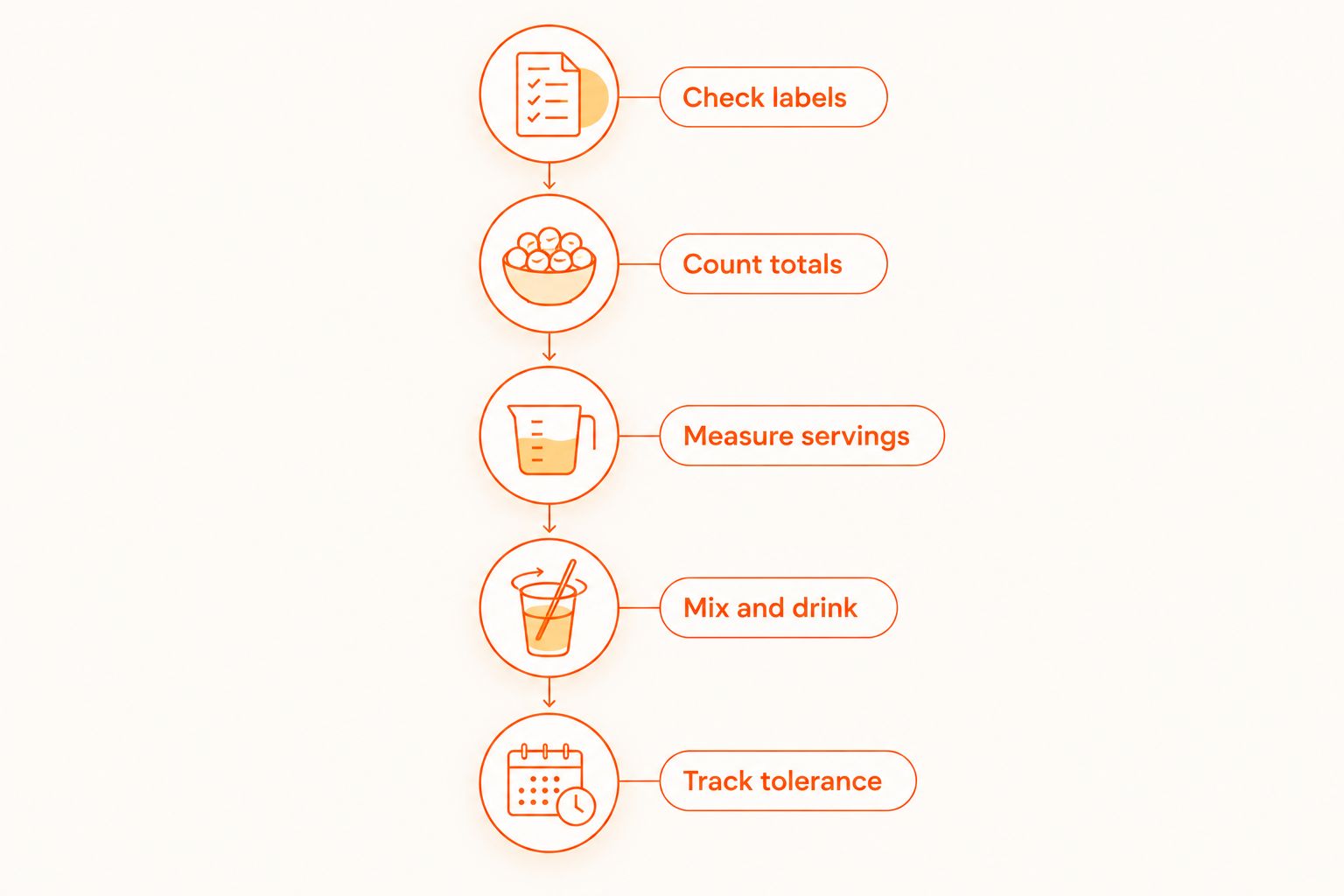
You can take the ingredients at different times if that feels better or fits your schedule. Separating them is a practical choice, not an established requirement for absorption.
Taking the same combination as a training partner does not create the same outcome. The following factors explain why a stack's usefulness depends on more than its ingredient list:
For 2026, track training performance alongside body weight rather than treating every increase on the scale as a successful stack. Record your exercises, loads, and repetitions under comparable conditions.
Creatine's daily consistency is more important than combining it with glutamine at a particular workout time. There is no established combined timing window that makes this pairing necessary.
A meal or post-workout shake is a convenient reminder if you already use one. Taking the powders at breakfast is also a practical option when evening supplements are easy to forget.
On rest days, creatine maintenance does not depend on completing a workout. Glutamine still needs its own reason for inclusion; a rest day does not turn it into a required recovery supplement.
Neither ingredient requires you to buy a separate recovery drink. Keep the delivery method simple enough to repeat.
Glutamine has not been established as a reliable way to increase creatine's muscle-building effects in healthy lifters. Taking two ingredients together is not evidence that they produce an extra benefit together.
Judge the claim by the outcome being measured. A change in a laboratory marker, a proposed cellular mechanism, or a study in patients is not the same as stronger lifts or more muscle in healthy adults following resistance training.
The most useful 2026 buying rule is to require a separate justification for every ingredient. Creatine's evidence does not transfer to glutamine simply because both appear in the same product or routine.
Digestive discomfort is possible with supplements, particularly when you take large servings or several ingredients at once. If symptoms start after changing your routine, stop the new addition and discuss persistent symptoms with a healthcare professional.
Recommended creatine use has not been shown to damage kidney function in healthy adults. That does not establish safety for people with existing kidney disease or replace an individualized medical assessment.
Creatine can also affect serum creatinine, a marker used in kidney assessment. Tell your clinician that you take creatine before interpreting laboratory results; do not assume an abnormal result is harmless or diagnose kidney damage yourself.
Seek medical advice before starting this combination if you have kidney disease, take prescription medication, are pregnant or breastfeeding, or are choosing supplements for a minor. Do not use glutamine to self-treat persistent digestive symptoms.
Choose a simple creatine monohydrate product first if strength and high-intensity training are your priorities. Keep glutamine off the shopping list unless you can explain its separate purpose.
Tigerfitness is a sports-nutrition retailer for bodybuilders and fitness enthusiasts shopping for creatine supplements. One relevant option is MTS Creapure® Pure German Creatine Powder, which uses creatine monohydrate produced in Germany.
Best for: shoppers who specifically want a Creapure® creatine monohydrate powder. The practical advantage is a clearly identified creatine form; the limitation is that the powder still requires measuring and mixing, and it does not establish a reason to add glutamine.
Tigerfitness also sells glutamine supplements, but a broad supplement catalog is not a personalized recommendation. Read the current label and choose around your training goal, medical circumstances, and ability to follow the routine consistently.
Can I put glutamine and creatine together in the same shaker?
Yes, healthy adults can generally mix glutamine and creatine together when both product labels permit it. Measure each serving separately and account for ingredients already present in other supplements.
How much creatine should I take when I also use glutamine?
A common creatine monohydrate maintenance intake is 3–5 grams per day for healthy adults. Glutamine does not create an established need to increase that amount; follow your label and individualized medical advice.
Do glutamine and creatine compete for absorption?
There is no established requirement to separate glutamine and creatine to prevent an absorption problem. Taking them separately is reasonable if it improves your digestive comfort or routine.
Is glutamine necessary if I already take creatine?
No, glutamine is not necessary to make creatine effective. Evidence does not establish a reliable extra muscle-growth benefit from adding glutamine in healthy, adequately nourished lifters.
Can I take glutamine, creatine, and protein powder together?
These ingredients can generally share a shake for healthy adults when their labels permit mixing. Protein powder serves a different purpose: helping you meet dietary protein needs rather than making the combination automatically more effective.
Should women use a different glutamine and creatine stack?
Women do not need a special glutamine-and-creatine combination simply because they are women. Pregnancy, breastfeeding, medical conditions, and individual needs require separate guidance from a qualified clinician.
Should I stop creatine if my weight goes up?
An increase in body weight alone does not mean you need to stop creatine, because water-related weight gain can occur. Consider your goals and symptoms, and get medical advice for unexplained swelling or other concerning changes.
A stack can be compatible and still be unnecessary. For your 2026 routine, write down the purpose of each supplement before adding it: if glutamine's only explanation is that it goes with creatine, keep the routine simpler.
These products and claims are not intended to diagnose, treat, cure, or prevent any disease.
{"one"=>"Select 2 or 3 items to compare", "other"=>"{{ count }} of 3 items selected"}






Leave a comment