
Pick This Year's Olympia T-Shirt

Last Updated: September 6, 2026
Wholesale prices for whey protein concentrate have climbed steadily since 2024, and that trend accelerated through 2025 and into 2026, according to market analysis from The Washington Post. That means the cheapest place to buy whey protein is no longer about finding the lowest sticker price on a tub. The real game is finding the lowest cost per gram of actual protein, and most shoppers are getting that math wrong. At Tiger Fitness, we break down supplements for a living, so let me show you exactly how to stop overpaying and start buying smart.
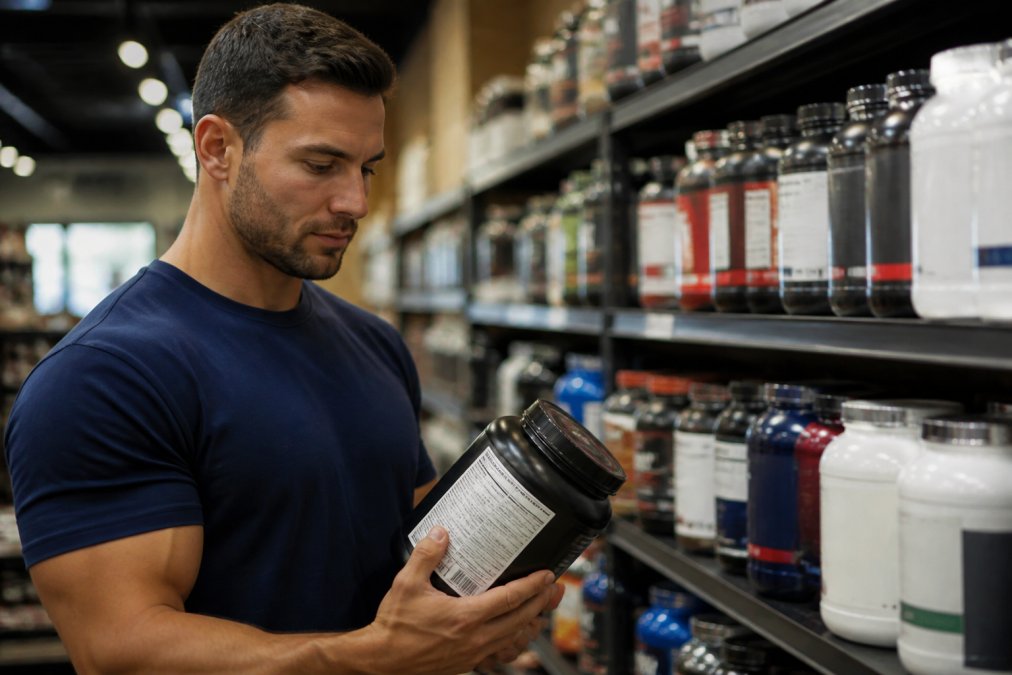
The single biggest mistake in supplement shopping is comparing tub prices without looking at serving size. A $40 tub that gives you 30 servings costs more per shake than a $50 tub that gives you 60 servings. It is that simple.
But here is where most guides stop, and where you actually start winning. The real metric isn't cost per serving. It's cost per gram of actual protein, and then you need to weigh that against the amino acid profile you're getting. A cheap protein that's 70% protein by weight is not the same value as a WPC-80 that's 80% protein by weight, even if the price per gram looks similar.
Let me show you the exact math I use when I'm evaluating any protein powder. This is the same framework I've used for years in the industry, and it cuts through every marketing claim on the label.
Step 1: Find the true protein per scoop. Look at the supplement facts panel. Take the protein grams per serving and divide by the scoop weight. If a scoop weighs 35 grams and delivers 25 grams of protein, you're looking at a 71% protein density. That's mediocre. A quality WPC-80 should hit 80%. An isolate should clear 85-90%.
Step 2: Calculate cost per gram of protein. Take the tub price, divide by the number of servings, then divide by the grams of protein per serving. Here's a real example using current market pricing:
The premium tub costs 60% more per gram. But that's not the whole story.
Step 3: Factor in the amino acid profile. This is the step almost every "cheapest whey protein" guide misses. Whey protein is a complete protein containing all essential amino acids, and it's particularly high in leucine, the trigger for muscle protein synthesis. Research published in the Nutrients journal on leucine thresholds shows you need roughly 2-3 grams of leucine per meal to maximally stimulate muscle protein synthesis.
Here's the trap. A cheap protein with 20g of protein per scoop might only deliver 1.8g of leucine. You'd need two scoops to hit the threshold, which doubles your effective cost per serving. A higher-quality whey concentrate or isolate at 25g per scoop typically delivers 2.5-3g of leucine in a single scoop. The "expensive" option becomes the cheaper one when you account for the leucine threshold.
Industry analysis from Nutrola's protein per dollar cheat sheet shows bulk whey protein concentrate runs about $0.03 to $0.04 per gram of usable protein. That is the benchmark you should measure everything against. But remember, that benchmark assumes you're getting a legitimate WPC-80, not a filler-laden blend.
Here is the trap most guys fall into. A cheaper tub often has a bigger scoop and lower protein density. You think you are saving money, but you are actually paying more per gram of protein. Consumer guides on GymGearHeads have hammered this point: price per gram is the only honest metric.
The math is straightforward. Take the tub price, divide it by the number of servings, then divide that by the grams of protein per serving. That gives you your true cost per gram. Then check the leucine. If you're short, you're not done shopping. And if you want to skip the manual math entirely, our FREE TOOLS & FITNESS CALCULATORS can help you dial in your daily protein targets so you know exactly what you're buying for.
The cheapest place to buy whey protein in 2026 is a specialty retailer that stocks multiple brands and lets you compare labels side by side. General market pricing for whey protein powder sits between $1 and $2 per serving, per Men's Health's whey protein review. Budget options like whey concentrate can dip to $0.78 per scoop, according to Garage Gym Reviews' Amazon protein analysis.
Tiger Fitness carries the range you need to make the smart call. You can grab a no-frills concentrate for maximum savings or step up to a premium isolate when your budget allows.
| Product | Price | Protein Per Serving | Value Play |
|---|---|---|---|
| NOW Sports Whey | $26.46 | High quality concentrate | Best entry price |
| MTS Machine Whey | $42.49 | WPC-80 + isolate blend | Best flavor to value ratio |
| Dymatize Elite Whey | $58.95 | 25g whey isolate + concentrate | Solid mid-range pick |
| ON Gold Standard | $78.50 | 24g triple-source whey | Trusted bestseller |
| Dymatize ISO 100 | $64.99 | 25g pure isolate | Premium recovery |
The NOW Sports Whey at $26.46 is the cheapest entry point. It is unflavored, which makes it versatile for smoothies and oatmeal, and it is Informed Sport certified. For a flavored daily driver, MTS Machine Whey at $42.49 uses a high percentage of WPC-80 whey concentrate, giving you more protein per scoop than cheaper proteins on the market.

Whey protein bulk deals only save you money if the price per gram actually drops. Some retailers inflate the per-serving cost on larger tubs, so you end up paying more for the privilege of buying in bulk.
The global whey protein market hit $9.7 billion in 2025 and is projected to reach $10.5 billion in 2026, according to Grand View Research's whey protein market report. With demand rising and wholesale costs climbing, locking in a bulk purchase now protects you against future price hikes.
When you find a brand you trust, buying the largest tub size makes sense. You save on the per-serving cost and you cut down on how often you have to reorder. Just check the math first.
You can save money on supplements without buying garbage. The key is knowing what to look for on the label. Whey protein is a complete protein containing all essential amino acids, and it is high in branched-chain amino acids that drive muscle protein synthesis.
Research published in Nutrients journal on protein synthesis found whey protein significantly promoted muscle protein synthesis after exercise better than soy or casein. That is why whey remains the gold standard. Do not swap it for a cheaper plant protein and expect the same results.
Here is what matters when you are hunting for value:
That rock-bottom tub price often hides real costs. Cheap protein powders use lower-grade concentrates with more lactose and fat, which can wreck your stomach and slow digestion. They also tend to use larger scoop sizes to mask lower protein density, so you burn through the tub faster.
But the hidden costs go deeper than what's in the tub. Let me break down the four traps that turn a "bargain" into the most expensive protein you'll ever buy.
Trap #1: The subscription cancellation friction. Many budget protein brands lock you into a "subscribe and save" model that shows a lower first-shipment price. The fine print? You're committed to recurring shipments at a higher rate, and canceling requires a phone call during business hours or navigating a deliberately confusing cancellation flow. A 2025 consumer survey found that subscription cancellation complaints are among the top three supplement industry complaints. That "cheap" tub just cost you an hour of your time and a monthly charge you forgot to cancel.
Trap #2: The shipping threshold math. A $25 tub of protein looks great until you hit checkout and see $8.95 in shipping. Suddenly your cost per gram jumps 35%. Some retailers offer free shipping at $50 or $75, which means you're buying more than you need just to avoid the fee. The real question isn't the tub price, it's the delivered cost per gram. A $30 tub with free shipping beats a $25 tub with $9 shipping every single time.
Trap #3: The shelf-life risk on clearance items. Clearance sections are tempting, but protein powder has a finite shelf life. Whey protein typically maintains potency for 12-18 months from manufacture date when stored properly. That clearance tub with a "best by" date six months out might be a great deal, or it might be a gamble. Once opened, protein powder exposed to heat and humidity can degrade faster, and the amino acid profile you paid for starts to break down. Check the lot code and manufacture date before you buy clearance. If it's already past its midpoint, you're not saving money, you're buying degraded protein.
Trap #4: The digestive cost of cheap fillers. Lower-grade whey concentrates contain more lactose and fat. For many adults with some degree of lactose intolerance, that means bloating, gas, and gastrointestinal distress. The "cheap" protein that wrecks your stomach isn't just uncomfortable, it's counterproductive. If you can't digest it properly, you're not absorbing the amino acids, and you're not getting the muscle protein synthesis response you're paying for. A premium isolate at a higher price per gram might actually be the cheaper option when you factor in digestive efficiency.
The other hidden cost is effectiveness. If you are not getting enough protein per serving, you are not stimulating muscle protein synthesis the way you should. You end up drinking two scoops when one should have been enough, which doubles your actual cost per gram.
The global whey protein market is expected to grow at a compound annual growth rate of 7.5 percent through 2033, per Grand View Research's industry analysis. That growth means more brands competing for shelf space, and not all of them are playing fair with their labels.
Here's the bottom line: the cheapest place to buy whey protein isn't the lowest sticker price. It's the lowest delivered cost per gram of bioavailable protein, with no subscription strings attached, from a tub that will actually last until you finish it. Do that math, and you'll never overpay for protein again.
The cheapest place to buy whey protein is wherever you can get the lowest cost per gram without sacrificing third-party testing and label transparency. For most lifters, that means buying from a retailer that carries multiple trusted brands so you can compare real numbers side by side.
Tiger Fitness gives you that full range. You can start with the NOW Sports Whey at $26.46 for an unbeatable entry price, step up to MTS Machine Whey at $42.49 for a flavored daily driver, or grab Dymatize ISO 100 at $64.99 when you want a premium isolate for faster recovery. Every option is backed by fast shipping and a rewards program that puts money back in your pocket.
Stop guessing and start calculating. The cheapest place to buy whey protein is the one that respects your budget and your gains.
The cheapest place to buy whey protein is where you calculate the lowest cost per gram of actual protein, not the lowest tub price. Online retailers like Tiger Fitness often have competitive prices. Look for sales, clearance sections, and bulk tubs. Always check the serving size and protein content to confirm you are getting a true deal.
Check the nutritional label for protein concentration and look for third-party testing certifications like Informed Sport or Informed Protein. A cheap tub with a larger scoop and lower protein density may cost more per gram of protein than a slightly pricier brand. Avoid proprietary blends and fillers. Look for a simple ingredient list where whey protein concentrate or isolate is the primary component.
Yes, clearance protein supplements are generally safe to consume as long as they are not expired and have been stored properly. Retailers discount products to clear inventory for new stock or because packaging changed. Check the 'best by' date on the tub. Protein powder past its prime loses potency but is rarely dangerous. If the powder smells rancid or has clumped due to moisture, throw it out.
Yes, buying whey protein in bulk is one of the most cost-effective ways to save money, but only if you check the price per serving. Larger tubs typically have a lower cost per gram of protein. For example, a 5-pound tub often costs less per serving than two 2-pound tubs.
Finding affordable whey protein does not mean settling for low quality. It means doing the math, checking the labels, and buying from a retailer that carries brands you can trust. Tiger Fitness offers the lowest prices on a wide selection of top-selling products, backed by fast shipping and personalized customer service. Get started with Tiger Fitness and fuel your training without breaking the bank.
{"one"=>"Select 2 or 3 items to compare", "other"=>"{{ count }} of 3 items selected"}





Leave a comment