
NEW NULLA BAR FLAVORS
In-Stock Now!

Last Updated: November 10, 2026
Quick Summary
You are consuming too much caffeine for workouts if you notice a racing or pounding heart, palpitations, shaky hands, anxiety, insomnia, or gut distress like cramping and nausea. Excessive intake can also cause chest tightness or lightheadedness, which means you should stop training. Add up every source of caffeine in your day, since coffee, energy drinks and pre-workouts all count toward your total.
Caffeine helps a lot of lifters get through a hard session. But more is not better. Past a certain point, caffeine works against you, and the signs show up in your heart, your nerves, your gut and your sleep.
Excessive caffeine can cause headaches, restlessness, heart problems and poor sleep quality. Each of those hits your training directly.
Here is why it matters. A jittery, overstimulated body does not lift heavy well. Your form slips. Your rest periods stretch. Your sleep, where most muscle repair happens, gets cut short.
Watch out: stacking a caffeine-heavy pre-workout on top of coffee and an energy drink is how most lifters get into trouble. Add up every source before you train.
Know the signs before they stop your session. Common signs of consuming too much caffeine include increased heart rate, palpitations, insomnia and anxiety. If you feel several of these during or after a workout, your dose is likely too high.
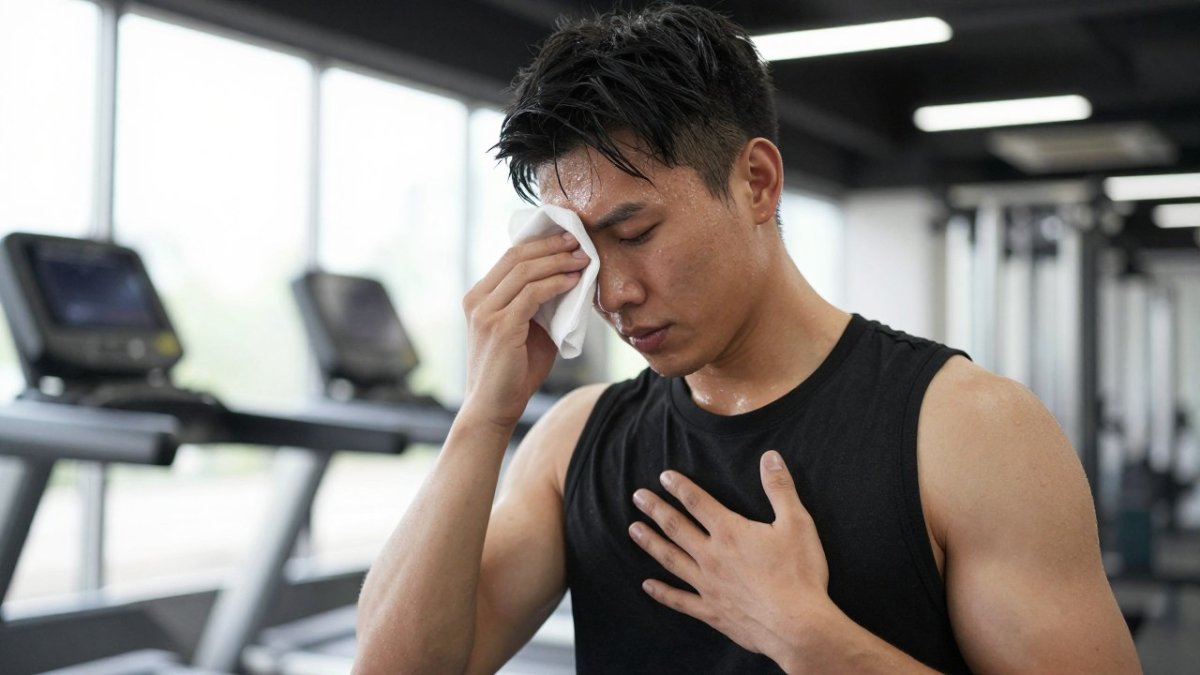
Gut trouble is another red flag. High doses taken around training can cause gastrointestinal distress. Cramping, nausea and urgent bathroom trips all pull your focus off the bar.
Your heart is the most important sign to track. A racing or pounding heart during a set that should feel controlled is a warning. Palpitations and high blood pressure are among the possible effects of too much caffeine.
Excessive intake can contribute to heart problems, and the cardiovascular risk is a real concern when caffeine is consumed right before or during exercise, which is exactly when most lifters take their pre-workout.
Stop and reassess if your heartbeat feels irregular, your chest feels tight, or you feel lightheaded. Do not push through those symptoms.
Shaky hands and a racing mind are classic overstimulation. Anxiety and insomnia are common signs of too much caffeine. A jittery lifter also tends to rush sets and lose control of the weight.
Sleep is where the damage adds up. Caffeine taken late in the day can keep you awake, and poor sleep blunts recovery, muscle growth and the next day's strength. You may feel fine in the gym and still pay for it at 2 a.m.
Here are the main overdose signs to watch for, pulled straight from the sections above.
| Sign | Where it shows up | What to do |
|---|---|---|
| Racing or pounding heart | Heart rate during a controlled set | Stop and reassess |
| Palpitations | Heartbeat feels irregular | Do not push through |
| Chest tightness or lightheadedness | Cardiovascular warning | Stop training |
| Shaky hands, racing mind | Nervous system overstimulation | Cut the dose |
| Insomnia or anxiety | Sleep and mood after training | Lower or move the dose earlier |
| Cramping, nausea, urgent bathroom trips | Gut distress | Reduce high doses around training |
There is no single safe number for everyone. Sensitivity to caffeine and how quickly your body clears it vary a lot from person to person. Two lifters can take the same dose and get very different results.
Read the label on your pre-workout and add up every source of caffeine you take in a day. Coffee, tea, energy drinks, fat burners and pre-workouts all count. Many lifters only count the scoop of pre-workout and miss the rest.
If you notice any of the overdose signs above, cut the dose first. Then reassess your total daily intake before you add anything else. Stimulant-free pre-workouts are a practical option if you are sensitive or training late. See how low-caffeine formulas are designed and what they deliver.
Caffeine can improve performance up to a point, and that point is lower than many lifters expect. The ergogenic effect comes from reduced perceived effort and better signal output from the nervous system. Once you pass your personal threshold, the same compound starts working against you, and the first casualty is usually technique, not muscle.
Here is the mechanism. Excess stimulation raises tremor and reduces fine motor control. On a squat, that shows up as a bar path that drifts forward or a brace that feels inconsistent. On a bench press, it shows up as a wobbling setup and a rushed descent. You can still move the weight, but you are moving it with less precision, and that increases the chance of a bad rep or an injury.
Watch out: the most common error is treating a bad session as a reason to add more caffeine. If your working sets feel shaky and your bar speed drops, the answer is almost never a bigger dose. Cut back, then reassess.
The second casualty is rest. A wired nervous system makes it hard to stay still between sets, so lifters rush their rest periods and then wonder why their top sets fall off. Rest periods that are too short reduce the quality of the next set, and that compounds across an entire session.
A practical way to find your sweet spot is to log two things for a few weeks: your caffeine dose and your bar speed on your heaviest working set. When you see bar speed fall while the dose climbs, you have found your ceiling. Drop back to the lowest dose that still gives you the focus you want, and hold it steady rather than chasing a bigger buzz. The FREE TOOLS & FITNESS CALCULATORS on Tiger Fitness can help you run the numbers on your daily intake and training load while you track it.
Caffeine has a half-life that varies widely with genetics, liver function, medications and how much you normally consume. That is why a dose that feels harmless at 4 p.m. can still be circulating in your system at 11 p.m. Half-life is a useful starting point, but the real question is how much is still active when you try to fall asleep.
For a lifter, this matters most because of recovery. Most muscle repair and hormone release happens during deep sleep, and caffeine taken late in the day can reduce total sleep time and fragment the sleep you do get. You may feel fine in the gym and still wake up with worse recovery, slower warm-ups and a flatter session the next day.
A simple rule works for most people. Work backward from your target bedtime and set a cutoff for your last caffeine dose. If you train in the evening, move your pre-workout earlier, lower the dose, or switch to a stimulant-free option on those days. Sleep quality is worth more to your training than one extra set of stimulation.
Watch out: many lifters count only the pre-workout and forget the coffee, tea and energy drink they had earlier. Add every source to the timeline before you decide your cutoff.
Act fast if the symptoms are strong. Stop taking caffeine right away. Sit or lie down, drink water, and avoid training until your heart rate and nerves settle.
Seek medical help right away if you have chest pain, fainting, severe palpitations, confusion, or trouble breathing. Those are emergency signs, not gym problems. Call your doctor or emergency services without waiting.
For milder symptoms, rest, hydrate and let the caffeine wear off. Skip the next workout's stimulant dose and rebuild from a lower baseline.
If you have been over-dosing for months, do not quit cold. Taper your intake over one to two weeks so your body adjusts. Cut the pre-workout dose first, then reduce coffee and other sources.
Build a simple plan. Set a daily caffeine ceiling, pick one main source, and keep your timing consistent. Use a stimulant-free pre-workout on heavy late sessions, such as Bucked Up Non-Stimulant Pre-Workout or the Ghost Pump V2 stim-free option, to keep your pump without the jitters.
For the bigger picture on training and fat loss without leaning on stimulants, read How Fat Loss Works E Book. And if you are unsure whether your pre-workout is doing anything at all, Do Pre-Workouts Actually Improve Performance? walks through the evidence.
Tiger Fitness stocks stim-free options for lifters who need to cut back on caffeine. Shop the range at Tiger Fitness and train hard without the jitters.
The earliest signs usually show up as a racing or pounding heartbeat, restlessness, jitteriness, headache, and an upset stomach. Increased heart rate, palpitations, high blood pressure, insomnia or sleep disruption, and anxiety are possible signs of consuming too much caffeine. If you notice these during a training session, especially alongside nausea or chest discomfort, stop taking caffeine for the day. Symptoms that are severe, persistent, or include chest pain, fainting, or shortness of breath need medical attention rather than waiting them out.
For many healthy adults, 200 mg is within the range that most people tolerate, but whether it is bad depends on your sensitivity, body weight, the time of day, and what else you have consumed. Sensitivity to caffeine and how quickly it is metabolized vary among individuals, so the same dose can produce very different effects. If 200 mg gives you palpitations, anxiety, or wrecks your sleep, it is too much for you. Start lower, track how you feel, and adjust based on results rather than a generic number.
Caffeine has a half-life that varies by person, so its effects can linger well after a late workout. Side effects like insomnia and restlessness can extend into the night and affect recovery the next day. A late-afternoon pre-workout dose can still be active at bedtime for many people. If you train late, use a lower dose or a stimulant-free option, and keep your last caffeine intake far enough from bed to protect your sleep.
Four hundred milligrams in a single pre-workout is a high dose and is more likely to cause palpitations, jitters, anxiety, and GI distress than a moderate amount. Too much caffeine may affect sleep, mood, and heart health. If you are sensitive to stimulants, a dose this high is a poor choice. Check the label, add up caffeine from coffee and energy drinks too, and consider a stimulant-free formula like Bucked Up Non-Stimulant Pre-Workout if you want pump and focus without the stimulant load.
{"one"=>"Select 2 or 3 items to compare", "other"=>"{{ count }} of 3 items selected"}







Leave a comment