





About this workout
The volleyball approach jump is not a standing vertical. You run in, you plant, and you convert horizontal speed into vertical lift off two feet in about a fifth of a second, then you land and do it again on the next rally. That conversion is a strength quality first and a reactive quality second, and it is trained in that order. This is an 8 week, 4 day program built around that specific jump: heavy squat and hinge work on the barbell days, approach and bound work while your legs are fresh, single leg work so your take-off side is not carrying the whole match by itself.
Who This Program Is For
- Outside hitters, middles and opposites in the off-season or preseason who want a taller approach jump and a faster second jump on the block.
- Intermediate lifters who already squat with a clean bar path and can hold a landing without their knees caving in.
- Players who can train four days a week in a gym with a barbell, dumbbells and a pull-up bar, plus a strip of field or court for bounds.
- Setters and liberos who want to be more athletic and more durable even though they are not swinging every point.
Who this is NOT for: If you are in the middle of a season playing five matches a week, this is the wrong eight weeks. You are already accumulating hundreds of jump landings, and stacking this plyometric volume on top of that is how a healthy player turns into a sore one. Run it in the off-season or the preseason, not in week six of league play. And if you cannot squat your own bodyweight for reps yet, stop reading and go build that first. Reactive training multiplies the strength you have. If the number is small, multiplying it does not get you very far. The weight room supports volleyball, it does not replace playing volleyball. Nothing in here teaches you to read a set, time an approach or swing at a blocker's hands. That happens at practice.
What You'll Need
- A barbell, plates and a squat rack.
- Dumbbells across a usable range, and a flat bench.
- A pull-up bar, and about thirty yards of open court, turf or gym floor for bounds and carries.
The Program
Four sessions a week: three lower body days and one upper body and core day. Run it Monday, Wednesday, Friday and Saturday, which keeps at least one full day between every lower body session and puts the only back to back pair on Friday lower and Saturday upper. Day 1 is max strength. Day 2 is the reactive day, where the approach jump actually gets built. Day 3 is posterior chain and single leg work. Day 4 is shoulders, back and trunk so your arm swing and your blocking position hold up. Every lower body day opens with jumps, because a jump done tired is just a squat you are bad at. If a session runs long, cut an accessory set, never the first movement.
| Day 1 | |||
|---|---|---|---|
| Max Strength Lower | |||
| Exercise | Sets | Reps | Rest |
| Broad Jump | 4 | 3 | 2 min |
| Barbell Squat | 5 | 5 at 80% | 3 min |
| Bulgarian Split Squat | 3 | 8 each leg | 90 sec |
| Hip Thrust (Weighted Hip Extension) | 3 | 8 | 90 sec |
| Standing Barbell Calf Raise | 3 | 12 | 60 sec |
| Plank | 3 | 45 sec | 45 sec |
| Day 2 | |||
|---|---|---|---|
| Reactive and Approach Work | |||
| Exercise | Sets | Reps | Rest |
| Split Jump | 4 | 6 each side | 90 sec |
| Lateral Bound | 4 | 4 each side | 90 sec |
| Barbell Jump Squat | 4 | 3 at 30% | 2 min |
| Barbell Front Squat | 3 | 3 at 75% | 3 min |
| High Knees | 3 | 20 yards | 60 sec |
| Hollow Body Hold | 3 | 40 sec | 45 sec |
| Day 3 | |||
|---|---|---|---|
| Posterior Chain and Single Leg | |||
| Exercise | Sets | Reps | Rest |
| Dumbbell Jumping Squat | 3 | 5 | 2 min |
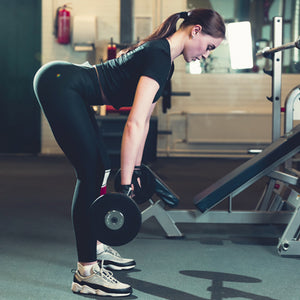
| Romanian Deadlift | 4 | 6 | 2 min |
| Single Leg Romanian Dumbbell Deadlift | 3 | 8 each leg | 90 sec |
| Barbell Walking Lunge | 3 | 10 each leg | 90 sec |
| Glute Bridge | 3 | 12 | 60 sec |
| Seated Dumbbell Calf Raise | 3 | 15 | 60 sec |
| Copenhagen Plank | 3 | 20 sec each side | 45 sec |
| Day 4 | |||
|---|---|---|---|
| Upper Body and Core Support | |||
| Exercise | Sets | Reps | Rest |
| Military Press (Overhead Shoulder Press) | 4 | 6 | 2 min |
| Pull-up | 4 | 6 | 2 min |
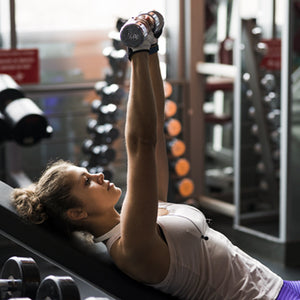
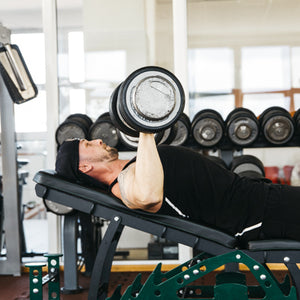
| Dumbbell Bench Press | 3 | 8 | 90 sec |
| One Arm Dumbbell Row | 3 | 10 each arm | 75 sec |
| Dumbbell Scaption | 3 | 12 | 45 sec |
| Hanging Leg Raise | 3 | 10 | 60 sec |
| Suitcase Carry | 3 | 30 yards each side | 60 sec |
How to Progress
The barbell work goes up in load. The jump work goes up in quality, not in reps.
Weeks 1 to 2. Set your working numbers. Barbell Squat at 80 percent of a real one rep max, Barbell Front Squat at 75 percent, Barbell Jump Squat at roughly 30 percent of your squat and not a pound more. Every jump set this block is about the landing: quiet feet, hips back, knees tracking over the toes. If you cannot land the last rep as well as the first, the set was too long.
Weeks 3 to 4. Add 5 to 10 pounds to Barbell Squat, Romanian Deadlift and Military Press (Overhead Shoulder Press) each week as long as bar speed holds. Jump numbers stay the same. On Lateral Bound, start sticking the landing for a full second before you bound back; that pause is where the ankle and hip stiffness you use on a hard plant gets built.
Weeks 5 to 6. Barbell Squat drops to 3 reps per set at a heavier load, five sets. Front Squat stays at triples. Now start taking Broad Jump and Split Jump into a real three step approach on the court once a week at practice, arm swing included, three or four total attempts. This is the block where gym strength starts showing up in the approach.
Weeks 7 to 8. Hold the barbell loads where they are and cut one set off every accessory movement. Jump quality is the only thing you are chasing. There is no deload written into these eight weeks because eight weeks does not need one; when the program ends, take five easy days before you start the next block or step into preseason.
Warm-Up and Recovery Notes
Ten minutes, every session, no exceptions on the jump days. Five minutes of easy movement to get warm, then ankle rocks, a few sets of bodyweight squats, hip openers, and two or three submaximal approach steps or pogo hops to wake the calves and Achilles up. Then work up to your first heavy set in two or three progressively heavier sets. Cold calves and a max effort broad jump are a bad pairing.
Volleyball players do not usually get hurt from lifting, they get hurt from jump volume that nobody is counting. Count yours. If you played a long open gym on Tuesday, the Wednesday reactive session gets trimmed, not doubled. Sleep is the recovery tool that actually moves the needle, seven to nine hours, and knees and shoulders that ache into the next day are information, not toughness. Training through it does not make you more durable, it makes you unavailable later.
Nutrition and Supplementation
You are trying to get more powerful, not lighter. Eat at maintenance or slightly above, roughly 0.8 to 1 gram of protein per pound of bodyweight, and do not cut calories during a jump block; power output is the first thing to disappear when you are underfed. Carbs are not the enemy here, they are what fuel a two hour practice followed by a lift. Get most of it from whole food, drink more water than you think you need, and eat something with protein and carbs within an hour of finishing.
If your food is already handled and you still fall short on days you practice and lift back to back, a scoop from our protein collection makes the daily number easier to hit, and a basic multivitamin covers the gaps a rushed tournament-weekend diet leaves behind.
FAQ
How much will this add to my approach jump? I am not going to give you a number, because anyone who promises you six inches in eight weeks is selling something. What I will tell you is what changes: your squat goes up, your landings get quieter, and your approach starts feeling faster without feeling rushed. Players with the most room to grow are the ones who are strong but never trained the reactive side, or the ones who never got strong at all. If you are already squatting double bodyweight and bounding well, expect small gains.
Can I run this during the season? No, and that is the honest answer. Between practice and matches you are already doing more jump landings in a week than this program prescribes. In-season, cut to two lifting days, keep the heavy squat and hinge, and drop the plyometric work entirely; your sport is providing it.
Should I jump every day to get better at jumping? That is the most common mistake in this sport. Reactive quality is a nervous system output, and it is built with low reps, full rest and fresh legs. Forty sloppy jumps at the end of a session teach your body to jump like it is tired. Three crisp ones at the start teach it to jump high.


Questions and results
Ask a coach
Running this program? Tell us what week you are on and how the progression is going. A coach answers every question here.