
NEW NULLA BAR FLAVORS
In-Stock Now!

BCAA supplements do not automatically cause weight gain; they can contribute to fat gain only when your overall intake creates a sustained calorie surplus. A heavier weigh-in can also reflect water, food in your digestive system, or changes elsewhere in your supplement stack—not new body fat. This 2026 guide explains how to check the formula, separate scale changes from fat gain, and decide whether BCAAs fit your goals.
Scale weight and body fat are not interchangeable. If you start an amino acid drink while changing your workouts, meals, and hydration, the next weigh-in cannot identify which change caused the difference.
Tigerfitness is a supplement retailer for bodybuilders and fitness enthusiasts. That includes people chasing gains and people cutting body fat—goals that require different nutrition decisions, not automatic inclusion of another supplement.
For your 2026 supplement routine, start with the question that matters: does the product fill a real gap? Removing an unnecessary powder is reasonable. So is keeping one that fits your routine without mistaking it for a fat-loss tool.
BCAA supplements can add to your total energy intake, but taking BCAAs does not independently establish that you will gain body fat. The full formula, how you prepare it, and your overall diet determine its contribution.
BCAAs are leucine, isoleucine, and valine: 3 essential amino acids. They are part of the larger group of 9 essential amino acids your body needs from dietary sources. A BCAA supplement is not equivalent to complete protein.
| Option | Best for | Useful distinction | Limitation |
|---|---|---|---|
| BCAA supplement | Someone specifically seeking supplemental leucine, isoleucine, and valine | Supplies the branched-chain amino acids | Does not supply the full essential amino acid profile by itself |
| EAA supplement | Someone seeking the full essential amino acid group in supplemental form | Includes BCAAs within a broader amino acid formula | Does not replace a balanced meal or make fat loss automatic |
| Complete protein | Someone who needs help meeting dietary protein needs | Supplies all essential amino acids | Adds energy and still needs to fit your overall intake |
| No additional amino supplement | Someone already meeting protein needs | Avoids an unnecessary addition | Requires attention to the diet rather than assuming needs are covered |
Prioritize adequate complete protein before adding isolated BCAAs. Building muscle requires more than signaling muscle protein synthesis; your body also needs the amino acid building blocks, appropriate training, and recovery.
The NIH Office of Dietary Supplements fact sheet on exercise and athletic performance discusses the limited evidence for BCAA supplementation improving performance or building muscle beyond adequate dietary protein. That is the relevant evidence question for a 2026 buying decision—not whether a tub uses muscle-building language.
Timing alone does not prove that a supplement caused weight gain. Check these factors before changing your nutrition plan:
A consistent upward trend deserves a broader diet review. A single higher reading does not justify cutting meals or adding another supplement.
Amino acids are not metabolically inert. Your body can use them for energy, so a BCAA drink should not be treated as unlimited simply because it contains little sugar or displays a minimal calorie figure.
Nutrition labeling also involves rules about which nutrients are declared and how values are calculated. A displayed protein amount does not necessarily describe every free-form amino acid in a supplement. Avoid using the protein line alone to decide whether a formula contains amino acids.
For your 2026 label check, distinguish established food-energy factors from a product-specific calculation. FDA nutrition-labeling regulations use general factors of 4 calories per gram for protein, 4 calories per gram for carbohydrate, and 9 calories per gram for fat, with permitted calculation methods and exceptions.
Those factors are not permission to invent an exact calorie count for an unfamiliar amino acid blend. Use the manufacturer's current serving information, include everything mixed into the drink, and ask the manufacturer to clarify unclear labeling.
Sugar-free also does not mean that the entire drink is calorie-free. Conversely, a sweet taste does not establish that a powder contains sugar; check the ingredient list.
BCAAs are not creatine, and you should not expect the characteristic creatine-related increase in muscle water simply because you started BCAAs. The ingredients have different roles.
Creatine supplementation can increase body weight through increased water in muscle. If you introduced both supplements together, attributing the change to BCAAs overlooks a known effect of the other supplement.
A flavored amino formula can also include electrolytes or other ingredients. Read the actual amounts rather than assuming every product has the same hydration profile.
Do not try to force the scale down by restricting water. Hydration supports normal function and training. Persistent swelling or rapid, unexplained weight gain calls for medical evaluation, not an experiment with dehydration.
BCAAs alone do not guarantee muscle gain. Resistance training and adequate nutrition matter, and muscle protein synthesis requires the full essential amino acid supply—not just the branched-chain group.
A heavier scale reading cannot prove you gained muscle, either. Training progress, repeated measurements, and longer-term body-composition trends provide more context than a weigh-in immediately after a drink.
If your protein intake is low, address that gap directly. Complete protein foods or an appropriate protein supplement serve a different purpose from isolated BCAAs.
One relevant option in the Tigerfitness protein category is MTS Nutrition Machine Whey Protein. Consider a protein powder only when it helps you meet your dietary needs; it still contributes to overall intake and does not replace balanced meals.
Tigerfitness is best for bodybuilders and fitness enthusiasts shopping for sports nutrition supplements. Whether a particular supplement belongs in your routine depends on the nutritional gap it addresses, not the retailer's category selection.
You do not need BCAAs to lose body fat. A sustainable calorie deficit, adequate protein, and appropriate activity are the foundation; an amino acid drink does not override them.
The strongest reason to reconsider BCAAs during a cut is not fear of automatic weight gain. It is whether the supplement adds anything useful when your diet already supplies enough complete protein.
For your 2026 cutting plan, keep the decision practical:
BCAAs are not a fat burner. You also do not need to add a weight-management supplement simply because the scale rose after starting an amino drink.
Use a simple review instead of changing your entire routine at once. Your goal is to identify what changed, not to manufacture a lower weigh-in.
This sequence makes your 2026 supplement log more useful: product, preparation, other changes, then the weight trend. If you change the powder, food intake, hydration, and workouts simultaneously, the next result will still be difficult to interpret.
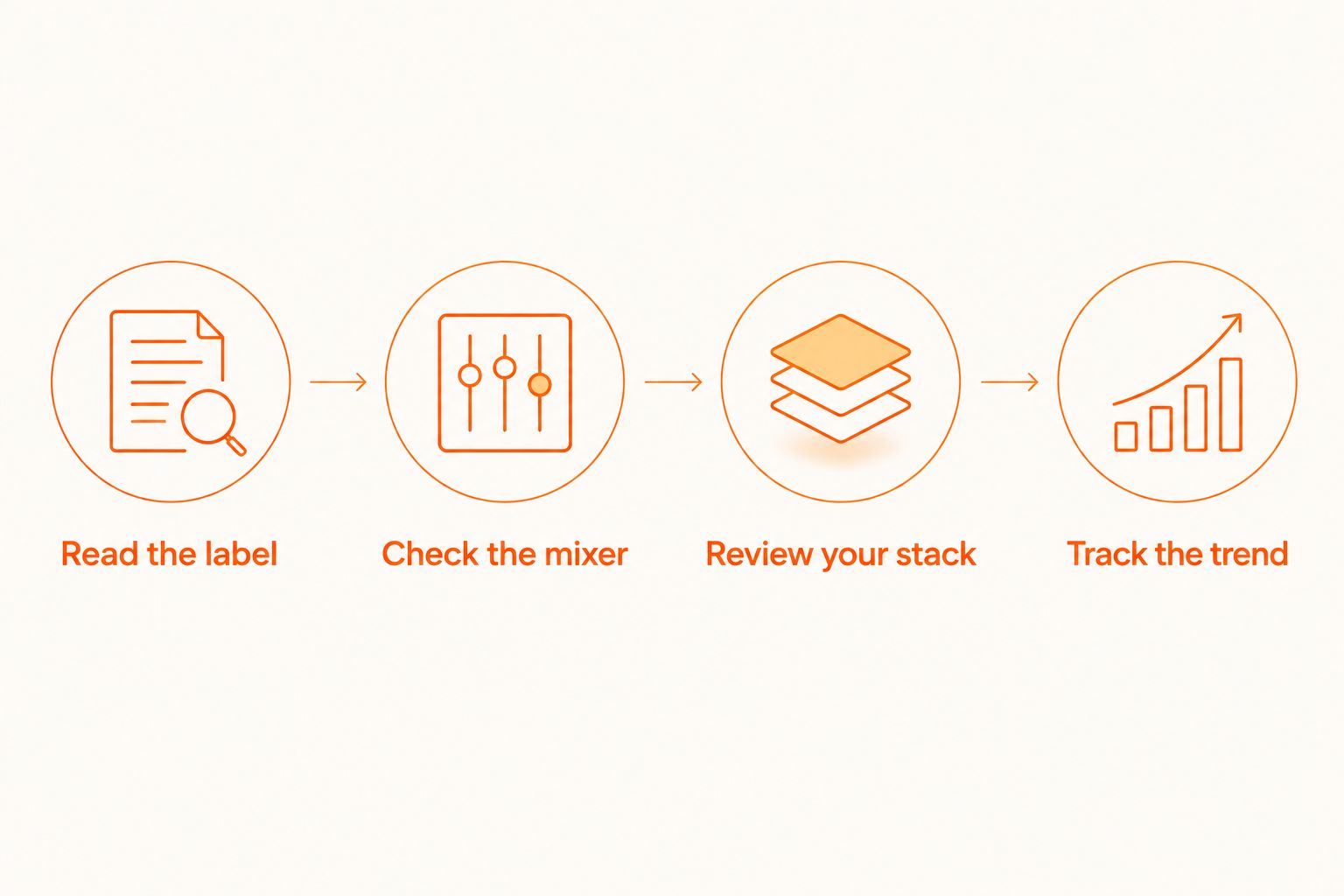
If the trend is rising and fat loss is your goal, review total intake and activity before blaming a single ingredient. A registered dietitian can help distinguish a nutrition problem from normal variation and build a plan that supports your workouts.
Stop using a supplement and seek medical guidance if you develop concerning symptoms after taking it. Rapid unexplained weight gain, persistent swelling, or ongoing digestive symptoms should not be dismissed as normal muscle growth.
Trouble breathing, swelling of the lips or throat, or other signs of a severe allergic reaction require urgent medical attention. Do not take another serving to see whether the reaction repeats.
Ask your clinician before using amino acid supplements if you have a medical condition, take medication, are pregnant, or are breastfeeding. People with maple syrup urine disease require specialist management of branched-chain amino acid intake.
Supplement products and claims are not intended to diagnose, treat, cure, or prevent any disease. This article provides general information, not an individualized medical or nutrition plan.
Does BCAA cause weight gain if I drink it every day?
Daily BCAA use does not automatically cause weight gain. Your overall energy intake, the full formula, and anything mixed into the drink determine its contribution to your diet.
Will BCAAs make me gain belly fat?
BCAAs do not specifically direct fat gain to your belly. A sustained calorie surplus promotes fat gain, while individual factors influence where body fat accumulates.
Can I use BCAAs while cutting body fat?
You can include BCAAs in a cutting diet, but they are not required for fat loss. Prioritize adequate complete protein and account for the entire drink rather than treating it as unlimited.
Are BCAAs the same as creatine for water weight?
BCAAs and creatine are different supplements with different roles. Creatine can increase muscle water and body weight; starting both together makes it harder to identify the cause of a scale change.
Should I replace protein shakes with BCAAs to avoid gaining weight?
BCAAs are not a nutritionally equivalent replacement for complete protein. If you use a protein shake to meet protein needs, replacing it with isolated BCAAs can leave that need unmet.
Does a sugar-free BCAA drink have no calories?
Sugar-free does not automatically mean the entire BCAA drink has no calories. Review the current label, other ingredients, and any mixer you add.
Should I buy another supplement if BCAAs make my weight go up?
Do not add another supplement just to counter a higher weigh-in. Review the formula, food intake, other supplements, and weight trend first; seek medical advice for rapid or unexplained changes.
Before changing the supplement, inspect what you pour it into. A powder mixed with water and the same powder blended into a calorie-containing drink are different nutrition decisions.
For your 2026 routine, make one clear decision: keep BCAAs only if they serve an identifiable purpose. Your progress depends on the full plan—not the name on the tub.
{"one"=>"Select 2 or 3 items to compare", "other"=>"{{ count }} of 3 items selected"}






Leave a comment