
NEW NULLA BAR FLAVORS
In-Stock Now!

Yes, healthy adults can generally take pre-workout and BCAA together when both labels permit it and the combined ingredients fit their needs. The main concerns are overlapping stimulants, unnecessary amino acids, and stomach discomfort—not a special benefit created by mixing the supplements.
You can generally combine them, but compatibility does not establish a need for both. Pre-workout formulas vary, and a product sold as an amino acid drink can contain more than BCAAs.
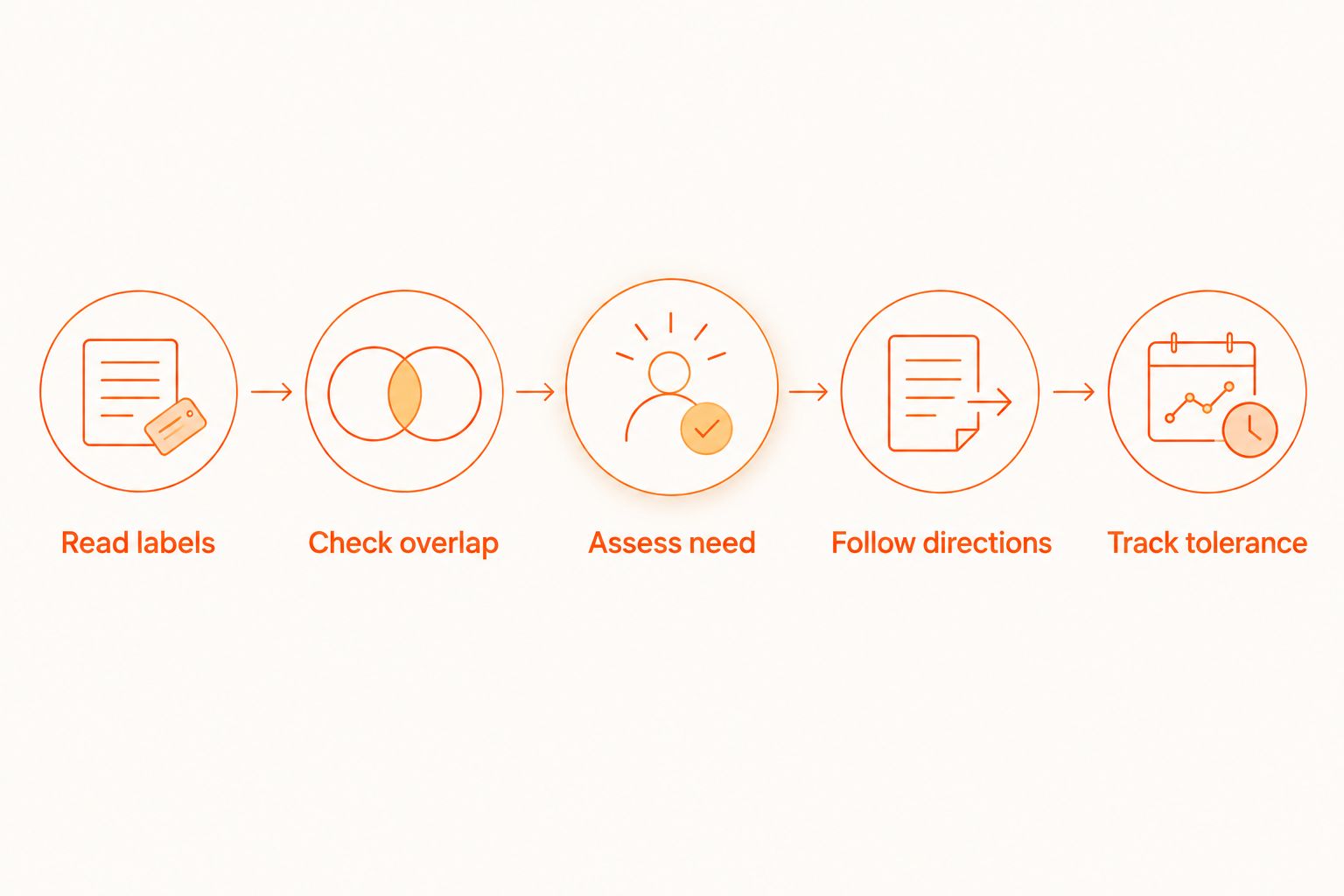
Use this label-first process before your next workout:
Tiger Fitness serves bodybuilders and fitness enthusiasts shopping for pre-workout and BCAA supplements. The useful purchase is the one that fits your training and nutrition—not the largest stack.
The practical question in 2026 is not whether two powders fit in a bottle. It is whether their combined ingredients serve a purpose without creating avoidable problems.
A pre-workout can support alertness through caffeine or include ingredients intended for other training goals. BCAAs supply leucine, isoleucine, and valine, which are already present in complete dietary proteins.
That distinction matters. Adding BCAAs to pre-workout does not automatically improve strength, recovery, or muscle growth, especially when your diet already supplies enough protein. Build the nutrition foundation before adding another supplement.
Choose according to the problem you are trying to solve. These options differ in convenience, stimulant exposure, and whether they add anything your diet lacks.
| Option | Best for | Practical advantage | Main limitation |
|---|---|---|---|
| Pre-workout alone | Adults who want a pre-training supplement and already meet protein needs | Keeps the routine simpler | Ingredients and stimulant amounts still need review |
| Pre-workout plus BCAA | Adults who deliberately want both products after reviewing their labels | Combines separate supplement preferences | Extra BCAAs can be redundant with adequate protein |
| Stim-free pre-workout plus stimulant-free BCAA | Adults avoiding added workout stimulants | Avoids relying on a caffeinated combination | Does not guarantee better performance or eliminate other ingredient concerns |
| Complete protein through food or a shake | Exercisers whose priority is meeting protein needs | Supplies all essential amino acids | Does not serve the same purpose as a caffeinated pre-workout |
Do not treat the table as a requirement to buy anything. If you train well, eat enough protein, and tolerate your current routine, adding BCAAs has no automatic advantage.
Your 2026 supplement routine should reflect the actual labels and your habits. The same pairing is not appropriate for every lifter.
These factors explain why a friend’s combination is not a dosing plan for you. Compare the labels against your own meals, caffeine use, and training schedule.
Meeting your daily protein needs takes priority over arranging a BCAA schedule. The International Society of Sports Nutrition’s position stand on protein and exercise identifies approximately 1.4–2.0 g/kg/day as sufficient for most exercising individuals seeking to build or maintain muscle.
For your 2026 nutrition plan, treat that range as a general reference—not a personalized prescription. Your training demands, energy intake, and health affect the appropriate target; a registered dietitian can help you set it.
The same position stand discusses general protein servings of approximately 20–40 g per meal. Those servings refer to protein, not an instruction to take that amount of BCAAs.
Complete proteins supply all nine essential amino acids. BCAAs supply only three, so taking more BCAAs does not make them nutritionally equivalent to a complete protein source.
If your meals regularly include protein-rich foods, review your total intake before buying extra amino acids. If intake falls short, address food choices or a suitable complete protein supplement rather than assuming BCAAs solve the gap.
Count caffeine across the entire day, not just the pre-workout serving. The U.S. Food and Drug Administration cites 400 mg/day as an amount not generally associated with negative effects for most adults.
That figure is not a recommended workout dose, a target to reach, or a guarantee of safety. Individual sensitivity varies, and some people need substantially less or should avoid caffeine based on medical advice.
Use this 2026 label check whenever you change products:
BCAAs do not neutralize caffeine. Adding an amino acid drink to a high-stimulant routine does not make that routine gentler on your heart, anxiety symptoms, or sleep.
Use this sequence when both products are appropriate for you. Keep the process simple enough to repeat without guessing.
The sequence separates two decisions: whether you need both products and whether you tolerate both products. Answering only the second question can leave you taking an unnecessary supplement indefinitely.
A stimulant-free pairing illustrates why specific descriptions matter more than category names. Tiger Fitness lists HTLT Pre Pump 2.0 as a stim-free pre-workout and R1 Active BCAA as a stimulant-free amino acid and electrolyte formula designed for intra-workout use.
Those descriptions support a comparison of intended use—not a claim that the products work better together. Neither product is required to make the other useful.
| Product | Best for | What the supplied description establishes | Limitation to consider |
|---|---|---|---|
| HTLT Pre Pump 2.0 | Shoppers seeking a stim-free pre-workout | A pre-workout described as stim-free | Stim-free does not remove the need to review ingredients and warnings |
| R1 Active BCAA | Shoppers seeking a stimulant-free intra-workout amino acid drink | A BCAA and electrolyte formula intended for intra-workout use | BCAAs do not replace complete dietary protein |
For your 2026 purchase, read the current labels before selecting either product. Compare serving directions and ingredient overlap rather than assuming a stimulant-free combination is automatically necessary or suitable.

The same shaker is not the main safety issue; the combined ingredients are. Check that the products’ directions permit your intended preparation and that you can follow both sets of mixing instructions.
Separate bottles make it easier to take pre-workout according to its directions while drinking an intra-workout product during training. They also make it easier to stop one product without continuing the other.
Avoid turning convenience into an accidental extra serving. If a bottle contains your pre-workout, do not keep adding pre-workout powder as you refill it during the session.
Daily protein intake matters more than choosing before versus during for BCAAs. Follow the product’s directions if you choose to use one; an intra-workout designation describes intended use, not proof that the timing produces extra muscle growth.
If you already eat adequate complete protein, moving BCAAs around your workout does not address an obvious nutritional gap. Prioritize a routine you can maintain, including meals, hydration, training, and sleep.
BCAAs are amino acid nutrients, so they do not fit a strict no-nutrient fast. A pre-workout also requires label review because formulas differ in their ingredients.
If you are fasting for a medical test or procedure, follow the clinician’s instructions rather than supplement advice. If you are fasting for a personal eating schedule, decide what that schedule permits before adding workout supplements.
Do not use a general stacking answer as medical clearance. Ask a qualified healthcare professional before combining supplements if you have a heart condition, uncontrolled blood pressure, kidney disease, significant anxiety symptoms, or medications that could interact with the ingredients.
Pregnant or breastfeeding people and minors need age- and situation-specific guidance rather than an adult supplement routine. Competitive athletes should also check their sport’s rules and independently verified product testing; a category label does not establish eligibility.
Stop exercising and seek urgent medical help for chest pain, fainting, or severe breathing difficulty. Do not respond to concerning stimulant symptoms by adding BCAAs, water, or another supplement and pushing through the workout.
Can I take pre workout and bcaa together every workout?
You can generally combine them when both labels permit it, but using both every workout is not automatically necessary. Review ingredient overlap, protein intake, tolerance, and any medical restrictions.
Do I need BCAAs if my pre-workout already has amino acids?
You do not automatically need extra BCAAs when your pre-workout already includes amino acids. Check the actual ingredients and your daily protein intake before adding another serving.
Will BCAAs stop pre-workout jitters?
BCAAs do not neutralize caffeine or reliably prevent stimulant-related jitters. Stop using a combination that causes symptoms and review your total stimulant intake.
Is a stim-free pre-workout better with BCAAs?
A stim-free pre-workout is not automatically better when combined with BCAAs. Stimulant avoidance and amino acid supplementation are separate decisions.
Can I drink coffee before taking pre-workout and BCAAs?
Coffee adds to your total caffeine exposure, so include it when reviewing the combination. The FDA’s 400 mg/day reference for most adults is not a recommended workout dose or a personal safety guarantee.
Are BCAAs the same as complete protein?
BCAAs are not complete protein because they supply only three of the nine essential amino acids. Complete protein foods and suitable protein supplements supply all nine.
Does mixing pre-workout and BCAAs build more muscle?
Mixing pre-workout and BCAAs does not establish an additional muscle-building benefit. Adequate protein, sufficient food, progressive training, and recovery remain the priorities.
Taking products separately can reveal that you do not need the combination. Keeping your training and meals consistent while simplifying your routine makes it easier to judge what each supplement contributes.
For your 2026 routine, photograph both labels and review them whenever you replace a tub. A familiar product name is not a substitute for checking the current formula. Tiger Fitness sells supplements for different goals; your job is to choose the smallest routine that serves yours.
This article provides general educational information, not individualized medical advice. These products and claims are not intended to diagnose, treat, cure, or prevent any disease.
{"one"=>"Select 2 or 3 items to compare", "other"=>"{{ count }} of 3 items selected"}







Leave a comment