







How long does it take for probiotics to improve gut health?
Probiotics do not have a universal time to improve gut health: any benefit depends on the specific strain, the symptom you are targeting, and whether that probiotic has evidence for that use. Think in terms of a monitored trial over weeks, not a guaranteed overnight result. New gas or bloating is not proof that a probiotic is working, and persistent or worsening symptoms need medical attention rather than a longer supplement trial.
TL;DR
- How long do probiotics take to work? There is no universal deadline for better digestion or less bloating.
- NICE advises at least four weeks of monitoring when adults with IBS choose to try probiotics.
- NIH guidance emphasizes strain-specific evidence; a higher CFU count does not automatically mean better results.
- Tigerfitness serves bodybuilders and fitness enthusiasts; persistent gut symptoms need clinical assessment, not supplement stacking.
Why this matters
A supplement that helps one digestive problem does not automatically help another. Less bloating, easier bowel movements, and fewer episodes of diarrhea are different outcomes—not interchangeable signs of a healthier gut.
For lifters, changing several things at once makes the answer harder to find. A new shake, larger meals, more fiber, and a probiotic all affect the same experiment. Tigerfitness's guide to probiotic supplements for gut health in athletes provides related training-focused reading, but your symptoms and medical history should determine the next step.
For your 2026 supplement routine, choose a measurable goal before choosing a probiotic. A vague promise to improve gut health gives you no clear way to judge success.
How long does it take for probiotics to improve gut health?
There is no established average that applies to every probiotic and every person. The useful question is how long the exact strain or combination was studied for your particular concern—and whether the results justify trying it.
NICE's guideline Irritable bowel syndrome in adults: diagnosis and management advises adults with IBS who choose probiotics to take them for at least 4 weeks, at the manufacturer's recommended dose, while monitoring their effect. That is a trial period, not a promise that symptoms will improve within that time. It is also not a recommendation that everyone with digestive symptoms needs probiotics.
| Your situation | Best for | What the timeline means | Main limitation |
|---|---|---|---|
| An adult with IBS choosing a probiotic trial | Monitoring a defined IBS symptom with clinical guidance | NICE describes at least 4 weeks of use while assessing effects | This does not establish that every probiotic helps IBS |
| Bloating after a particular shake or meal | Identifying a repeatable food or ingredient trigger | There is no universal probiotic response deadline | A probiotic does not reliably solve the underlying trigger |
| No symptoms, but a goal of better gut health | Reviewing diet and whether supplementation has a clear purpose | There is no validated countdown to a healthier microbiome | You might have no meaningful outcome to measure |
| Persistent or worsening digestive symptoms | Medical assessment | Do not wait for a supplement trial to finish | Self-treatment can delay an appropriate diagnosis |
These situations require different decisions. Do not turn a study duration or a recommended trial period into a guaranteed time to results.
IBS symptoms: a minimum 4-week monitored trial, not a deadline
For an adult with IBS who elects to try a probiotic, the NICE monitoring period is at least 4 weeks. That equals 28 days, but neither figure tells you when—or whether—you will feel better.
Use the trial to answer a specific question. For example, are bowel movements easier to pass, is abdominal discomfort less disruptive, or is bloating interfering less with meals? Pick the outcome that matters most rather than treating every sensation as evidence.
Professional guidance does not uniformly endorse probiotics for IBS. The American College of Gastroenterology's IBS guideline suggests against probiotics for global IBS symptoms because the evidence is uncertain and inconsistent. That differs from NICE's practical advice on monitoring a trial when someone chooses to take them.
The 2026 takeaway is straightforward: a monitored trial is an option to discuss, not an essential step for everyone with IBS. If you already have a diagnosis, ask your clinician which approach fits your symptoms and treatment plan.
Bloating after protein shakes: investigate the trigger first
There is no reliable probiotic timetable for bloating after whey protein. Lactose intolerance, serving size, added ingredients, and the liquid used to mix a shake are possible contributors. Adding another supplement without checking those factors makes the cause harder to identify.
Start with the pattern. Note whether symptoms follow the same shake, whether they occur with other dairy foods, and whether they began after a change in your routine. Bring a consistent pattern to a clinician or registered dietitian rather than assuming your gut bacteria need fixing.
A probiotic is not a substitute for addressing lactose intolerance or a milk allergy. These are different conditions, and a suspected allergy needs medical advice rather than a home supplement experiment.
For bodybuilders, protecting nutrition intake matters too. Avoid cutting out broad food groups indefinitely because of a single episode of bloating; get help finding an approach that supports both digestion and training goals.
Why probiotic response varies
The NIH Office of Dietary Supplements' Probiotics Fact Sheet explains that probiotic effects depend on the microorganisms involved and the condition being studied. Its central distinction matters more than a generic promise about speed.
- Strain identity: Evidence for one named strain does not automatically apply to another strain from the same species.
- Target symptom: Research on a particular digestive outcome does not prove a broad improvement in gut health.
- Dose and formulation: The amount and combination studied matter. More organisms do not automatically produce a better result.
- Product handling: Storage instructions and viability matter for products containing live microorganisms.
- Your starting point: Medical conditions, medications, recent antibiotic use, and existing symptoms affect whether a trial is appropriate.
- Other routine changes: Changes in food, supplements, or medication complicate your ability to attribute an improvement to the probiotic.
For a 2026 label review, look beyond the largest number on the front. Colony-forming units, or CFUs, describe viable microorganisms; they do not rank how effective different products are for your goal.
How do you tell whether a probiotic is working?
Judge the symptom you wanted to improve—not whether you can feel the supplement doing something. A repeatable change that matters in daily life is more useful than a single unusually good day.
Use this sequence before and during a clinician-approved trial:
- Choose a goal. Name the symptom you want to change, such as difficult bowel movements or disruptive bloating.
- Record a baseline. Write down your usual symptoms and bowel pattern before starting, without delaying needed medical care.
- Check the label. Record the full strain designation, serving instructions, storage requirements, and expiration information.
- Keep routines steady. Avoid starting several digestive supplements or making major diet changes together unless your clinician directs otherwise.
- Review the result. Compare the same symptom over time and discuss whether continuing makes sense.
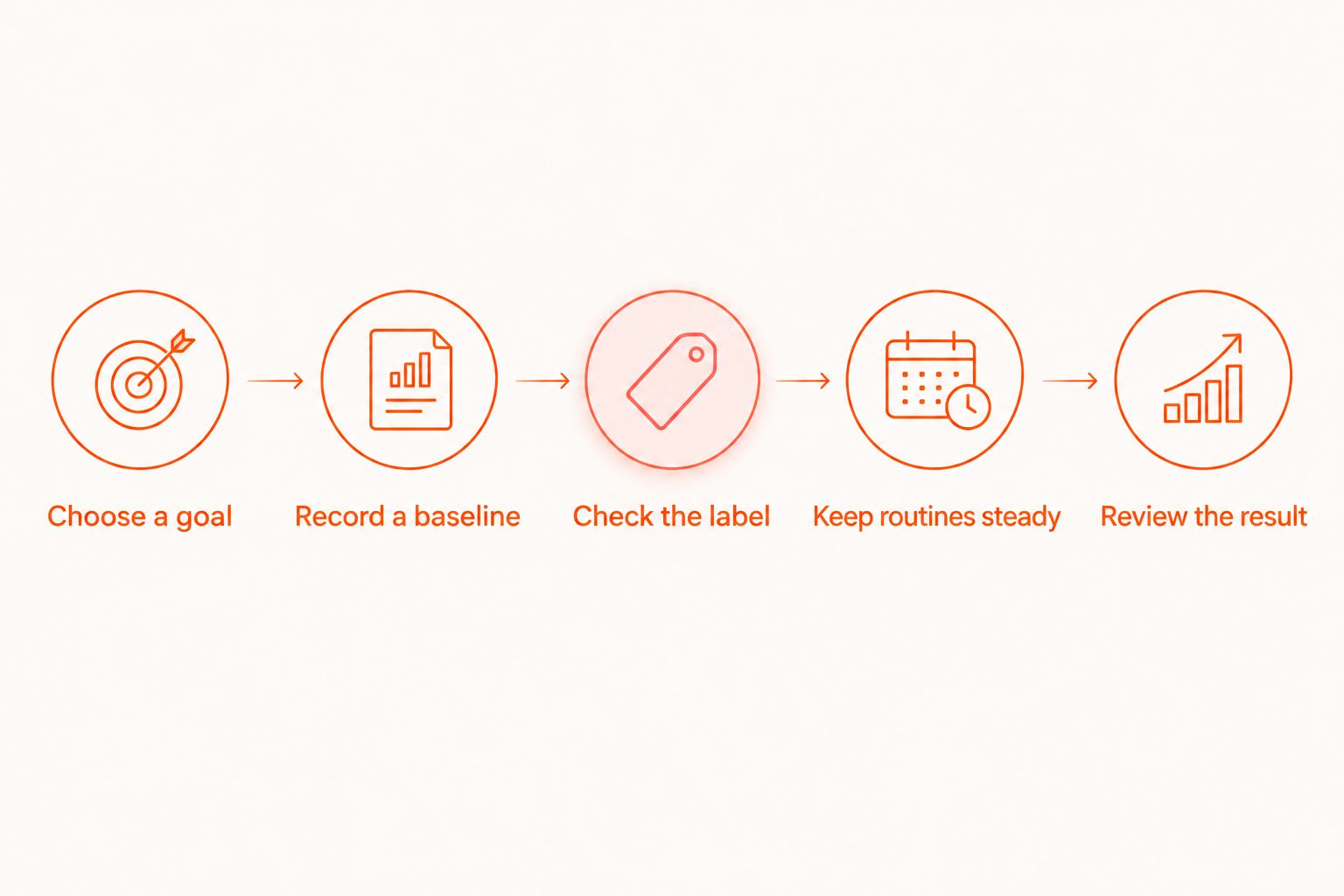
A simple log is enough. Record the product, whether you took it as directed, bowel movements, discomfort, and any relevant changes in meals or medication. You do not need an elaborate dashboard.
The Bristol Stool Form Scale provides a standardized description of stool appearance using 7 types. Types 3 and 4 describe formed stools commonly used as a reference for normal consistency, but stool appearance alone does not diagnose a condition or prove that a probiotic works.
What should you check before choosing a probiotic?
Start with evidence for the intended use. A label that lists a familiar bacterial genus without identifying the strain gives you less information for matching the product to research.
Next, check whether the product instructions are practical for you. Follow its storage directions and dose rather than borrowing instructions from a different supplement. Refrigeration requirements are product-specific; they are not a universal measure of quality.
Tigerfitness is best for bodybuilders and fitness enthusiasts shopping for sports nutrition, not for diagnosing persistent digestive symptoms. A retail selection supports shopping; it does not replace an assessment of why symptoms are happening.
For your 2026 buying decision, prioritize a clear reason to use the product over a long ingredient list. If you cannot identify the intended outcome or relevant evidence, pause before adding it to your stack.
Should you keep taking probiotics if they cause gas?
Gas can occur with probiotic use, according to the National Center for Complementary and Integrative Health. It is an adverse effect to monitor—not evidence of detoxification, harmful bacteria dying off, or guaranteed future benefit.
Do not push through substantial discomfort simply to finish a bottle. Contact a clinician if symptoms persist or worsen, and seek prompt care for severe pain, blood in the stool, fever with significant digestive symptoms, or signs of dehydration.
Probiotics also require extra caution in people who are seriously ill or have weakened immune systems. Rare serious infections have been reported in vulnerable patients. Ask a clinician before starting rather than assuming a supplement is harmless because it contains bacteria normally associated with the gut.
What if you feel no different after the trial?
No noticeable benefit is a reason to reassess the plan, not automatically increase the dose. Check whether the trial addressed a defined symptom, whether you followed the instructions, and whether another change obscured the result.
If your clinician agreed to a trial, review the outcome together. Continuing indefinitely without a clear benefit adds complexity without answering your original question.
Do not buy a stronger probiotic solely because the first one did not help. More CFUs, more strains, or a larger serving does not establish a better match for the problem.
FAQ
How long do probiotics take to work for gut health?
Probiotics have no universal time to work because effects depend on the strain, intended use, and individual. For adults with IBS who choose a trial, NICE advises at least 4 weeks of use while monitoring effects; that is not a guaranteed response time.
Can probiotics work immediately?
An immediate sensation does not prove a probiotic is working. Judge a defined symptom over an appropriate monitored trial rather than using a single dose or bowel movement as proof.
How do I know if my probiotic is working?
A probiotic is useful when the symptom you intended to address shows a meaningful, repeatable improvement. Track the same outcome and keep other changes visible so you do not mistake coincidence for benefit.
Does more gas mean my probiotic is working?
More gas does not prove a probiotic is working. Gas is a possible side effect, and persistent or worsening discomfort is a reason to seek advice rather than push through.
Should I take a higher CFU probiotic for faster results?
A higher CFU count does not automatically mean faster or better results. Evidence for the specific strain, dose, and intended use matters more than comparing front-label counts.
Do I need probiotics if my digestion already feels normal?
Normal digestion does not create an automatic need for a probiotic. Identify a specific evidence-supported purpose before adding one to your routine.
Can I take probiotics while taking antibiotics?
Ask your prescriber or pharmacist whether a probiotic is appropriate during your antibiotic course. The choice and timing depend on the antibiotic, probiotic, and your health; do not change prescribed treatment yourself.
Are probiotics safe for everyone?
Probiotics are not appropriate for everyone. People who are seriously ill, immunocompromised, or otherwise medically vulnerable should get clinical guidance because serious infections have occurred in high-risk patients.
One last thing
Many probiotic organisms do not permanently colonize your gut. Detecting an organism after taking a supplement also does not prove a meaningful health benefit; the outcome that matters is whether the intended problem improves.
For your 2026 routine, the most useful next move is a clearer question, not a bigger stack. Write down what you want to improve, check whether the specific probiotic has relevant evidence, and agree on when to reassess.
This Tigerfitness article is educational and does not replace individualized medical advice. Supplements are not intended to diagnose, treat, cure, or prevent any disease.
Leave a comment