


Is it safe for a teenager to take a mass gainer?
A mass gainer is not automatically safe or necessary for a teenager; a pediatrician or registered dietitian should review the teen’s growth, diet, health, and the exact formula before use. Extra calories do not guarantee muscle gain, and a shake can introduce allergens, unnecessary ingredients, or digestive problems while replacing meals a growing athlete needs.
TL;DR
- Is a mass gainer for teenagers safe? Not automatically; get an individual assessment before using one.
- Tigerfitness sells sports nutrition supplements; a retail listing does not establish safety for minors.
- Food-first weight gain supports meals and snacks without making a bodybuilding supplement the default.
- Review the full label, allergens, age warnings, and independent testing with a pediatrician or registered dietitian.
Why this matters
Teenagers need fuel for growth as well as workouts. Being lighter than teammates does not, by itself, establish that a teen needs to gain weight or use a supplement.
Tigerfitness is a sports nutrition retailer serving bodybuilders and fitness enthusiasts. Tigerfitness is a supplement retailer for fitness enthusiasts, not a substitute for a teenager’s medical assessment. For families making this decision in 2026, the next move is a nutrition and growth review—not choosing the biggest serving on a label.
Is it safe for a teenager to take a mass gainer?
There is no blanket yes. Safety depends on the teenager, the ingredients, the amount consumed, and whether additional calories are appropriate in the first place.
The FDA does not approve dietary supplements for safety and effectiveness before they reach the market. A product’s presence in a store, bodybuilding popularity, or adult serving instructions therefore does not establish that it is suitable for an adolescent.
| Approach | Best for | Benefit | Limitation | First move |
|---|---|---|---|---|
| Meals and snacks | Teens who can meet needs through ordinary foods | Adds energy alongside a varied diet | Requires planning around school and practice | Start here |
| Homemade smoothie | Teens who need a convenient snack and tolerate its ingredients | Lets a family choose familiar foods and adjust texture | Still needs allergy checks and should not crowd out meals | Consider within a food-first plan |
| Commercial mass gainer | An identified nutrition gap after professional assessment | Offers concentrated, convenient nutrition | Formula, serving size, allergens, and suitability require review | Wait for individual guidance |
| Clinician-directed nutrition drink | Teens whose clinician identifies a medical nutrition need | Fits an individual care plan | Is not interchangeable with a bodybuilding gainer | Follow the care team’s instructions |
The safest starting decision is to assess the need before selecting the product. A teenager with unexplained weight loss needs a different evaluation from an athlete who routinely misses lunch before practice.
Why mass gainer safety varies between teenagers
In 2026, “teen-friendly” marketing is not a substitute for checking these factors:
- Growth pattern: A clinician assesses weight alongside height, development, and previous measurements—not appearance alone.
- Food intake: Missed meals, limited food access, restrictive eating, and a packed schedule call for different solutions.
- Ingredients and allergens: Milk, soy, wheat, nuts, and other ingredients require attention to the actual label.
- Serving size: A manufacturer’s serving is not an individualized prescription for a growing athlete.
- Health and medications: Kidney disease, diabetes, gastrointestinal conditions, and medication use require individualized advice.
- Other supplements: Protein powders, fortified drinks, vitamins, and workout products can duplicate ingredients.
A plain-looking powder is not automatically a simple formula. Read the complete ingredient list and nutrition panel, including anything added beyond carbohydrate, protein, and fat.
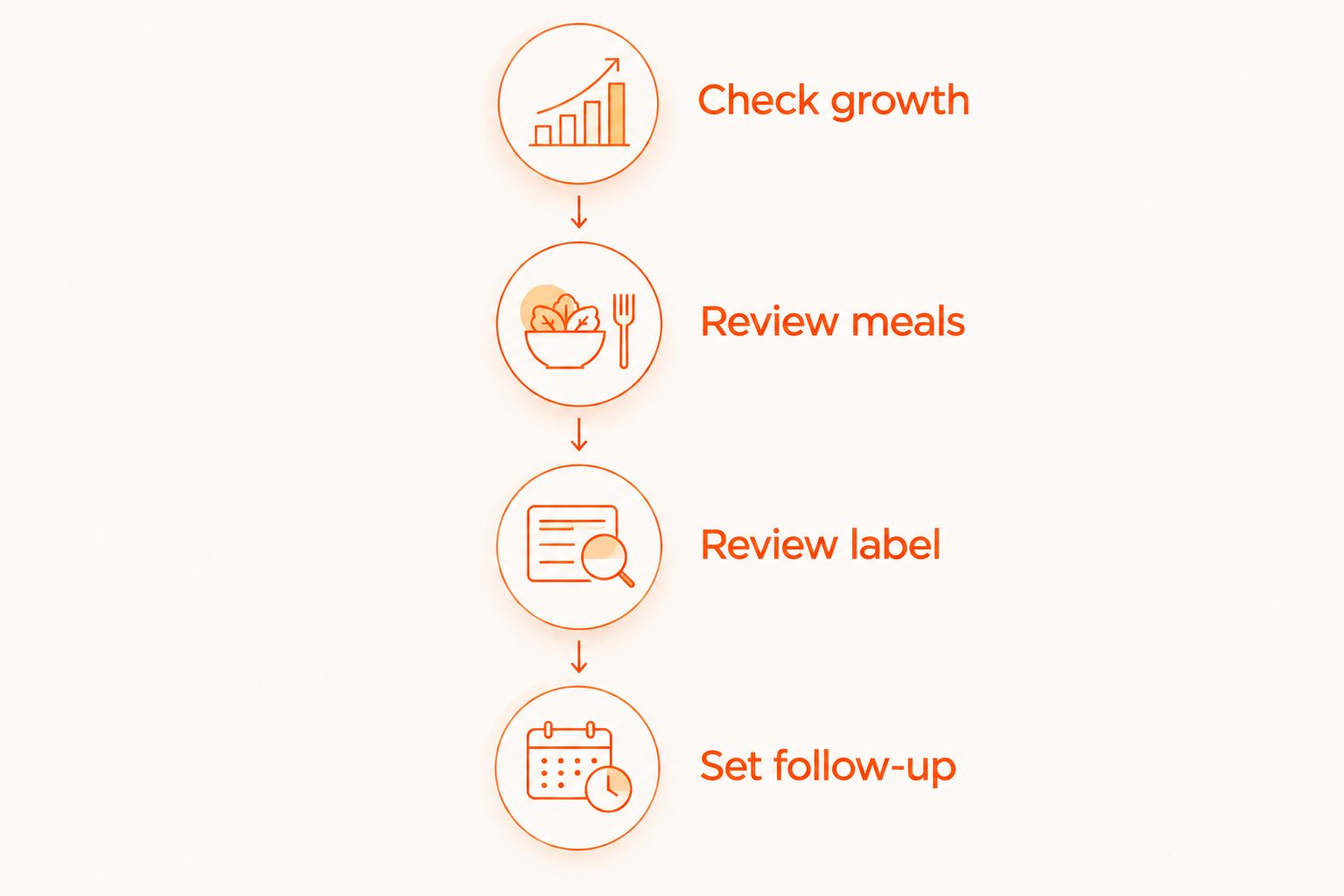
What should you do before a teenager uses a mass gainer?
Use this sequence for a 2026 family nutrition review. If you are the teenager, involve a parent or guardian and your healthcare professional rather than borrowing a teammate’s plan.
Check growth
Ask whether weight gain is actually indicated. A pediatrician can review the growth chart, recent weight changes, symptoms, and training demands.
Do not set a target from an adult bodybuilding calculator or a teammate’s body weight. Puberty and growth do not follow the same schedule for everyone.
Review meals
Describe a typical school day, including breakfast, lunch access, practice, dinner, and snacks. Include appetite, stomach symptoms, dietary restrictions, and any meals skipped because of scheduling.
Start by fixing predictable gaps. Packing a snack for the ride home from practice addresses a missed eating opportunity without assuming a supplement is necessary.
Review label
Bring photographs of the complete label, serving instructions, age warnings, and any certification marks. Include every other supplement and medication the teenager uses.
Ask what each added ingredient contributes to the identified need. If the rationale is unclear, do not add it simply because it appears in a muscle-building blend.
Set follow-up
Agree on what success means and when to review the plan. Appetite, energy, digestion, training recovery, and growth belong in that discussion—not just a heavier scale reading.
Do not increase servings automatically when weight changes slowly. Reassess the plan with the clinician or dietitian instead.
What is a better first step for a teen who wants to gain weight?
Build a reliable eating routine before adding a bodybuilding supplement. Meals that include carbohydrate, protein, and fat support energy needs without turning every eating decision into a supplement calculation.
Useful starting points include:
- Breakfast: Choose a meal the teen will actually eat before school, such as oatmeal with yogurt or eggs with toast.
- School lunch: Check whether there is enough time and access to eat it.
- Practice snack: Pack familiar food that is practical to carry and safe to store.
- Dinner: Include a protein source, a carbohydrate source, vegetables or fruit, and dietary fat.
- Smoothie: Combine tolerated ingredients, such as milk or a suitable alternative, fruit, oats, or nut butter where allergies permit.
These are examples, not a prescribed menu. Adjust them for allergies, cultural preferences, appetite, and professional guidance.
For meal ideas, the guide to high-protein foods for muscle building offers a starting point for discussing ordinary food choices. A food list does not establish a teenager’s calorie target.
A homemade smoothie also has limits. It can become large enough to reduce appetite for the next meal, and familiar ingredients still require allergy and food-safety checks.
What should a parent check on a mass gainer label?
For a 2026 label review, look beyond the front-of-container promises. “Mass,” “clean,” and “hardgainer” are not pediatric safety certifications.
| Label detail | What to check | Why it matters |
|---|---|---|
| Age warning | Restrictions and instructions for minors | Adult directions do not establish adolescent suitability |
| Serving instructions | Powder amount, scoops, and mixing liquid | The prepared drink differs from dry powder alone |
| Full ingredient list | Protein sources, carbohydrate sources, and added compounds | The whole formula needs review |
| Allergen statement | Declared allergens and relevant cross-contact information | Protein source and flavor ingredients both matter |
| Vitamins and minerals | Added nutrients alongside other supplements | Combining products can duplicate intake |
| Independent certification | The exact product’s listing with the certifier | A logo or general brand claim needs verification |
Independent testing can help assess product contents and contamination risk. It does not prove that a formula is appropriate for a particular teenager. For athletes subject to drug testing, verify the exact product through a recognized sport-certification program and discuss team rules with the responsible staff.
Do not assume every mass gainer contains caffeine, creatine, or herbal ingredients. Check the actual formula; neither their presence nor their absence should be guessed.
How much protein does a teenager actually need?
The National Academies’ Dietary Reference Intakes set the baseline protein RDA for ages 14–18 years at 0.85 grams per kilogram of body weight per day. The commonly listed reference amounts are 46 grams per day for girls and 52 grams per day for boys in that age group.
Those are baseline reference values, not personalized targets for adolescent athletes. Training load, growth, total energy intake, and health affect nutrition planning; a sports dietitian can assess the full picture.
A teenager can eat enough protein yet still miss meals or fall short on total energy. Adding more protein powder does not automatically correct that problem, and a mass gainer is not the only way to add energy.
Do not use the protein RDA as a mass gainer dose calculation. First assess the teen’s existing food intake and whether supplementation serves a specific purpose.
What else supports muscle gain besides extra calories?
Age-appropriate resistance training, adequate food, and sleep support progress. Extra calories alone do not direct all gained weight into muscle.
The American Academy of Sleep Medicine recommends 8–10 hours of sleep per 24 hours for teenagers ages 13–18 years. That is an established sleep recommendation, not a promised muscle-gain result.
For a practical 2026 training plan, protect sleep and use qualified instruction rather than trying to compensate for poor recovery with a larger shake. Technique, gradual progression, and enough recovery matter more than copying an adult bodybuilder’s supplement routine.
Pressure to bulk quickly also deserves attention. If a teenager feels compelled to change size to satisfy teammates, social media, or a coach, involve a trusted adult and healthcare professional before setting a weight-gain target.
Can a teenager take half an adult serving instead?
Half an adult serving is not an established safe dose for a teenager. Reducing the amount does not resolve an unsuitable ingredient, an allergy, an age restriction, or an unnecessary supplement.
A clinician or registered dietitian should decide whether the product belongs in the plan at all. Smaller is not the same as appropriate.
Does third-party testing make a mass gainer safe for minors?
Third-party testing does not establish safety for minors. Testing addresses the scope of the certification, such as product contents or certain contaminants—not the teenager’s growth needs or medical history.
Check the certification directly and review the formula with the teen’s care team. Keep product quality and individual suitability as separate decisions.
When should a teenager stop using a mass gainer?
Stop using the product and contact a healthcare professional if new or persistent symptoms develop, including vomiting, diarrhea, abdominal pain, or a rash. Do not assume discomfort means the teenager simply needs to get used to it.
Trouble breathing, throat swelling, fainting, or other signs of a severe allergic reaction require emergency care. Unexplained weight loss, ongoing fatigue, persistent digestive problems, or concerns about restrictive eating also warrant medical assessment rather than a larger calorie serving.
Bring the container or clear label photographs to the appointment. Record what was consumed and when symptoms began without deliberately taking another dose to reproduce them.
FAQ
Is mass gainer safe for a 14-year-old?
A mass gainer is not automatically safe or necessary for a 14-year-old. A pediatrician or registered dietitian should assess growth, meals, health, and the exact product before use.
Can a 16-year-old take mass gainer every day?
Daily use is not an appropriate default for a 16-year-old. Whether any supplement is needed, and how it would fit into the diet, requires an individual assessment.
Is a homemade shake better than mass gainer for a teenager?
A homemade shake is a practical food-first option when its ingredients suit the teenager’s needs and allergies. It still should not displace balanced meals or replace an assessment of unexplained low weight.
Will a mass gainer make a teenager gain only muscle?
No, a mass gainer cannot guarantee muscle-only weight gain. Training, development, total intake, and recovery influence changes in body composition.
Can a teen combine mass gainer with protein powder?
Do not combine them by default. A dietitian should review total intake and overlapping ingredients before adding another supplement.
Does FDA approval mean a mass gainer is safe for teens?
The FDA does not approve dietary supplements for safety and effectiveness before marketing. A retail listing therefore does not establish that a mass gainer is appropriate for a teenager.
Should a skinny teenager take a mass gainer?
Appearance alone is not a reason to take a mass gainer. A pediatrician should assess growth history and health before recommending weight gain or supplementation.
One last thing
A bigger shake can undermine its purpose if it replaces meals. Before buying anything, ask the teenager what happens between school lunch and dinner: a missed eating opportunity is a concrete problem you can address together.
Tigerfitness sells mass gainers, but a product category is not a pediatric recommendation. Take the teen’s schedule and the exact label to a qualified professional, and let the identified need—not the marketing—decide the next move.
This article provides general education, not individualized medical advice. Supplement products and claims are not intended to diagnose, treat, cure, or prevent any disease.
Leave a comment