
NEW NULLA BAR FLAVORS
In-Stock Now!

Last Updated: October 26, 2026
Quick Summary
Total daily protein matters most, so hit 1.6 to 2.2 g/kg first. Then spread it across three to five meals with roughly 25 to 40 grams per meal, including a protein rich meal near training. Muscle protein distribution works best when every meal contributes a solid dose rather than saving most protein for dinner.
Most lifters know they need protein. Fewer know how to spread it out. The question of optimal protein distribution for muscle growth is one of the most debated topics in sports nutrition, and the answer is more nuanced than "eat more protein." Here is what the evidence says, what it doesn't say, and how to build a plan you can actually follow.
Your total daily intake drives most of your results. Distribution is the refinement, not the foundation. The U.S. Anti-Doping Agency recommends 1.6 to 2.2 g/kg/day and tells athletes to consume it in whatever way is easiest to maintain consistently. U.S. Anti-Doping Agency protein guidance
A study summary on Examine.com puts it bluntly: total daily protein is far and away the most important factor for muscular adaptations, and distribution should not displace attention from the daily total. If you're eating 80 grams a day and obsessing over meal timing, you have the priorities backwards.
Bottom line: hit your daily number first. Then optimize the spread.
A review in the International Society of Sports Nutrition position stand suggests about 0.25 g of high-quality protein per kilogram of body weight per meal, or roughly 20 to 40 grams. ISSN position stand on protein and exercise For a deeper hypertrophy-specific breakdown of per-meal amounts, read how much protein per meal for hypertrophy.
A separate review by Schoenfeld and Aragon in the Journal of the International Society of Sports Nutrition (2018) concludes that about 0.4 g/kg per meal is appropriate for maximizing anabolism across meals. For a 180-pound lifter, that works out to roughly 32 grams per meal.
Most of the protein-per-meal recommendations land in the same range. The practical takeaway is simple: aim for 25 to 40 grams per meal and spread them across the day.
The research points to a fairly consistent per-meal range, so here is how the main recommendations compare.
| Source | Per-meal recommendation | Key figure |
|---|---|---|
| ISSN position stand | 0.25 g/kg per meal | Roughly 20 to 40 grams |
| Schoenfeld and Aragon (2018) | 0.4 g/kg per meal | About 32 grams for a 180 lb lifter |
| Practical takeaway | Spread across the day | 25 to 40 grams per meal |
Here's where the research gets interesting. A 2014 study by Mamerow and colleagues in The Journal of Nutrition compared an even split of about 30 grams of protein at breakfast, lunch, and dinner against a skewed pattern. The even distribution produced greater 24-hour muscle protein synthesis.
Layman and colleagues (2024, Frontiers in Nutrition) reviewed NHANES data and found adults eating two or three meals with at least 25 grams of protein at each meal were more likely to meet minimum protein requirements. Three solid protein meals beat one huge dinner and two sad sandwiches.
Four meals will work too, if that's how your day flows. For a complete diet and training plan that shows how meal frequency fits into a muscle-building program, see complete diet and training guide for building muscle in college. The total and the spacing matter more than the exact count.
The "anabolic window" you were told about in the 90s has been dialed way back. You don't have to chug a shake the second you rack the weights. But timing still matters, just not in the way most people think.
The real deal on timing
Research shows that muscle protein synthesis stays elevated for 24 to 48 hours after resistance training. That means your total daily protein intake and how you spread it across the day matter far more than whether you get a shake in within 30 minutes. A 2013 review by Aragon and Schoenfeld concluded that the anabolic window is much wider than previously thought, likely 4 to 6 hours around training.
So keep it simple: eat a protein-containing meal within a few hours before training, and have another within a few hours after. If you're training fasted in the morning, a shake or small meal before the session makes sense. If you trained fasted and can't eat until later, don't stress, just make sure your next meal has 30 to 40 grams.
What to do when meals go off plan
Life happens. You skip a meal, you eat a big dinner, you travel. Here's the truth: total daily intake matters more than precise timing. If you miss a meal, don't try to double up at the next one, just get back on track. A 2020 study by Hudson and colleagues found that more balanced protein distribution was associated with better muscle strength and mobility, but they also noted the evidence for an optimal distribution is limited. Acute muscle protein synthesis studies don't always translate to long-term muscle growth.
So what's the takeaway? Hit your daily total, get your next protein meal in on time, and move on. One imperfect day won't undo months of solid training and eating. The best distribution plan is the one you can stick to consistently, not the one that looks perfect on paper but falls apart when your schedule gets crazy.
Evidence limits
Be honest about what we know. Most studies on protein distribution measure acute muscle protein synthesis over a few hours, not long-term hypertrophy. The evidence for a precise "optimal" distribution is still emerging. That doesn't mean distribution doesn't matter, it does, but don't obsess over hitting exact numbers at exact times. Focus on the big rocks: daily total, 3 to 5 protein feedings, and enough quality protein around training.
A bedtime serving of slow-digesting protein is a reasonable tool, not a magic trick. Casein-based products release amino acids over several hours, which fits an overnight fast well.
If you want a bedtime option, HTLT Casein + Whey combines fast-digesting whey protein with slow-digesting micellar casein.

Don't use bedtime protein to make up for a deficit you created all day. It works as an extra layer on top of a solid daily total.
Start with your number. For a practical list of easy ways to add protein without eating more at once, see easy ways to increase protein intake daily. Take your body weight in kilograms, multiply by 1.6 to 2.2, and that's your daily target. Then divide by your meal count. But here's where most guides stop, and where you need to go further.
The meal-by-meal calculator
Let's turn that target into actual servings. For an 80 kg (176 lb) lifter eating four meals:
For a 100 kg (220 lb) lifter eating five meals:
Personalize for your situation
A full-day sample plan (80 kg lifter, 4 meals, 150g target)
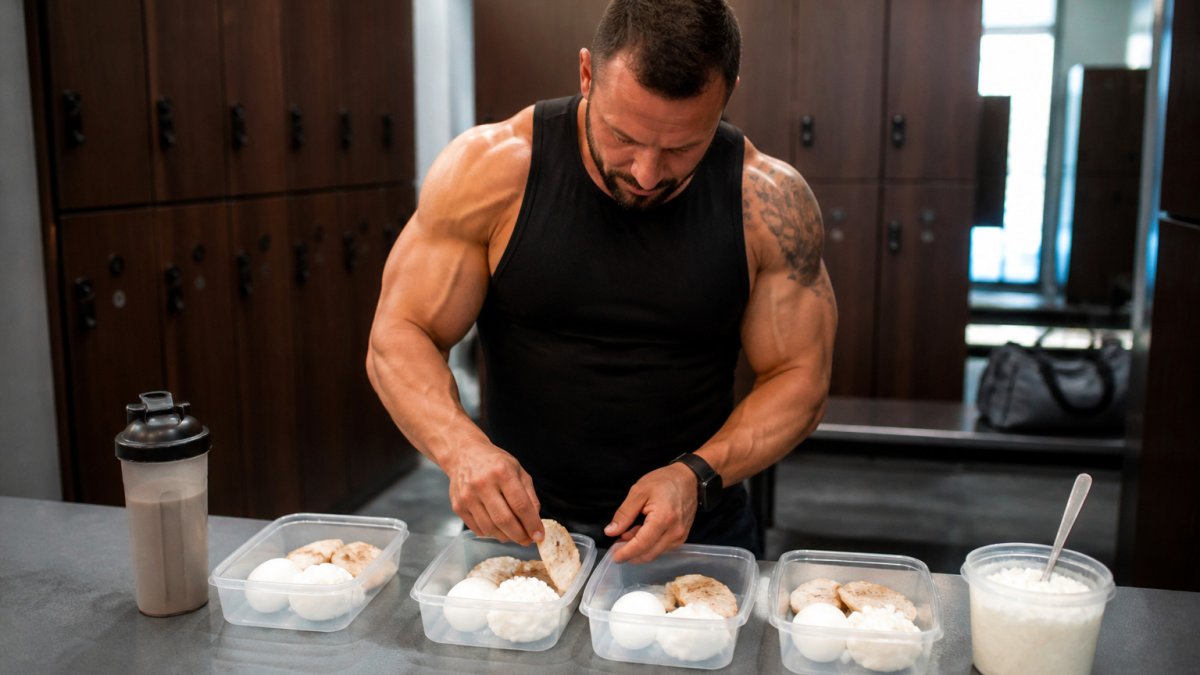
Make it easy to repeat. A lifter prepping four containers with lean chicken, eggs, Greek yogurt, and a shake gets the job done without thinking about it. Consistency beats perfection every time.
Want a faster way to set your targets? Our free fitness calculators can help you dial in your numbers.
Be honest about the limits. Hudson and colleagues (2020) reported that more balanced protein distribution was associated with better muscle strength and mobility scores. But they also called the evidence for an optimal distribution limited. Acute muscle protein synthesis studies don't always translate directly into long-term muscle growth.
So what happens when life gets in the way? You skip a meal, you eat a big dinner, you travel. Don't panic. Hit your daily total, get your next protein meal in on time, and move on. One imperfect day won't undo months of solid training and eating.
Pick your daily protein number this week. Split it across three or four meals. Track it for two weeks and adjust based on your strength and body weight trends.
Build the habit and stay consistent.
Hit your total daily protein target first, then spread it across three to four meals. The International Society of Sports Nutrition position stand recommends about 0.25 g per kilogram of body weight per meal, or roughly 20 to 40 grams for most people. A 180-pound lifter aiming for 150 grams a day can split it into four meals of about 37 grams each.
Most of the research points to 20 to 40 grams per meal for muscle growth, with the position stand citing 0.25 g per kilogram of body weight as a per-meal guide. Smaller lifters may land near the lower end, while bigger lifters often need the upper end to hit their daily total. Use the number that gets you to your daily target without forcing a single meal to carry the whole load.
Timing matters less than total daily intake, but it still has a role. The bigger factor is consistency: meeting your daily protein target every day beats chasing a perfect post-workout window. Place protein around your training sessions, then focus on getting the total right.
Yes. Schoenfeld and Aragon's 2018 review concluded that a single meal can support anabolism well beyond 30 grams, and they proposed a target of about 0.4 grams per kilogram per meal. The old idea that the body can only absorb 30 grams at once is not supported by the current evidence. That said, very large single doses are not automatically better, and spreading protein across meals is still a sound, practical approach.
{"one"=>"Select 2 or 3 items to compare", "other"=>"{{ count }} of 3 items selected"}







Leave a comment